
Unbequeme Frauen*
Donne* scomode
Inconvenient woman*

01 NURA
Warum ist es der Flüchtling, der dir Angst macht und nicht die Nazis im Landtag?
Perché è il rifugiato a farti paura e non i nazisti nel consiglio provinciale?
Why is it the refugee who scares you, and not the Nazis in the provincial parliament?
Lies mehr darüber
Songtext aus ihrem Lied „Fair“
Ich kann dir sagen, hier läuft sehr viel schief
Verkaufen Waffen, aber wollen kein‘ Krieg
Findest Feminismus lustig, weil du’s nicht so siehst
Doch wenn ich Max heißen würde, würd‘ ich mehr verdienen
Sie sagen: „Du bist eine Frau
Pass nachts draußen auf“
Der Rock ist ganz kurz und die Typen zu blau
Schicken Leute in den Bau
Für’s Gras rauchen, wow
Doch Alkohol zelebrieren mit Spots im TV
Warum halten alle in der Bahn Abstand
Und warum muss mich jeder anstarren?
Ich will hier weg wegen der Fascho Nachbarn
Aber krieg‘ die Wohnung nicht mit diesem Nachnamen
Ich kann dir sagen, hier läuft sehr viel schief
Affenlaute bei ’nem Fußballspiel
Auf’m rechten Auge blind, weil du es nicht siehst
Letzte Worte: „I can’t breath“
Ruhe in Frieden
Kinder gehen auf die Straßen wegen Frust
Trotzdem ballern wir an Neujahr hundert Mio. in die Luft
Leben in ’ner virtuellen Welt, sind auf der Flucht
Und Designer aufm Schulhof sind ein Muss
Warum stört dich das Kopftuch meiner Mama
Warum verurteilst du mich, weil ich wenig an hab‘
Warum ist es der Flüchtling, der dir Angst macht
Und nicht die Nazis im Landtag?
Leggi di più
Testo della sua canzone «Fair»
Posso dirti che qui molte cose vanno storte
Vendono armi, ma non vogliono la guerra
Trovi il femminismo divertente perché non la vedi così
Ma se mi chiamassi Max, guadagnerei di più
Dicono: «Sei una donna
Stai attenta fuori di notte»
La gonna è molto corta e i tipi sono troppo ubriachi
Mandano la gente in galera
Per aver fumato erba, wow
Ma celebrano l’alcol con spot in TV
Perché tutti in treno tengono le distanze
E perché tutti devono fissarmi?
Voglio andarmene da qui per via dei vicini fascisti
Ma con questo cognome non mi danno l’appartamento
Posso dirti che qui molte cose vanno storte
Versi da scimmia durante una partita di calcio
Cieco dall’occhio destro perché tu non lo vedi
Ultime parole: «Non riesco a respirare»
Riposa in pace
I bambini scendono in strada per la frustrazione
Eppure a Capodanno spariamo cento milioni in aria
Viviamo in un mondo virtuale, siamo in fuga
E i capi firmati nel cortile della scuola sono d’obbligo
Perché ti disturba il velo di mia madre
Perché mi giudichi perché ho addosso poco
Perché è il rifugiato a farti paura
E non i nazisti nel Consiglio provinciale?
Read about it
Lyrics from her song “Fair”
I can tell you, a lot is going wrong here
They sell weapons but don’t want war
You think feminism is funny because you don’t see it that way
But if my name were Max, I’d earn more
They say: “You’re a woman
Be careful outside at night”
The skirt is very short and the guys are too drunk
They send people to jail
For smoking weed, wow
But celebrate alcohol with ads on TV
Why does everyone keep their distance on the train
And why does everyone have to stare at me?
I want to get out of here because of the fascist neighbors
But I can’t get the apartment with this last name
I can tell you, a lot is going wrong here
Monkey noises at a football match
Blind in the right eye because you don’t see it
Last words: “I can’t breathe”
Rest in peace
Kids take to the streets out of frustration
Yet on New Year’s we blow a hundred million into the air
Living in a virtual world, we’re on the run
And designer clothes in the schoolyard are a must
Why does my mother’s headscarf bother you
Why do you judge me because I’m wearing very little
Why is it the refugee who scares you
And not the Nazis in the provincial parliament?
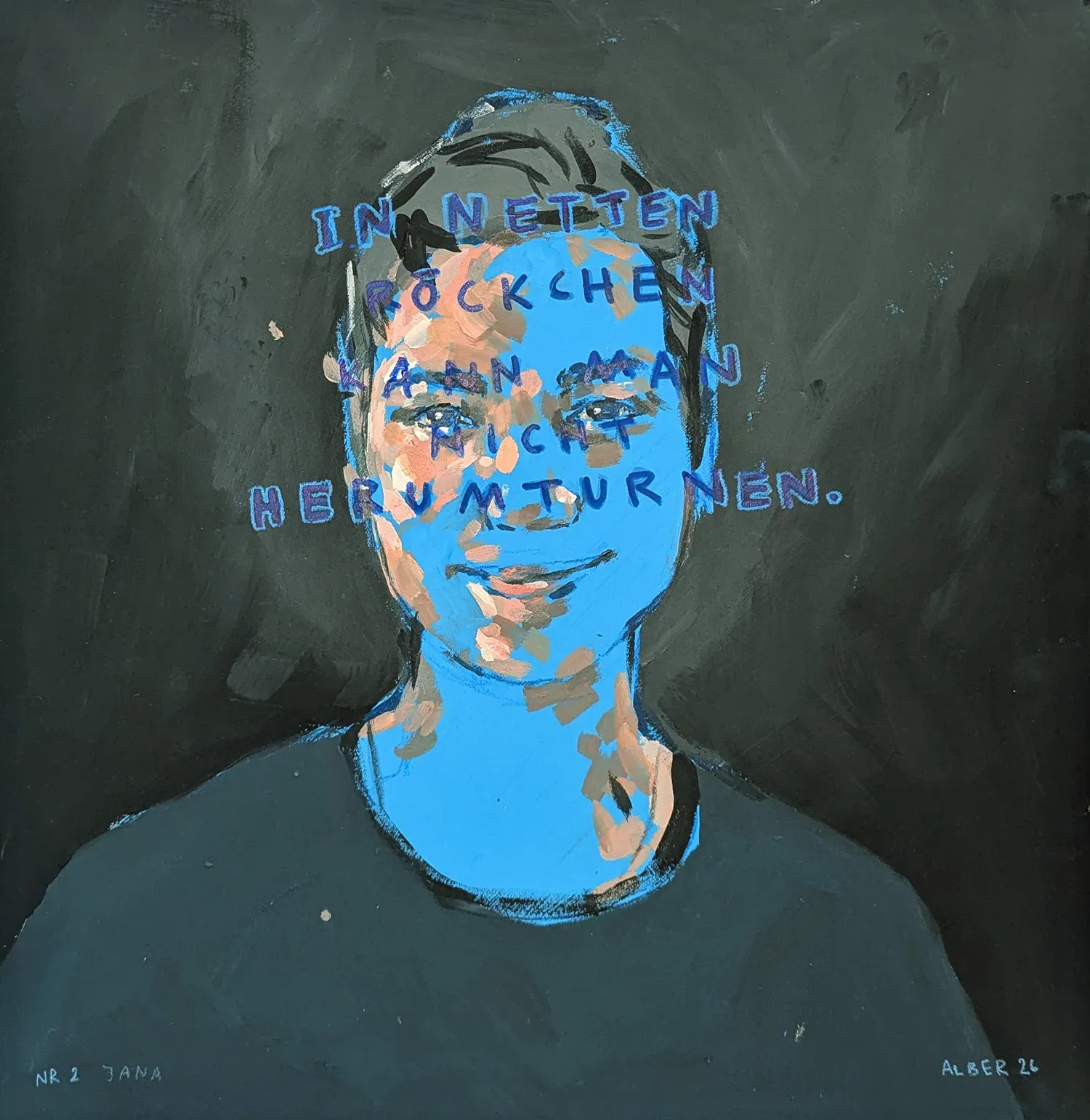
02 JANA
In netten Röckchen kann man nicht herumturnen
Con le minigonne carine non si può fare ginnastica liberamente.
You can’t tumble around in pretty little skirts.
Listen to the audio
Lies mehr darüber
Ich finde, dass Frauenkleidung oft einfach unbequemer ist oder Frauen ungeschickter macht, weniger Freiheit gibt, wie sie sich bewegen können.
Ich bin mit einem Zwillingsbruder aufgewachsen und kann mich erinnern, dass ich das unfair gefunden habe. Zum Beispiel an Geburtstagen, bei der Erstkommunion oder anderen Anlässen war für mich als Mädel die Erwartung da, ein Röckchen oder ein Kleid zu tragen.
Ich war ein sehr aktives Kind. Ich habe mich gern bewegt, bin gern herumgeturnt. Und in Kleidern und Röckchen kann man halt nicht so herumturnen. Wenn wir gespielt haben und dreckig waren, dann war das bei meinem Bruder viel mehr okay als bei mir.
Das hat sich echt lang gezogen. Es hat Situationen gegeben, wo man gemerkt hat: Für Mama und Papa ist das jetzt etwas Unfeines, wenn ich als Mädel herumturne oder dreckig bin. Und das sind Sachen, die mich geprägt haben.
Bei Frauen liegt der Fokus schon sehr darauf, wie sie ausschauen. Und dass es offenbar wichtiger ist, wie man ausschaut, als das, was man leistet oder zu sagen hat oder macht.
Und Frauen stehen oft in der Tradition, Unbequemes aufzunehmen und auszugleichen, Sachen einfach fein zu machen. Man tendiert eher dazu, still zu sein. Wenn etwas unbequem ist, schluckt man es. Aber es dann zu adressieren oder etwas zu sagen, bringt das Unbequeme nach außen.
Frauen sollten diese Bewegungsräume und Freiheiten haben, oder sich nehmen. Weil genau da eine andere Wertung entsteht: Was darf ich anziehen? Wie darf ich mich bewegen? Darf ich herumturnen, darf ich dreckig werden?
Für mich kann die Einschränkung von Bewegungsfreiheit schon bei solchen kleinen Sachen anfangen.
Freiheit ist irgendwo die Möglichkeit, so zu sein oder nicht zu sein. Und als Frau bedeutet das für mich, die Freiheit zu haben, zu sein und zu handeln – mit ähnlichen Möglichkeiten und ähnlichen Konsequenzen wie Männer.
Leggi di più
Trovo che l’abbigliamento femminile sia spesso semplicemente più scomodo o renda le donne più impacciate, dia loro meno libertà nel modo in cui possono muoversi.
Sono cresciuta con un fratello gemello e ricordo di averlo trovato ingiusto. Per esempio, ai compleanni, alla Prima Comunione o in altre occasioni, da ragazza ci si aspettava che indossassi una gonnellina o un vestito.
Ero una bambina molto attiva. Mi piaceva muovermi, mi piaceva fare capriole e arrampicarmi. E con vestiti e gonnelline non puoi muoverti così liberamente. Quando giocavamo e ci sporcavamo, per mio fratello andava molto più bene che per me.
Questa cosa è andata avanti davvero a lungo. Ci sono state situazioni in cui si capiva: per mamma e papà è poco fine che io, da ragazza, faccia capriole o mi sporchi. E sono cose che mi hanno segnata.
Per le donne l’attenzione è molto concentrata su come appaiono. E sembra che sia più importante come una donna appare che quello che fa, quello che ha da dire o quello che realizza.
E le donne spesso hanno la tradizione di assorbire ciò che è scomodo e compensarlo, di rendere semplicemente le cose più piacevoli. Si tende piuttosto a stare zitte. Se qualcosa è scomodo, lo si ingoia. Ma affrontarlo o dire qualcosa porta quel disagio verso l’esterno.
Le donne dovrebbero avere questi spazi di movimento e queste libertà, oppure prenderseli. Perché proprio lì nasce una valutazione diversa: cosa posso indossare? Come posso muovermi? Posso fare capriole, posso sporcarmi?
Per me la limitazione della libertà di movimento può iniziare già da cose così piccole.
La libertà è, in qualche modo, la possibilità di essere o non essere in un certo modo. E come donna significa per me avere la libertà di essere e di agire, con possibilità e conseguenze simili a quelle degli uomini.
Read about it
I think women’s clothing is often simply more uncomfortable or makes women more awkward, giving them less freedom in how they can move.
I grew up with a twin brother, and I remember thinking that was unfair. For example, at birthdays, First Communion, or other occasions, there was an expectation that I, as a girl, would wear a little skirt or a dress.
I was a very active child. I liked moving around, I liked tumbling around. And you just can’t tumble around like that in dresses and little skirts. When we played and got dirty, that was much more okay for my brother than it was for me.
That went on for a really long time. There were situations where you could tell: for Mum and Dad, it was somehow improper if I, as a girl, tumbled around or got dirty. And those are things that shaped me.
With women, there is a strong focus on how they look. And apparently how you look is more important than what you achieve, what you have to say, or what you do.
And women often stand in a tradition of absorbing uncomfortable things and smoothing them over, of simply making things nice. You tend more toward staying quiet. If something is uncomfortable, you swallow it. But addressing it or saying something brings that discomfort out into the open.
Women should have these spaces to move and these freedoms, or take them for themselves. Because that is exactly where a different judgment appears: What am I allowed to wear? How am I allowed to move? Am I allowed to tumble around, am I allowed to get dirty?
For me, restrictions on freedom of movement can start with things as small as that.
Freedom is, in a way, the possibility to be or not to be a certain way. And as a woman, for me that means having the freedom to be and to act, with similar possibilities and similar consequences as men.
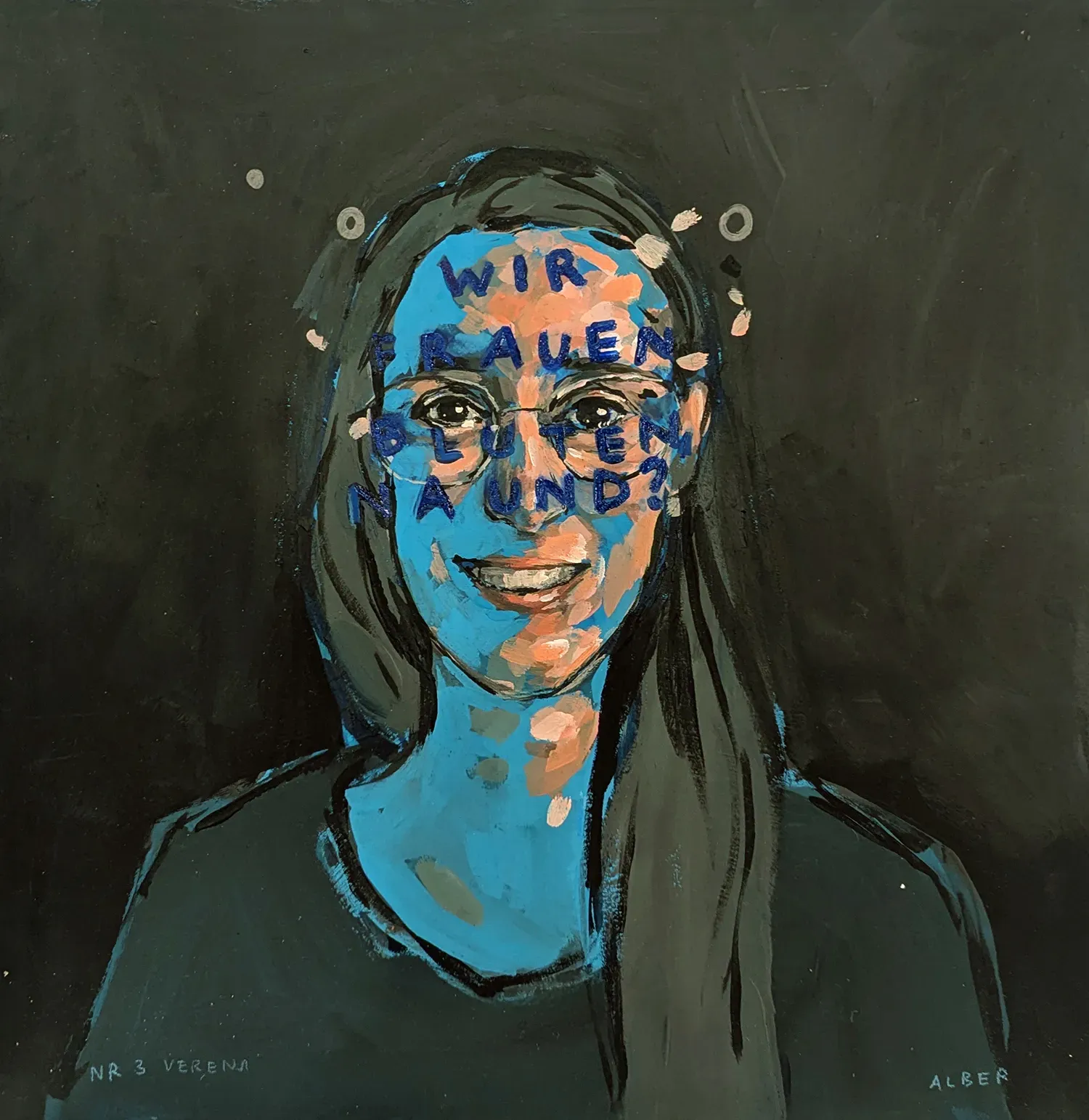
03 VERENA
Wir Frauen bluten, na und?
Noi donne sanguiniamo, e allora?
We women bleed, so what?
Listen to the audio
Lies mehr darüber
Ich blute einmal im Monat so wie Millionen andere Frauen auch. Warum soll man nicht darüber reden dürfen?
Für mich hat es sich voll gelohnt, meinen Körper besser kennenzulernen und ein paar Vorgänge einfach besser zu verstehen und zu sagen Hey, deswegen ist das jetzt so! Jetzt macht alles einen Sinn. Also deswegen bin ich gerade voll kontaktfreudig, weil ich gerade meinen Eisprung habe und voll viel machen kann und ich bin kreativ und bin gerne unter Menschen. Oder eben Hey, ich bin jetzt kurz vor meiner Periode. Ich brauch ein bisschen mehr Rückzug, ich brauche Zeit für mich. Ich gehe jetzt nicht voll aus und ich kann jetzt in der Zeit auch einfach nicht so viel geben und deswegen plane ich mein Leben so oder ich brauche jetzt einfach ein warmes Essen oder ich brauche besondere Nährstoffe, einfach weil mein Zyklus das sagt oder eben eine Pause. Tut mir gut. Oder im Gegensatz ich bin gerade voller Energie, also nutze ich sie. Und ich lebe sie voll aus. Und ich genieße es. Und ich schöpfe meine Kraft voll aus und das Wissen hat für mich schon etwas verändert und ich glaube, das kann etwas verändern. Und deswegen ist es für mich wichtig zu wissen und zu sagen und anderen Mädels mitzugeben. Keine ist kaputt. Also ich bin nicht kaputt und ich muss nicht repariert werden, sondern es ist einfach mein Zyklus und passt und ich kann meinen Körper unterstützen. Aber ich muss mich eben nicht reparieren, sondern es passt wie ich bin.
Und es geht auch darum, ein bisschen Akzeptanz für den eigenen Körper zu fördern und fürs eigene Sein und Selbstliebe. Und dann denkt man sich Hey! Es braucht einfach mehr Aufklärung. Genau deswegen. Unbedingt. Und weil es wichtig ist, dass man weiß, was im Körper passiert und dass man den eigenen Körper einfach schätzen lernt. Also ich bin auch für die Normalisierung. Frauen bluten, der weibliche Körper blutet und das kann auch schmerzhaft sein. Und es geht mit gewissen Veränderungen im Körper einher. Und wenn man das als etwas ganz Normales sieht. Und wenn man da einfach mehr Aufklärung drüber verbreitet, dann muss man nicht das Tampon in der Schultasche verstecken und irgendwie heimlich zum Klo schmuggeln, oder? Bei der Arbeit kann man es nicht sagen, dass man gerade einfach seine Tage hat. Das ist ein Thema wie jedes andere auch, über das man reden kann. Und dann schafft man es vielleicht auch, weil es ja normal ist und wirklich ein Thema ist, in der Gesellschaft zu sagen okay, wir schaffen es, Periodenprodukte zum Beispiel zugänglicher zu machen. Es gibt nämlich schließlich auch Periodenarmut, weil sowohl Hygieneprodukte als auch Produkte gegen Schmerzen einfach sehr viel kosten. Wenn man es einfach schafft, in der Gesellschaft etwas zu verändern und auf höherer Ebene irgendwie eben der Periodenarmut entgegenzuwirken und einfach das Thema zu normalisieren, so dass Mädels die Chance haben, ihren Körper besser kennenzulernen. Aber auch Jungs wissen, was da vor sich geht und dass das einfach ein ganz natürlicher Prozess und ein ganz natürlicher Vorgang ist. Das ist meine Vision und mein Ziel.
Leggi di più
Sanguino una volta al mese, come milioni di altre donne. Perché non si dovrebbe poterne parlare?
Per me è valsa davvero la pena conoscere meglio il mio corpo e capire meglio alcuni processi, e dire: Ehi, ecco perché adesso è così! Adesso tutto ha senso. Per esempio, adesso sono molto socievole perché sto ovulando, posso fare tantissime cose, sono creativa e mi piace stare con le persone. Oppure: Ehi, sono poco prima delle mestruazioni. Ho bisogno di ritirarmi un po’ di più, ho bisogno di tempo per me. Non esco così tanto e in questo periodo non riesco semplicemente a dare così tanto, quindi organizzo la mia vita di conseguenza. Oppure ho bisogno di un pasto caldo o di nutrienti particolari, semplicemente perché il mio ciclo me lo dice, oppure di una pausa. Mi fa bene. O al contrario: in questo momento sono piena di energia, quindi la uso. La vivo fino in fondo. Me la godo. E sfrutto appieno la mia forza. Questa consapevolezza per me ha già cambiato qualcosa e credo che possa cambiare qualcosa. Per questo per me è importante saperlo, dirlo e trasmetterlo anche ad altre ragazze. Nessuna è rotta. Io non sono rotta e non devo essere riparata: è semplicemente il mio ciclo, va bene così e posso sostenere il mio corpo. Ma non devo ripararmi, va bene così come sono.
E si tratta anche di favorire un po’ di accettazione del proprio corpo, del proprio modo di essere e dell’amore per sé. E allora pensi: Ehi! Serve semplicemente più informazione. Proprio per questo. Assolutamente. Perché è importante sapere che cosa succede nel corpo e imparare ad apprezzare il proprio corpo. Io sono anche per la normalizzazione. Le donne sanguinano, il corpo femminile sanguina e può anche fare male. E questo comporta determinati cambiamenti nel corpo. Se lo si vede come qualcosa di completamente normale e si diffonde più informazione, allora non bisogna nascondere l’assorbente interno nello zaino di scuola e portarlo di nascosto in bagno, no? Al lavoro non si può dire che si hanno semplicemente le mestruazioni. È un tema come un altro, di cui si può parlare. E forse così, proprio perché è normale ed è davvero un tema, si riesce anche a dire nella società: okay, rendiamo per esempio i prodotti mestruali più accessibili. Esiste anche la povertà mestruale, perché sia i prodotti igienici sia quelli contro il dolore costano semplicemente molto. Se si riesce a cambiare qualcosa nella società e, a un livello più alto, a contrastare la povertà mestruale e a normalizzare il tema, allora le ragazze hanno la possibilità di conoscere meglio il proprio corpo. Ma anche i ragazzi sanno che cosa succede e che si tratta semplicemente di un processo del tutto naturale. Questa è la mia visione e il mio obiettivo.
Read about it
I bleed once a month, just like millions of other women. Why shouldn’t we be allowed to talk about it?
For me, it has really been worth getting to know my body better and understanding a few processes better, and saying: Hey, that’s why it’s like this right now! Now it all makes sense. So that’s why I’m really outgoing right now, because I’m ovulating, I can do a lot, I’m creative and I like being around people. Or: Hey, I’m just before my period. I need a bit more withdrawal, I need time for myself. I’m not going out all the time and during this period I simply can’t give as much, so I plan my life accordingly. Or I just need a warm meal, or I need certain nutrients, simply because my cycle says so, or a break. That does me good. Or the opposite: I’m full of energy right now, so I use it. And I live it fully. And I enjoy it. And I draw fully on my strength. That knowledge has already changed something for me, and I think it can change something. That’s why it’s important to me to know this, to say it, and to pass it on to other girls. No one is broken. I’m not broken and I don’t need to be fixed. It’s simply my cycle, and that’s okay, and I can support my body. But I don’t need to fix myself; I’m okay as I am.
And it’s also about encouraging a bit of acceptance of your own body, of your own way of being, and self-love. And then you think: Hey! We simply need more education. Exactly for that reason. Absolutely. Because it’s important to know what is happening in the body and to learn to appreciate your own body. I’m also in favor of normalization. Women bleed, the female body bleeds, and that can also be painful. And it comes with certain changes in the body. If you see that as something completely normal and spread more information about it, then you don’t have to hide the tampon in your school bag and somehow smuggle it to the toilet. At work, you can’t say that you simply have your period. It’s a topic like any other that you can talk about. And perhaps then, because it’s normal and it really is an issue, society can also say: okay, let’s make period products more accessible, for example. Period poverty exists, because both hygiene products and products for pain simply cost a lot. If we manage to change something in society and, on a higher level, to counter period poverty and normalize the topic, then girls have the chance to get to know their bodies better. But boys also know what is going on and that it is simply a completely natural process. That is my vision and my goal.
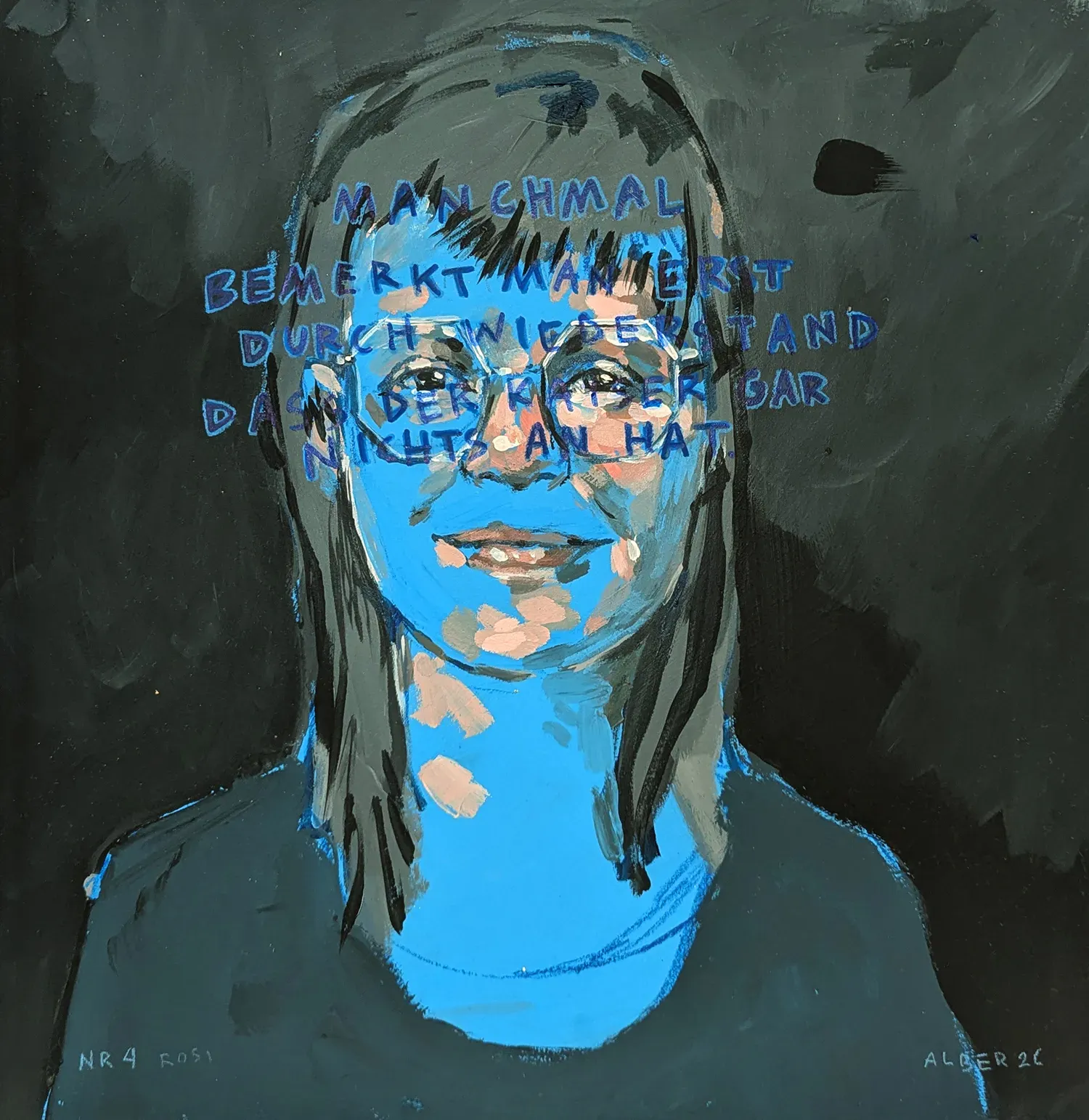
04 ROSI
Manchmal merkt man erst durch Widerstand, dass der Kaiser gar nichts anhat.
A volte è solo opponendo resistenza che ci si accorge che l’imperatore è nudo.
Sometimes it takes resistance to realize that the emperor has no clothes.
Lies mehr darüber
Schon als Kind habe ich irgendwie gemerkt: Die Burschen, die dürfen mehr. Und ich habe dann angefangen, männliches Verhalten zu kopieren. Das hat sich ziemlich lange durchgezogen. Auch in meinen ersten Jobs als Programmiererin hatte ich das Gefühl, ich muss mich extra beweisen. Ich muss noch rationaler sein, noch härter, damit ich auf dasselbe Level komme. Weil ich in einem sehr männlich geprägten Umfeld war und Kompetenz bei mir nicht immer einfach vorausgesetzt wurde. Ich hatte das Gefühl, ich muss zuerst zeigen, dass ich wirklich programmieren kann, bevor mir dieselbe Expertise zugestanden wird. Und irgendwann habe ich gemerkt, wie viel mir diese Strategie abverlangt. Mit achtundzwanzig hatte ich ein Burnout und habe gemerkt: Das geht alles an dem vorbei, wer ich eigentlich sein möchte. Solche Situationen begegnen mir aber bis heute. Zum Beispiel gebe ich Programmierworkshops. Da passiert es, dass Männer anfangen, mir Dinge zu erklären, die sie eine halbe Stunde vorher von mir gelernt haben. Obwohl ich gerade diejenige bin, die den Kurs gibt und die Expertise hat. Heute merke ich solche Situationen schneller. Und inzwischen kann ich damit spielen. Dann setze ich mich hin und sage: „Erklär mal. Wie gut kannst du das? Von wem hast du das?“ Nicht unbedingt, um jemanden bloßzustellen. Sondern damit vielleicht sichtbar wird, was da gerade passiert. Meine Mama ist auch Informatikerin. Sie hat Wirtschaftsinformatik und Mathematik studiert und war später oft die einzige Frau in Teams mit jüngeren männlichen Programmierern. Ihr wurde nicht automatisch mit Respekt begegnet. Sie musste sich den Respekt erst erarbeiten und immer wieder beweisen, dass sie wirklich programmieren kann und schnell genug ist. Ich habe das als Jugendliche gesehen und gedacht: Mama, lass dich doch nicht so unterbuttern. Damals habe ich noch gar nicht verstanden, wie anstrengend es ist, diesen Kampf jeden Tag führen zu müssen. Irgendwann war sie dann in einer Firma mit einer extrem hierarchischen Struktur. Beim Mitarbeiter:innengespräch wusste sie eigentlich schon vorher, dass ihr Chef ihr wieder vor allem sagen würde, was sie alles nicht gut genug macht. Und diesmal hat sie plötzlich nicht mehr mitgespielt. Er sagt: „Das machst du falsch. Das kannst du nicht.“ Und sie:
„Nein, nein, glaub ich nicht.“
„Nein, der Meinung bin ich nicht.“
„Nein, ich finde, ich mache das gut.“
„Ich kann das. Ich mache das auf meine Art.“
Und der war völlig aus dem Konzept. Diese ganze Dynamik hat auf einmal nicht mehr funktioniert.
Danach hat sie mich angerufen und gesagt:
„Hey, ich habe gerade Rosi gemacht in der Arbeit.“ Und genau das finde ich am Unbequemsein so spannend: Man kann Menschen manchmal in ihrer Macht entblößen. Man macht sichtbar, was vorher nur funktioniert hat, weil alle mitgespielt haben. Wie bei Des Kaisers neue Kleider. Alle tun so, als hätte der Kaiser wunderschöne Kleider an.
Bis jemand sagt:
„Aber der Kaiser hat ja gar nichts an.“
Und plötzlich ist sichtbar, was die ganze Zeit schon da war.
Genau dieses Bloßstellen von Machtstrukturen finde ich wichtig.
Und eigentlich wäre es für uns alle leichter, wenn wir alle unbequemer wären.
text
Leggi di più
Già da bambina mi sono resa conto in qualche modo che i ragazzi potevano fare di più. E allora ho iniziato a copiare comportamenti maschili. Questa cosa è andata avanti abbastanza a lungo. Anche nei miei primi lavori come programmatrice avevo la sensazione di dover dimostrare qualcosa in più. Dovevo essere ancora più razionale, ancora più dura, per arrivare allo stesso livello. Perché ero in un ambiente molto dominato dagli uomini e la mia competenza non veniva sempre data per scontata. Avevo la sensazione di dover prima dimostrare che sapevo davvero programmare prima che mi venisse riconosciuta la stessa competenza. E a un certo punto mi sono resa conto di quanto mi costasse questa strategia. A ventotto anni ho avuto un burnout e ho capito: tutto questo passa completamente accanto a chi vorrei davvero essere. Situazioni del genere mi capitano però ancora oggi. Per esempio, tengo workshop di programmazione. Succede che degli uomini inizino a spiegarmi cose che hanno imparato da me mezz’ora prima. Anche se sono proprio io quella che tiene il corso e che ha la competenza. Oggi mi accorgo più in fretta di queste situazioni. E nel frattempo riesco anche a giocarci. Allora mi siedo e dico: «Spiegami. Quanto ne sai? Da chi l’hai imparato?» Non necessariamente per mettere qualcuno in imbarazzo. Ma perché magari diventi visibile quello che sta succedendo in quel momento. Anche mia mamma è informatica. Ha studiato informatica gestionale e matematica ed è stata spesso l’unica donna in team con programmatori uomini più giovani. Il rispetto nei suoi confronti non era automatico. Doveva prima conquistarselo e dimostrare continuamente che sapeva davvero programmare ed era abbastanza veloce. Da adolescente lo vedevo e pensavo: Mamma, non lasciarti mettere i piedi in testa così. Allora non avevo ancora capito quanto fosse faticoso dover combattere questa battaglia ogni giorno. A un certo punto si è trovata in un’azienda con una struttura estremamente gerarchica. Al colloquio con il personale sapeva praticamente già prima che il suo capo le avrebbe di nuovo detto soprattutto tutto ciò che non faceva abbastanza bene. E quella volta, all’improvviso, non ha più partecipato al gioco. Lui dice: «Questo lo fai male. Questo non lo sai fare.» E lei:
«No, no, non credo.»
«No, non sono di questa opinione.»
«No, secondo me lo faccio bene.»
«Lo so fare. Lo faccio a modo mio.»
E lui era completamente spiazzato. Tutta quella dinamica all’improvviso non ha più funzionato.
Dopo mi ha chiamata e ha detto:
«Ehi, ho appena fatto la Rosi al lavoro.» Ed è proprio questo che trovo così interessante nell’essere scomode: a volte si può spogliare qualcuno del suo potere. Si rende visibile quello che prima funzionava soltanto perché tutti partecipavano al gioco. Come ne I vestiti nuovi dell’imperatore. Tutti fanno finta che l’imperatore indossi dei vestiti bellissimi.
Finché qualcuno dice:
«Ma l’imperatore non ha proprio niente addosso.»
E all’improvviso diventa visibile ciò che era già lì da sempre.
Trovo importante proprio questo smascherare le strutture di potere.
E in realtà per tutti noi sarebbe più facile se fossimo tutti un po’ più scomodi.
Read about it
Even as a child, I somehow noticed: the boys are allowed to do more. And then I started copying male behavior. That went on for quite a long time. Even in my first jobs as a programmer, I felt I had to prove myself more. I had to be even more rational, even tougher, to get to the same level. Because I was in a very male-dominated environment and my competence was not always simply assumed. I felt I first had to show that I really could program before I was granted the same level of expertise. And at some point I realized how much that strategy demanded of me. At twenty-eight, I had burnout and realized: all of this is completely missing who I actually want to be. Situations like that still happen to me today. For example, I run programming workshops. It happens that men start explaining things to me that they learned from me half an hour earlier, even though I’m the one teaching the course and I’m the one with the expertise. Today I notice situations like that more quickly. And by now I can play with them. Then I sit down and say: “Explain it to me. How well do you know it? Who did you learn it from?” Not necessarily to embarrass someone, but so that maybe what is happening in that moment becomes visible. My mum is also a computer scientist. She studied business informatics and mathematics and was later often the only woman on teams with younger male programmers. She wasn’t automatically treated with respect. She first had to earn that respect and repeatedly prove that she really could program and was fast enough. As a teenager I saw that and thought: Mum, don’t let them push you around like that. Back then I didn’t yet understand how exhausting it is to have to fight that battle every day. At some point she was working in a company with an extremely hierarchical structure. Before her employee review, she already knew that her boss would again mainly tell her everything she wasn’t doing well enough. And this time she suddenly stopped playing along. He says: “You’re doing this wrong. You can’t do this.” And she:
“No, no, I don’t think so.”
“No, I don’t agree.”
“No, I think I’m doing this well.”
“I can do this. I do it my way.”
And he was completely thrown off. That whole dynamic suddenly stopped working.
Afterwards she called me and said:
“Hey, I just did a Rosi at work.” And that is exactly what I find so interesting about being uncomfortable: sometimes you can strip people of their power. You make visible what only worked before because everyone played along. Like in The Emperor’s New Clothes. Everyone pretends the emperor is wearing beautiful clothes.
Until someone says:
“But the emperor isn’t wearing anything at all.”
And suddenly what was there all along becomes visible.
That exposing of power structures is exactly what I think is important.
And actually, it would be easier for all of us if we were all more uncomfortable.
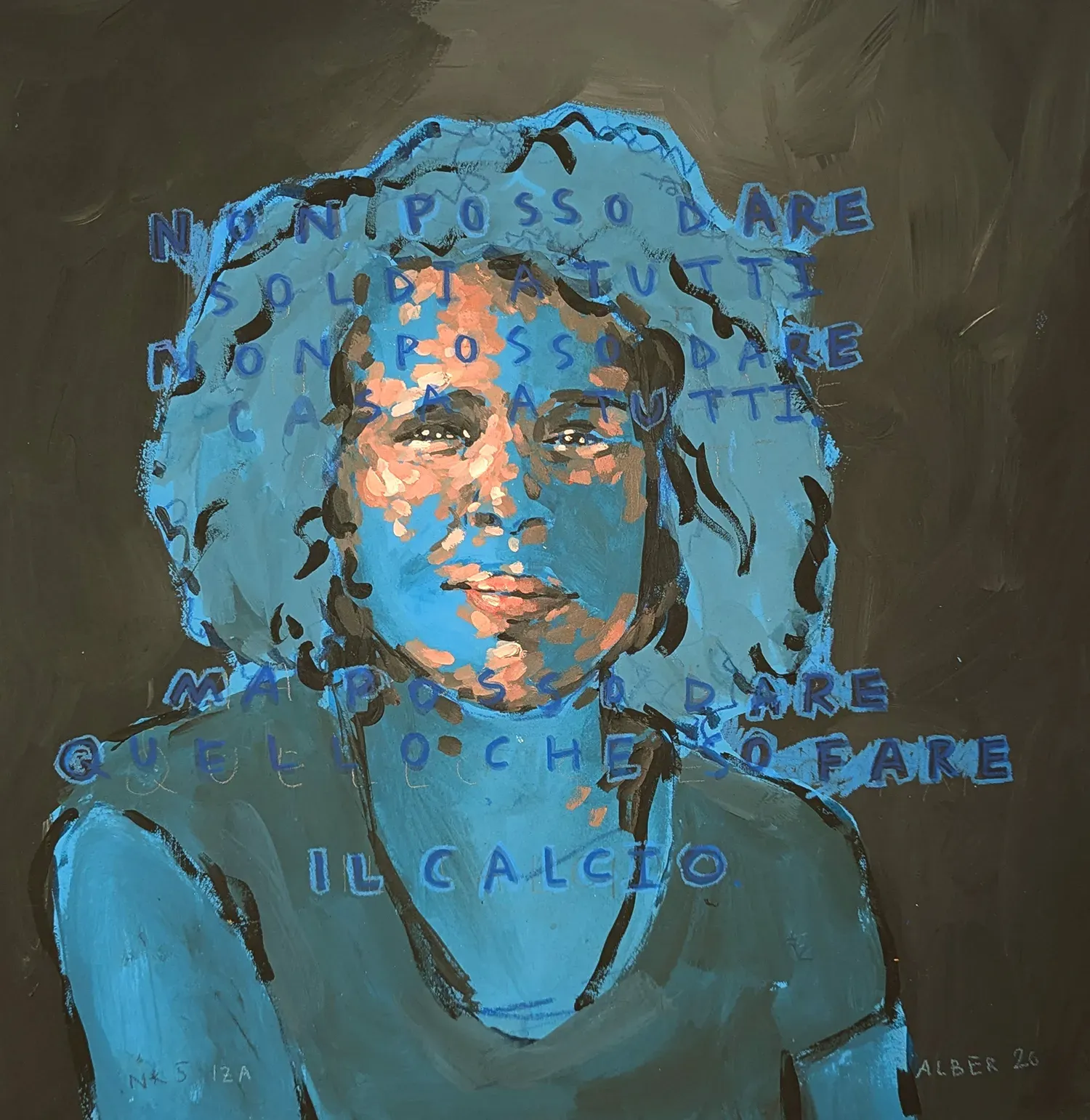
05 IZABELA
Non posso dare soldi a tutti. Non posso dare una casa a tutti. Ma posso dare quello che so fare: il calcio.
Ich kann nicht allen Geld geben. Ich kann nicht allen ein Zuhause geben. Aber ich kann das weitergeben, was ich kann: Fußball.
I can’t give everyone money. I can’t give everyone a home. But I can give what I know how to do: football.
Lies mehr darüber
Ich komme aus Rumänien. Ich bin halb Rumänin und halb Afrikanerin. In meiner Stadt war ich die einzige Person of Color. Und das war schmerzhaft, in dem Sinn, dass ich gemobbt wurde und beim Aufwachsen sehr gelitten habe.
Ich habe mit den Leuten Fußball gespielt. Das war der Moment, in dem mich niemand beleidigt hat. Ich war nicht anders, niemand hat mich anders angeschaut. Und von dort hat mich diese Sache bis heute begleitet.
Als ich nach Bozen gekommen bin, wollte ich zu den Jungs gehen, aber ich konnte nicht mit ihnen reden. Also habe ich angefangen, Fußball zu spielen. Und von da an konnte ich sagen: „Wie heißt du?“ Denn Fußball ist ein Sport, bei dem man, wenn man spielt, nicht darauf schaut, wer du bist. Wenn wir auf dem Platz sind, spielen wir zusammen.
Ich war selbst Migrantin, ich war allein, ich wusste nichts, niemand hat mit mir gesprochen. Ich habe angefangen, Leute kennenzulernen, und ich habe gesehen, dass mir der Fußball die Möglichkeit gibt, auf alle zuzugehen. Und ich möchte anderen diese Möglichkeit zeigen.
Ich versuche, die Menschen zusammenzubringen, diese Barrieren zu durchbrechen. Schau, wir sind in Bozen, und wenn wir auf dem Platz sind, gibt es das nicht: Du bist dort, du bist dort. Komm, versuchen wir zusammen zu sein.
Vor zwei Jahren haben wir gemeinsam mit einer anderen lieben Person dieses Turnierprojekt mit dreiundzwanzig Mannschaften und mehr als dreihundert Teilnehmenden gemacht. Männer, Frauen, Menschen jeden Alters und aus vielen Ländern.
Beim letzten Fußballturnier, dem Afrika-Cup, waren wir im Finale. Die Atmosphäre war ziemlich hart, es gab viel Spannung. Und sie hatten Angst davor, dass ich als Frau als Schiedsrichterin mitmache. Dann kamen die anderen Schiedsrichter und die Organisatoren: „Du machst nicht mit, lass es, er macht das.“
Ich wollte es aber trotzdem machen. Nicht nur, weil ich eine Frau bin und etwas beweisen muss, sondern weil ich den ganzen Tag dort gewesen war, von morgens bis abends, mit all dieser Spannung. Und jetzt, beim Finale, kommt jemand, der den ganzen Tag nicht dort war?
Ich hätte sagen können: „Ja, okay, ich überlasse es dir. Ich pfeife nicht.“ Stattdessen habe ich Nein gesagt: „Ich mache es trotzdem.“
Ich versuche, Menschen zu unterstützen, die mit dem Boot angekommen sind, die leiden, die niemanden haben. Ich kann nicht allen Geld geben, ich kann nicht allen ein Haus geben. Aber ich weiß, dass ich mich dem widmen kann, was ich kann: dem Fußball. Und danach werden wir Freunde.
Leggi di più
Io provengo dalla Romania. Sono metà rumena e metà africana. Nella mia città ero l’unica persona di colore. E questa è stata una sofferenza, nel senso che sono stata bullizzata e ho sofferto tanto crescendo.
Giocavo a calcio con le persone. Era il momento in cui nessuno mi offendeva. Non ero diversa, nessuno mi guardava in modo diverso. E da lì questa cosa mi ha accompagnata fino adesso.
Quando sono arrivata a Bolzano, volevo andare con i ragazzi, ma non riuscivo a parlare con loro. E quindi mi mettevo a giocare a calcio. E da lì mi permettevo di dire: «Come ti chiami?» Perché è uno sport in cui, quando giochi, non guardi chi sei. Quando siamo in campo, giochiamo insieme.
Sono stata un’immigrata, ero da sola, non sapevo niente, nessuno mi parlava. Ho iniziato a conoscere persone, ho visto che il calcio mi dà la possibilità di avvicinarmi a tutti. E io voglio presentare agli altri questa possibilità.
Cerco di mettere insieme le persone, di rompere queste barriere. Guarda, noi siamo a Bolzano e quando siamo in campo non esiste: tu sei lì, tu sei lì. Dai, cerchiamo di stare insieme.
Due anni fa, insieme a un’altra persona cara, abbiamo fatto questo progetto di torneo con ventitré squadre e più di trecento partecipanti. Maschi, femmine, persone di tutte le età e di tanti Paesi.
Nell’ultimo torneo di calcio, la Coppa d’Africa, eravamo alla finale. L’atmosfera era abbastanza dura, c’era tanta tensione. E avevano paura che io, come donna, partecipassi come arbitra. Sono arrivati gli altri arbitri e gli organizzatori: «Tu non partecipi, lascia stare, che fa lui».
E invece io l’ho voluto fare. Non soltanto perché sono una donna e devo dimostrare qualcosa, ma perché ero stata tutto il giorno presente lì, dalla mattina fino alla sera, con tutta quella tensione. E adesso, alla finale, arriva qualcuno che non è stato lì tutto il giorno?
Avrei potuto dire: «Sì, va bene, lascio a te. Io non arbitro». Invece ho detto di no: «Vado lo stesso».
Io cerco di essere un supporto per le persone immigrate che sono arrivate con la barca, che soffrono, che non hanno nessuno. Io non posso dare soldi a tutti, non posso dare una casa a tutti. Ma so che posso dedicarmi a quello che so: il calcio. E poi diventiamo amici.
Read about it
I come from Romania. I am half Romanian and half African. In my town, I was the only person of color. And that was painful, in the sense that I was bullied and suffered a lot growing up.
I played football with people. It was the moment when nobody insulted me. I wasn’t different, nobody looked at me differently. And from there, that has stayed with me until now.
When I arrived in Bolzano, I wanted to go up to the boys, but I couldn’t talk to them. So I started playing football. And from there I could say: “What’s your name?” Because it’s a sport where, when you play, you don’t look at who someone is. When we’re on the field, we play together.
I was an immigrant myself, I was alone, I didn’t know anything, nobody spoke to me. I started getting to know people and saw that football gives me the chance to get close to everyone. And I want to show other people that possibility.
I try to bring people together, to break down these barriers. Look, we are in Bolzano, and when we are on the field there is no: you are there, you are there. Come on, let’s try to be together.
Two years ago, together with another person close to me, we organized this tournament project with twenty-three teams and more than three hundred participants. Men, women, people of all ages and from many countries.
At the last football tournament, the Africa Cup, we were at the final. The atmosphere was pretty intense, there was a lot of tension. And they were afraid of me, as a woman, taking part as a referee. The other referees and the organizers came over: “You’re not taking part. Leave it, he’ll do it.”
But I wanted to do it. Not only because I’m a woman and have to prove something, but because I had been there all day, from morning until evening, with all that tension. And now, at the final, someone arrives who hasn’t been there all day?
I could have said: “Yes, okay, I’ll leave it to you. I won’t referee.” Instead I said no: “I’m doing it anyway.”
I try to support immigrants who arrived by boat, who are suffering, who have nobody. I can’t give money to everyone, I can’t give everyone a home. But I know I can give what I know: football. And afterwards we become friends.
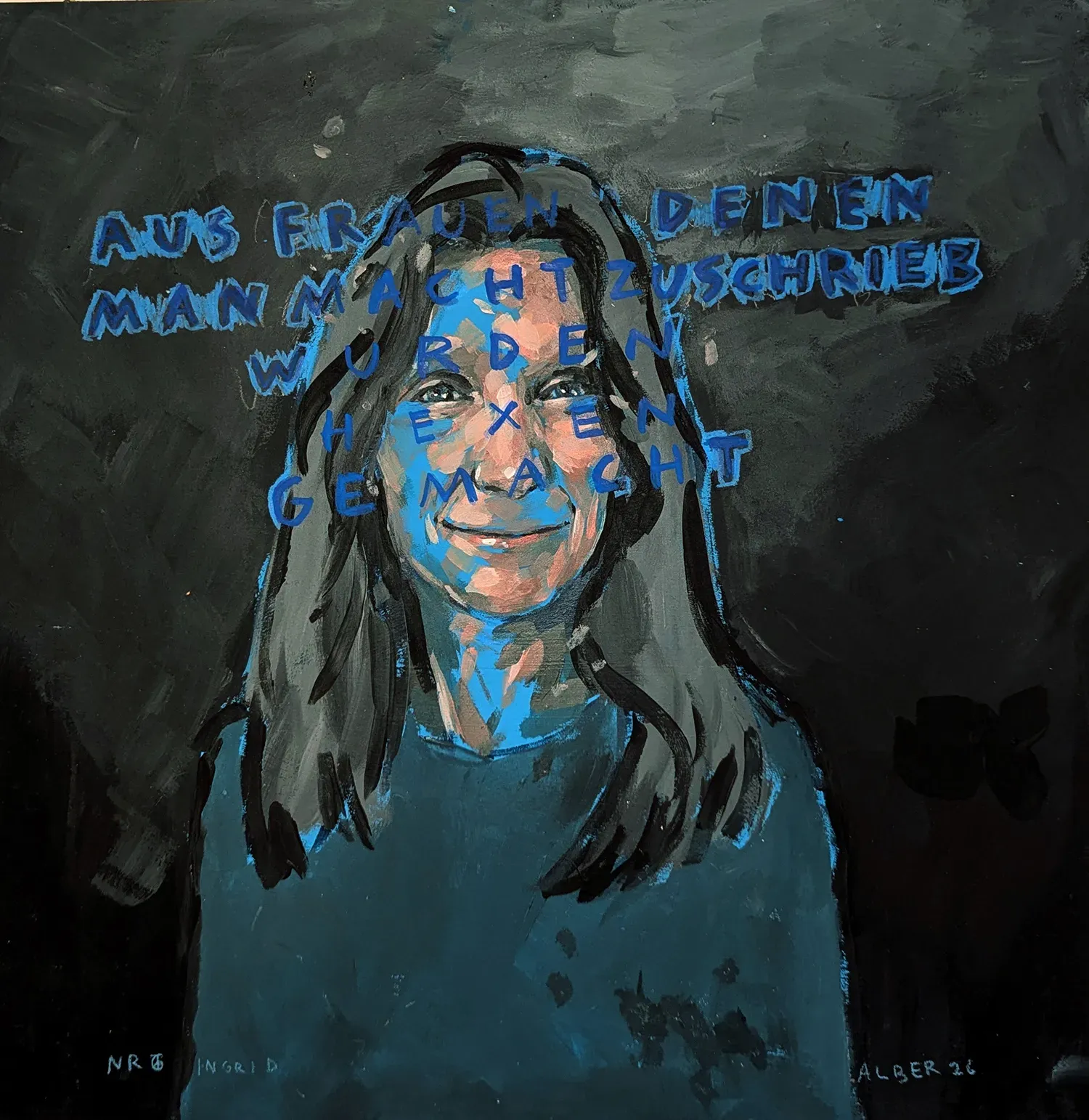
06 INGRID
Aus Frauen, denen man Macht zuschrieb, wurden Hexen gemacht.
Le donne a cui si attribuiva potere venivano dette streghe.
Women who were believed to have power were branded as witches.
Lies mehr darüber
Ich bin dann ins Archiv gegangen. Das war alles verstaubt, es war nicht aufgeräumt. Wie soll ich da irgendwas finden? Und mitten, wirklich mitten in dem ganzen grauen Chaos, liegt eine rosarote Leitzmappe, auf der ich schon ‚Hexenprozess‘ gesehen habe.
Es war der Prozess von der Anna Metzgerin, dem Immenstädter Weiberle. Sie ist von Immenstadt über die Alpen bis auf den Ritten gekommen. Dort ist sie aufgegriffen worden, weil sie von einer anderen Frau, die gefoltert worden ist, benannt worden war.
Man hat sie befragt. Und dann hat sie gesagt, was sie getan hat. Sie hat den Frauen Kräuter gegeben, um abzutreiben und oft dafür ein Stück Brot bekommen. Also nichts Schlimmes in dem Sinne. Dann hat man sie gefoltert. Dann hat sie praktisch die ganzen Sachen mit dem Teufel erzählt. Das, was sie hören wollten.
Also meiner Hexe haben sie die Daumenschrauben angelegt, bis es so wehgetan hat, dass du alles erzählst, was sie hören wollten. Und dann hat man ihr die Folter wieder weggenommen. Und dann hat sie alles wieder widerrufen. Das hat nicht gestimmt, das hat nicht gestimmt, das hat nicht gestimmt.
Als dann die Prozessakten fertig waren, war nicht klar: Was ist jetzt passiert mit der Frau? In den Regierungskopialbüchern, wo die Gemeinde nach Innsbruck geschrieben hat, stand: Was sollen wir mit der Frau? Und Innsbruck hat geantwortet: Mildernde Umstände. Sie wird geköpft und nicht verbrannt. Wahnsinn, oder?
Für mich sind Hexen die Frauen gewesen, die einfach Wissen um die Gesetzmäßigkeiten der Natur und Kräuterwissen gehabt haben. Es waren ja ganz oft Hebammen. Die Frauen haben einfach das Wissen um die Gesetzmäßigkeiten der Natur gehabt, um Kräuter.
Und irgendwann hat man das dann verknüpft mit: Die kann heilen, die hat überirdische Kräfte. Die ist wahrscheinlich schuld, dass das Wetter wieder die Ernte zerstört hat. Man hat ihnen dann unterstellt, sie können Gewitter machen, sie können Leute sterben lassen. Sie sind böse Frauen, gefährliche Frauen. Also die Angst vor starken Frauen.
Und ich glaube, dass wir Frauen uns oft nicht getrauen, mit dem, was wir können und was wir wissen, uns wirklich zu zeigen. Die Hexe ist für mich ein Sinnbild für die Frauen, die ihr Wissen und ihr Können nicht unter den Scheffel stellen, sondern sich trauen zu sagen: Ich kann das. Und das kann ich gut.
Leggi di più
Poi sono andata in archivio. Era tutto impolverato, non era in ordine. Come avrei dovuto trovare qualcosa lì dentro? E in mezzo, proprio in mezzo a tutto quel caos grigio, c’era un raccoglitore rosa su cui avevo già visto scritto «processo alle streghe».
Era il processo di Anna Metzgerin, la «donnina di Immenstadt». Era arrivata da Immenstadt, attraversando le Alpi, fino al Renon. Lì era stata fermata perché era stata nominata da un’altra donna che era stata torturata.
L’hanno interrogata. E poi ha detto quello che aveva fatto. Aveva dato alle donne delle erbe per abortire e spesso aveva ricevuto in cambio un pezzo di pane. Quindi niente di grave, in quel senso. Poi l’hanno torturata. E allora ha raccontato tutte quelle cose sul diavolo. Quello che volevano sentire.
Alla mia strega, per esempio, hanno messo le viti ai pollici finché il dolore era tale che raccontavi tutto quello che volevano sentirsi dire. Poi hanno smesso di torturarla. E allora lei ha ritrattato tutto. Non era vero, non era vero, non era vero.
Quando gli atti del processo erano conclusi, non era chiaro: che cosa era successo alla donna? Nei registri delle copie governative, in cui il comune aveva scritto a Innsbruck, c’era scritto: Che cosa dobbiamo fare con questa donna? E Innsbruck ha risposto: circostanze attenuanti. Verrà decapitata e non bruciata. Pazzesco, no?
Per me le streghe erano donne che semplicemente conoscevano le leggi della natura e le erbe. Molto spesso erano levatrici. Le donne avevano semplicemente conoscenze sulle leggi della natura, sulle erbe.
E a un certo punto si è collegato tutto questo all’idea: sa guarire, ha poteri soprannaturali. Probabilmente è colpa sua se il maltempo ha di nuovo distrutto il raccolto. Poi hanno cominciato ad accusarle di poter provocare temporali, di poter far morire le persone. Sono donne cattive, donne pericolose. Quindi la paura delle donne forti.
E credo che noi donne spesso non osiamo davvero mostrarci con quello che sappiamo fare e con quello che sappiamo. Per me la strega è un simbolo delle donne che non nascondono il proprio sapere e le proprie capacità, ma osano dire: Io so farlo. E lo so fare bene.
Read about it
Then I went into the archive. Everything was dusty, it wasn’t organized. How was I supposed to find anything there? And right in the middle, really in the middle of all that gray chaos, there was a pink ring binder on which I had already seen the words “witch trial.”
It was the trial of Anna Metzgerin, the “little woman from Immenstadt.” She had come from Immenstadt across the Alps to Renon. She was picked up there because another woman who had been tortured had named her.
They questioned her. And then she said what she had done. She had given women herbs to induce abortions and often received a piece of bread in return. So nothing terrible in that sense. Then they tortured her. Then she basically told all those stories about the devil. What they wanted to hear.
So in the case of my witch, they put thumbscrews on her until it hurt so much that you tell them everything they want to hear. And then they stopped the torture. And then she retracted everything. That wasn’t true, that wasn’t true, that wasn’t true.
When the trial records were finished, it wasn’t clear: what happened to the woman? In the government copy books, where the municipality had written to Innsbruck, it said: What should we do with the woman? And Innsbruck replied: mitigating circumstances. She will be beheaded and not burned. Insane, right?
For me, witches were women who simply had knowledge of the laws of nature and knowledge of herbs. Very often they were midwives. Women simply knew about the laws of nature, about herbs.
And at some point that was connected with: she can heal, she has supernatural powers. She is probably to blame for the weather destroying the harvest again. Then they were accused of being able to make storms, of being able to make people die. They are evil women, dangerous women. So, fear of strong women.
And I think that we women often don’t dare to really show ourselves with what we can do and what we know. For me, the witch is a symbol of women who do not hide their knowledge and abilities, but dare to say: I can do this. And I can do it well.
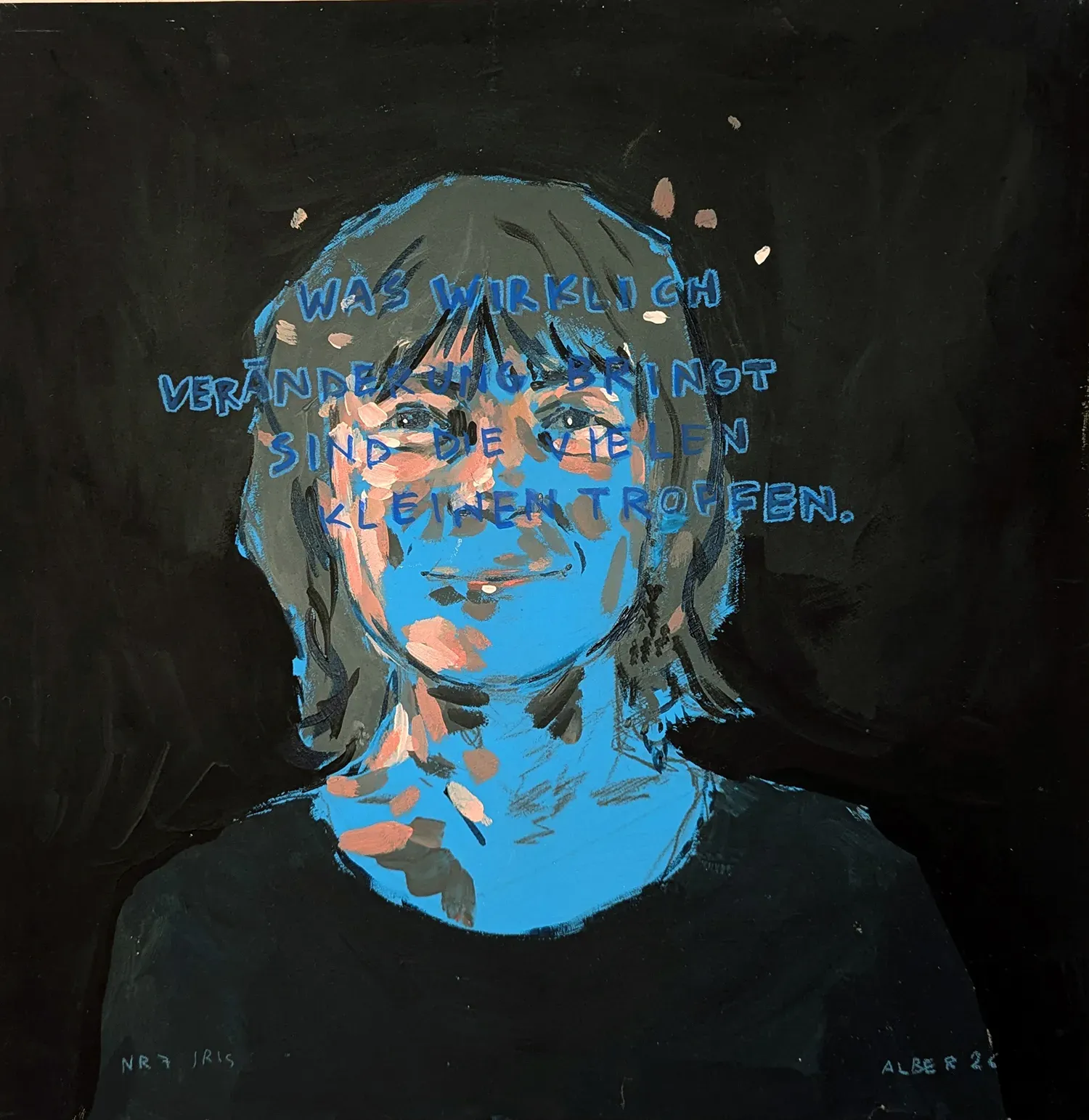
07 IRIS
Was wirklich Veränderung bringt, sind die vielen kleinen Tropfen.
Sono le tante piccole gocce a portare davvero il cambiamento.
It’s the many little drops that truly bring change.
Lies mehr darüber
Früher ist es noch so passiert, dass Kinder mit zweieinhalb Jahren von überall aus Südtirol nach Bozen gebracht worden sind. Weil es dort einen Gehörlosenkindergarten gegeben hat, wo es eine spezialisierte Kindergärtnerin gegeben hat. Aber das heißt, du kommst mit zweieinhalb Jahren meistens zu einer Pflegefamilie. Du kommst vom Gadertal daher oder vom Vinschgau.
Und ich war da einfach der Meinung: Das ist eigentlich eine Segregation und nicht eine Integration. Obwohl ich schon davon überzeugt gewesen bin, dass es ihnen in der Schule gut gegangen ist und sie vielleicht sprechen gelernt haben. Aber eine Schülerin aus dem Gadertal hat mir auch gesagt: ‚Ich verstehe zu Hause überhaupt nichts.‘ Das ist für mich einfach keine Integration gewesen.
Und da habe ich also jahrelang praktisch gekämpft. Die Kinder mit Beeinträchtigung sollen daheim bleiben, im Sinne von daheim. Nicht mehr Sonderklassen, sondern dass jedes Kind das Anrecht hat, im eigenen Dorf zu bleiben und möglichst gut gefördert zu werden.
Ich habe dann gehörlose Kinder unterrichtet. Das waren vielleicht die schönsten Jahre vom Unterricht her. Einfach weil das Kinder sind, die sehr intelligent sind, aber denen der akustische Kanal fehlt. Sie haben einen ganz starken visuellen Kanal. Sie sind sehr kreativ. Sie sehen, sie hören anders.
Und was ganz wichtig ist in der Integration: dass zum Beispiel die Schüler erklären, wie sie sind. Wir haben ja alle eigentlich Angst vor der Behinderung. Eigentlich kennst du die Person nicht und du weißt nicht Bescheid. Da war ein Junge, der gesagt hat: ‚Pass mal auf, ich habe ein Cochlea-Implantat.‘ Er dann erklären, was ein Cochlea-Implantat ist.
Und das Einzige, was dann funktioniert hat, waren immer wieder die Gespräche, das Kennenlernen, die Angst vor der Behinderung zu nehmen. Also die Aufklärung. Ja, das ist wichtig.
Leggi di più
Una volta succedeva ancora che i bambini di due anni e mezzo venissero portati a Bolzano da ogni parte dell’Alto Adige. Perché lì c’era un asilo per bambini sordi con una maestra specializzata. Ma questo significa che a due anni e mezzo finivi quasi sempre in una famiglia affidataria. Arrivavi dalla Val Badia o dalla Val Venosta.
E io ero semplicemente dell’opinione che quella fosse in realtà segregazione e non integrazione. Anche se ero convinta che a scuola stessero bene e forse avessero imparato a parlare. Ma un’alunna della Val Badia mi ha anche detto: «A casa non capisco assolutamente niente.» Per me quella non era integrazione.
E allora per anni ho praticamente combattuto. I bambini con disabilità devono poter restare a casa, nel senso di restare nel loro ambiente. Niente più classi speciali, ma ogni bambino deve avere il diritto di restare nel proprio paese ed essere sostenuto nel miglior modo possibile.
Poi ho insegnato a bambini sordi. Sono stati forse gli anni più belli dell’insegnamento. Semplicemente perché sono bambini molto intelligenti, ma a cui manca il canale uditivo. Hanno un canale visivo molto forte. Sono molto creativi. Vedono, sentono in modo diverso.
E una cosa molto importante nell’integrazione è che, per esempio, gli alunni spieghino come sono. In fondo abbiamo tutti paura della disabilità. Non conosci la persona e non sai nulla. C’era un ragazzo che ha detto: «Guarda, io ho un impianto cocleare.» Ha spiegato che cos’è un impianto cocleare.
E l’unica cosa che poi ha funzionato sono stati sempre i colloqui, il conoscersi, il togliere la paura della disabilità. Quindi l’informazione. Sì, quello é importante.
Read about it
In the past, children as young as two and a half were brought to Bolzano from all over South Tyrol. Because there was a kindergarten for deaf children there with a specialized kindergarten teacher. But that means that at two and a half, you usually ended up with a foster family. You came from Val Badia or Val Venosta.
And I simply thought: that is actually segregation, not integration. Even though I was convinced that they were doing well at school and perhaps had learned to speak. But one student from Val Badia also told me: “I don’t understand anything at home.” For me, that simply wasn’t integration.
And so I basically fought for years. Children with disabilities should be able to stay at home, in the sense of staying in their own community. No more special classes, but every child should have the right to stay in their own village and be supported as well as possible.
Then I taught deaf children. Those were perhaps the best years of teaching. Simply because they are children who are very intelligent, but whose auditory channel is missing. They have a very strong visual channel. They are very creative. They see, they hear differently.
And something that is very important in integration is that, for example, students explain what they are like. We are all actually afraid of disability. You don’t know the person and you don’t know anything about it. There was a boy who said: “Look, I have a cochlear implant.” He explained what a cochlear implant is.
And the only thing that worked again and again was talking, getting to know each other, taking away the fear of disability. Education, basically. Yes, that is important.
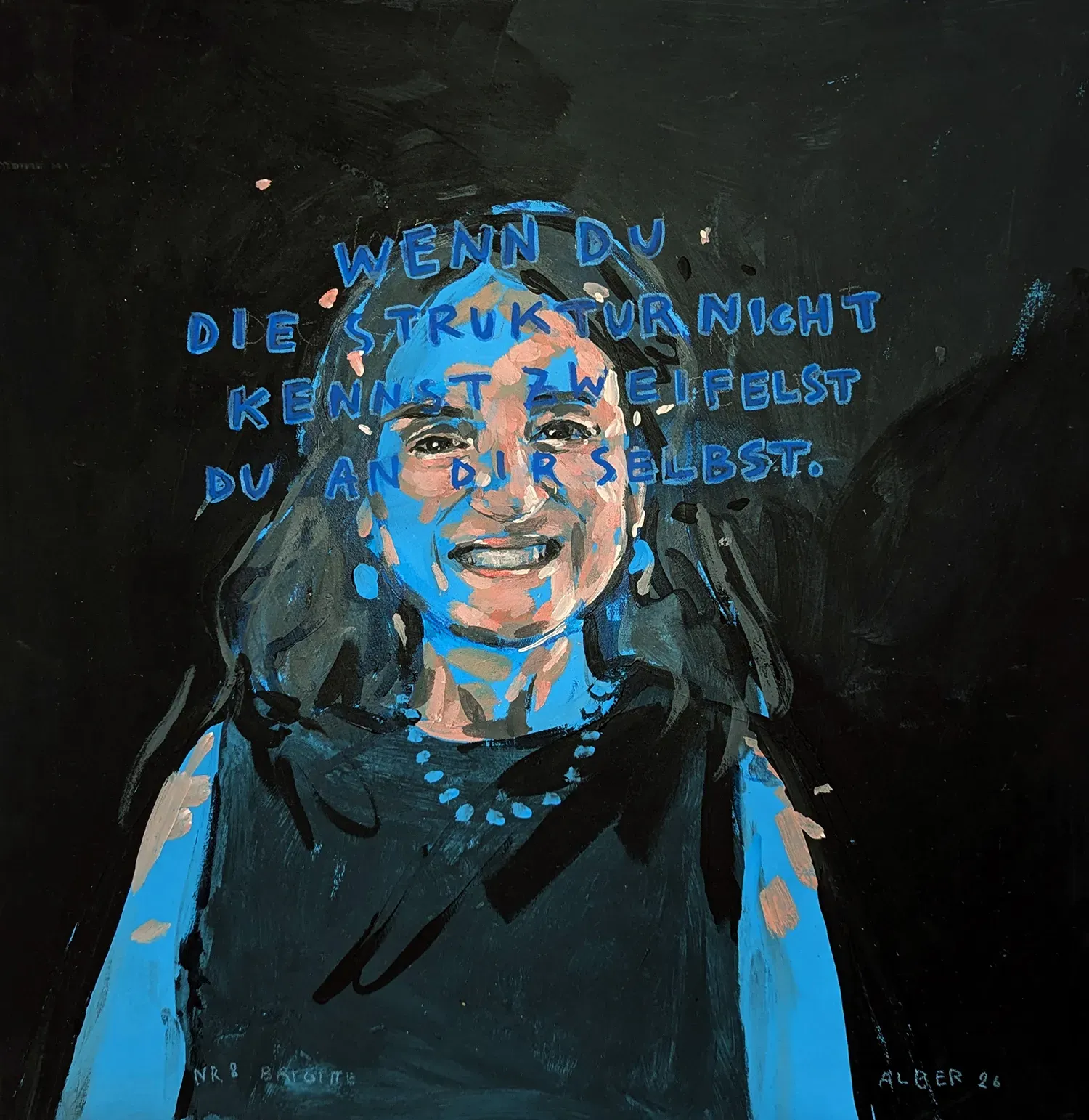
08 BRIGITTE
Wenn du die Struktur nicht erkennst, zweifelst du an dir selbst.
Se non riconosci la struttura, inizi a dubitare di te.
If you don’t recognize the structure, you start doubting yourself.
Lies mehr darüber
Ich habe Kollegen gehabt, die mit dem ganzen Thema Feminismus nichts anfangen konnten, bis sie jeden Tag neben mir gesessen sind und das erlebt haben. Erst dann haben sie gemerkt: Ich hatte das nie gesehen.
Meine allererste Erfahrung im Gemeinderat war, dass die anderen angefangen haben, laut zu reden, wenn ich meine Reden hielt. Bei meinen männlichen Kollegen haben sie zugehört.
Als ich in der Politik angefangen habe, war ich so Ende dreißig und hatte ziemlich graue, lockige Haare. Dann habe ich einen anonymen Brief gekriegt, wo stand, ich muss zum Friseur gehen. Die Tageszeitung hat über eine Pressekonferenz von mir berichtet, und darunter standen Kommentare, ich solle mal zum Friseur gehen.
Mein Mann und ich haben beide fünfundsiebzig Prozent Teilzeit gearbeitet. Und er ist berühmt gewesen in der ganzen Umgebung als der sehr nette Papi, der so viel mit den Kindern unterwegs gewesen ist. Und ich war halt ein bisschen die Rabenmutter. Wieso?
Politikerinnen werden auch heute noch gefragt: ‚Wie schaffen Sie das eigentlich mit Ihrer Familie?‘ Ich bin auch gefragt worden: ‚Sind die Kinder eigentlich einverstanden gewesen, dass Sie in die Politik gehen?‘ Das ist eine Frage, die meinen männlichen Kollegen sehr selten gestellt wird.
Was uns oft aufgefallen ist: Wenn ich eine Aussage getroffen habe und die in irgendeiner Zeitung meinem männlichen Kollegen in den Mund gelegt worden ist, waren die Kommentare viel positiver. Dann haben wir einen Versuch gemacht: Ich sage etwas und mein männlicher Kollege verbreitet es. Und wir haben festgestellt: Eine weibliche Aussage schafft mehr Kritik.
Und der Knackpunkt ist: Wenn man sich das als Frau nicht bewusst ist, führt es einfach dazu, dass man meint: Okay, ich traue mir einfach weniger zu.
Deswegen ist das Benennen voll wichtig. Es ist schon revolutionär, zu sagen, was ist. Etwas benennen kann jemand anders bemerken. Wenn jemand etwas bemerkt, kann man es benennen. So wird es Wahrheit.
Leggi di più
Ho avuto colleghi che non sapevano che farsene di tutto il tema del femminismo, finché non si sono seduti ogni giorno accanto a me e l’hanno vissuto. Solo allora si sono resi conto: non l’avevo mai visto.
La mia primissima esperienza in consiglio comunale è stata che gli altri cominciavano a parlare ad alta voce quando facevo i miei interventi. Quando parlavano i miei colleghi uomini, invece, ascoltavano.
Quando ho iniziato in politica avevo circa trentotto, trentanove anni e capelli piuttosto grigi e ricci. Poi ho ricevuto una lettera anonima in cui c’era scritto che dovevo andare dal parrucchiere. Il quotidiano ha scritto di una mia conferenza stampa e sotto c’erano commenti che dicevano che avrei dovuto andare dal parrucchiere.
Mio marito e io lavoravamo entrambi al settantacinque per cento. E lui era famoso in tutta la zona come il papà molto bravo che passava così tanto tempo con i bambini. E io ero un po’ la madre degenere. Perché?
Ancora oggi alle politiche viene chiesto: «Come fa con la sua famiglia?» A me è stato chiesto anche: «I bambini erano d’accordo che lei entrasse in politica?» È una domanda che ai miei colleghi uomini viene posta molto raramente.
Una cosa che abbiamo notato spesso: se facevo una dichiarazione e su qualche giornale veniva attribuita a un mio collega uomo, i commenti erano molto più positivi. Allora abbiamo fatto un esperimento: io dico qualcosa e il mio collega uomo la diffonde. E abbiamo constatato che una dichiarazione femminile genera più critiche.
E il punto è questo: se come donna non ne sei consapevole, finisci semplicemente per pensare: Okay, evidentemente ho meno fiducia in me stessa.
Per questo dare un nome alle cose è davvero importante. È già rivoluzionario dire ciò che è. Se si dà un nome a qualcosa, qualcun altro può accorgersene. Se qualcuno si accorge di qualcosa, può darle un nome. Così diventa verità.
Read about it
I had colleagues who couldn’t relate to feminism at all until they sat next to me every day and experienced it. Only then did they realize: I had never seen that before.
My very first experience on the municipal council was that the others started talking loudly whenever I gave my speeches. When my male colleagues spoke, they listened.
When I started in politics, I was in my late thirties and had fairly gray, curly hair. Then I received an anonymous letter saying that I needed to go to the hairdresser. The daily newspaper reported on a press conference of mine, and underneath there were comments saying I should go to the hairdresser.
My husband and I both worked seventy-five percent part-time. And he was famous throughout the area as the really nice dad who spent so much time with the children. And I was a bit of the bad mother. Why?
Female politicians are still asked today: “How do you actually manage it with your family?” I was also asked: “Were the children actually okay with you going into politics?” That is a question my male colleagues are asked very rarely.
Something we noticed often was this: when I made a statement and some newspaper attributed it to my male colleague, the comments were much more positive. Then we tried an experiment: I say something and my male colleague spreads it. And we found that a statement from a woman attracts more criticism.
And the key point is: if you are not aware of that as a woman, it simply leads you to think: Okay, I just have less confidence in myself.
That is why naming things is so important. It is already revolutionary to say what is. Naming something can help someone else notice it. If someone notices something, they can name it. That is how it becomes truth.
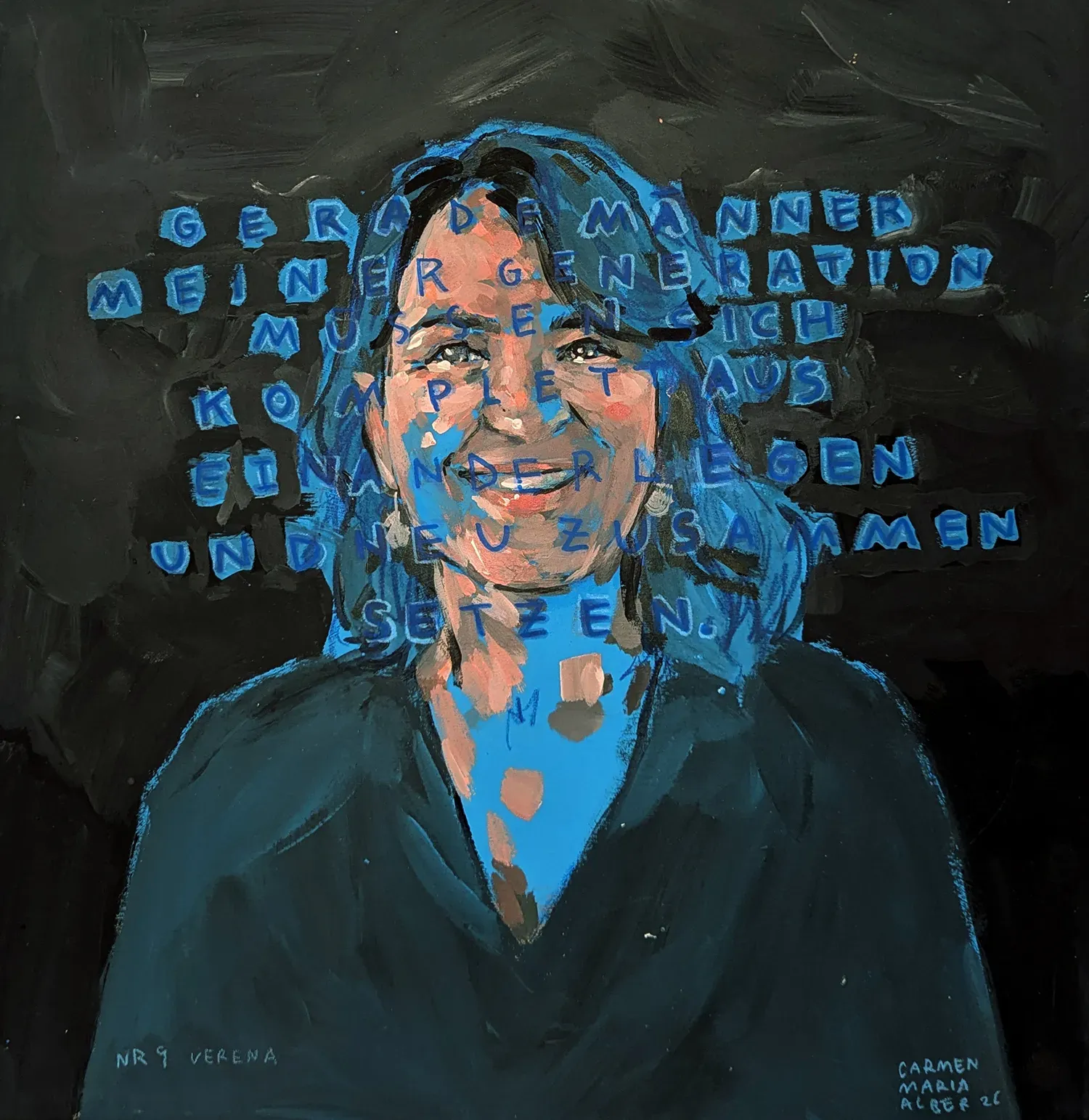
09 VERENA
Gerade Männer meiner Generation müssen sich komplett auseinanderlegen und neu zusammensetzen.
Soprattutto gli uomini della mia generazione devono smontarsi completamente e ricomporsi da capo.
Men of my generation, especially, need to completely take themselves apart and put themselves back together.
Lies mehr darüber
Meine Kinder sind 2000 und 2002 geboren. Da sind nicht viele Väter zu Hause geblieben und haben auf die Kinder geschaut. Für viele Frauen ist das ein großes Opfer: Entweder sie bleiben daheim und haben dann keine Pensionsvorsorge, dann fehlen die Jahre, das Geld. Ich finde dieses Gemischte viel besser: beide stecken ein bisschen zurück, und nachher kommt man vielleicht auf einen gemeinsamen Nenner. Und ich glaube, dann ist auch bei einem Mann viel mehr Verständnis dafür da, was daheim alles abgeht. Bei meinem Mann war, dass er weniger arbeitet und mehr übernimmt, eigentlich nicht zur Diskussion. Wenn darüber geredet worden ist, hat sich das so verflogen. Das war schon ein Knackpunkt. Es war halt so diese alteingesessene Lebensweise: So ist es. Da ist nichts gegangen, dass man in der Familienkonstellation ein bisschen flexibler wäre. Nein, so ist es. Und das ist schon blöd.
Mir ist ja auch vorgehalten worden: Er muss auf die Kinder schauen, sie geht arbeiten. Also wirklich klipp und klar. Dabei habe ich mir meine Zeit geholt, wo ich gearbeitet habe, und meine Hauptarbeit war nachmittags und abends. Ohne Betreuung kann ich die Arbeit nicht machen. Und nach der Trennung hat er die Zeit für seine Kinder gefunden. Er hat sie sich nehmen müssen. Du hast deine Besuchszeiten, du hast deine Wochenenden, du musst dir Zeit für deine Kinder freischaufeln. Wenn ich heute zurückdenke: Ganz sicher hätte ich es gleich wieder getan. Ich hätte mir nur einen Haufen Chaos weniger in unserem Leben geholt.
Mein Sohn ist nicht mit solchen Sachen gefüttert worden. Du hast zu kochen, du hast aufzuräumen, du hast zu putzen, du hast zu saugen – du hast alles zu können, gleich wie alle anderen. Und bei meiner Tochter genauso. Es ist komplett egal: Wir machen Kekse, wir fahren Motorrad – jeder kann alles machen. Meine Mama war schon berufstätig, und von meiner Oma mütterlicherseits habe ich dieses: Arbeiten, dein eigenes Geld haben, auf eigenen Füßen stehen. Das habe ich schon früh mitgekriegt. Denn wenn die Frau daheim ist und alles gut geht, dann geht es ihr gut. Es ist nur saudumm für die Frau, wenn es nicht aufgeht. Was, wenn eine Trennung ist? In welcher Situation befindet sich die Frau dann? Da fehlen Jahre, da fehlt Pension. Das, was du für die Kinder getan hast, wird nicht gezählt, obwohl es eigentlich die wichtigste Arbeit ist.
Ich denke viel über Partnerschaften und über gleichberechtigte Partnerschaften. Und ich glaube, gerade Männer meiner Generation müssen sich komplett auseinanderlegen und neu zusammensetzen. Weil das, was sie mitgekriegt haben, so strukturiert ist. Sie müssen sich hinsetzen und daran zweifeln, dass das das Richtige ist. Du musst Selbstkritik ausüben. Sie haben es so vorgelebt gekriegt – warum soll das jetzt nicht mehr weitergehen? Aber genau das ist die Arbeit, die man mit sich selber machen muss. Und man muss sie machen wollen. Ich glaube, in der heutigen Zeit überleben die Beziehungen, wo ein bisschen Balance entsteht. Man ist nicht einfach Teil vom Leben des Partners. Du, als Frau, bist eine eigene Person. Mach deine Sachen weiter und mach Sachen mit dem Partner. Aber schalte dich als Person nicht komplett aus und funktioniere nur mehr für andere.
Leggi di più
I miei figli sono nati nel 2000 e nel 2002. Allora non c’erano molti padri che restavano a casa a badare ai bambini. Per molte donne è un grande sacrificio: o restano a casa e poi non hanno una previdenza pensionistica, mancano gli anni, manca il denaro. Io trovo molto meglio una soluzione mista: tutte due cede un po’ uno , e poi forse si trova un punto d’incontro. E credo che così anche un uomo capisca molto meglio tutto quello che succede a casa. Con mio marito, l’idea che lui lavorasse meno e si occupasse di più delle cose non era davvero in discussione. Quando se ne parlava, la cosa finiva un po’ nel nulla. Quello è stato un punto critico. Era proprio questo modo di vivere tradizionale e radicato: è così. Non c’era verso di essere un po’ più flessibili nella struttura familiare. No, è così. Ed è proprio una cosa stupida.
A me è stato anche rinfacciato: lui deve badare ai bambini, lei va a lavorare. Proprio detto chiaramente. Io però mi ero ricavata il mio tempo per lavorare e il mio lavoro principale era il pomeriggio e la sera. Senza qualcuno che si occupi dei bambini non posso fare il mio lavoro. E dopo la separazione lui il tempo per i suoi figli l’ha trovato. Ha dovuto trovarlo. Hai i tuoi orari di visita, hai i tuoi fine settimana, devi liberare del tempo dal lavoro per i tuoi figli. Se ci ripenso oggi: lo rifarei sicuramente allo stesso modo. Mi sarei soltanto risparmiata un mucchio di caos nella nostra vita.
Mio figlio non è stato cresciuto con queste cose. Devi saper cucinare, devi mettere in ordine, devi pulire, devi passare l’aspirapolvere: devi saper fare tutto, come tutti gli altri. E con mia figlia è stato lo stesso. È completamente indifferente: facciamo biscotti, andiamo in moto, tutti possono fare tutto. Mia mamma lavorava già, e da mia nonna materna ho ricevuto questo: lavorare, avere i propri soldi, stare sulle proprie gambe. L’ho capito molto presto. Perché se la donna resta a casa e tutto va bene, allora sta bene. È solo davvero stupido per la donna se le cose non funzionano. Che cosa succede se c’è una separazione? In che situazione si trova allora? Mancano anni, manca pensione. Quello che hai fatto per i figli non viene conteggiato, anche se in realtà è il lavoro più importante.
Penso molto alle relazioni e alle relazioni paritarie. E credo che soprattutto gli uomini della mia generazione debbano smontarsi completamente e ricomporsi. Perché quello che hanno imparato è strutturato in quel modo. Devono sedersi e mettere in dubbio che quella sia la cosa giusta. Devi fare autocritica. È stato vissuto così davanti ai loro occhi: perché ora non dovrebbe più continuare così? Ma è proprio questo il lavoro che bisogna fare su se stessi. E bisogna volerlo fare. Credo che oggi sopravvivano le relazioni in cui nasce un po’ di equilibrio. Non sei semplicemente una parte della vita del partner. Tu, come donna, sei una persona a sé. Continua a fare le tue cose e fai delle cose con il partner. Ma non spegnerti completamente come persona e non funzionare soltanto per gli altri.
Read about it
My children were born in 2000 and 2002. Back then, not many fathers stayed home and looked after the children. For many women, that is a huge sacrifice: either they stay home and then have no pension provision, and the years and the money are missing. I think a mixed arrangement is much better: each person steps back a little and then maybe you find common ground. And I think then a man also has much more understanding of everything that goes on at home. With my husband, the idea that he would work less and take on more was basically not up for discussion. When it was talked about, it just sort of drifted away. That was definitely a breaking point. It was this deeply rooted traditional way of life: this is how it is. There was no room to be a little more flexible in the family arrangement. No, this is how it is. And that is just stupid.
I was also told: he has to look after the children, she goes to work. Really, very clearly. But I had carved out my time to work, and my main work was in the afternoons and evenings. Without childcare I can’t do my job. And after the separation, he found the time for his children. He had to make the time. You have your visiting times, you have your weekends, you have to clear time in your work for your children. Looking back today, I would definitely do it the same way again. I would just have saved us a whole lot of chaos in our lives.
My son was not raised with those kinds of ideas. You have to know how to cook, you have to tidy up, you have to clean, you have to vacuum—you have to be able to do everything, just like everyone else. And the same with my daughter. It doesn’t matter at all: we bake cookies, we ride motorcycles—everyone can do everything. My mum already worked, and from my maternal grandmother I got this idea: work, have your own money, stand on your own two feet. I understood that very early. Because if the woman stays at home and everything goes well, then she is fine. It is just really bad for the woman if it doesn’t work out. What if there is a separation? What situation is the woman in then? Years are missing, pension is missing. What you did for the children is not counted, even though it is actually the most important work.
I think a lot about relationships and equal partnerships. And I think men of my generation in particular have to completely take themselves apart and put themselves back together. Because what they learned is structured that way. They have to sit down and question whether that is actually right. You have to practice self-criticism. They saw it modeled that way—why shouldn’t it continue that way now? But that is exactly the work you have to do on yourself. And you have to want to do it. I think that today, relationships survive where some balance develops. You are not simply part of your partner’s life. You, as a woman, are your own person. Keep doing your own things and do things with your partner. But don’t switch yourself off completely as a person and function only for others.
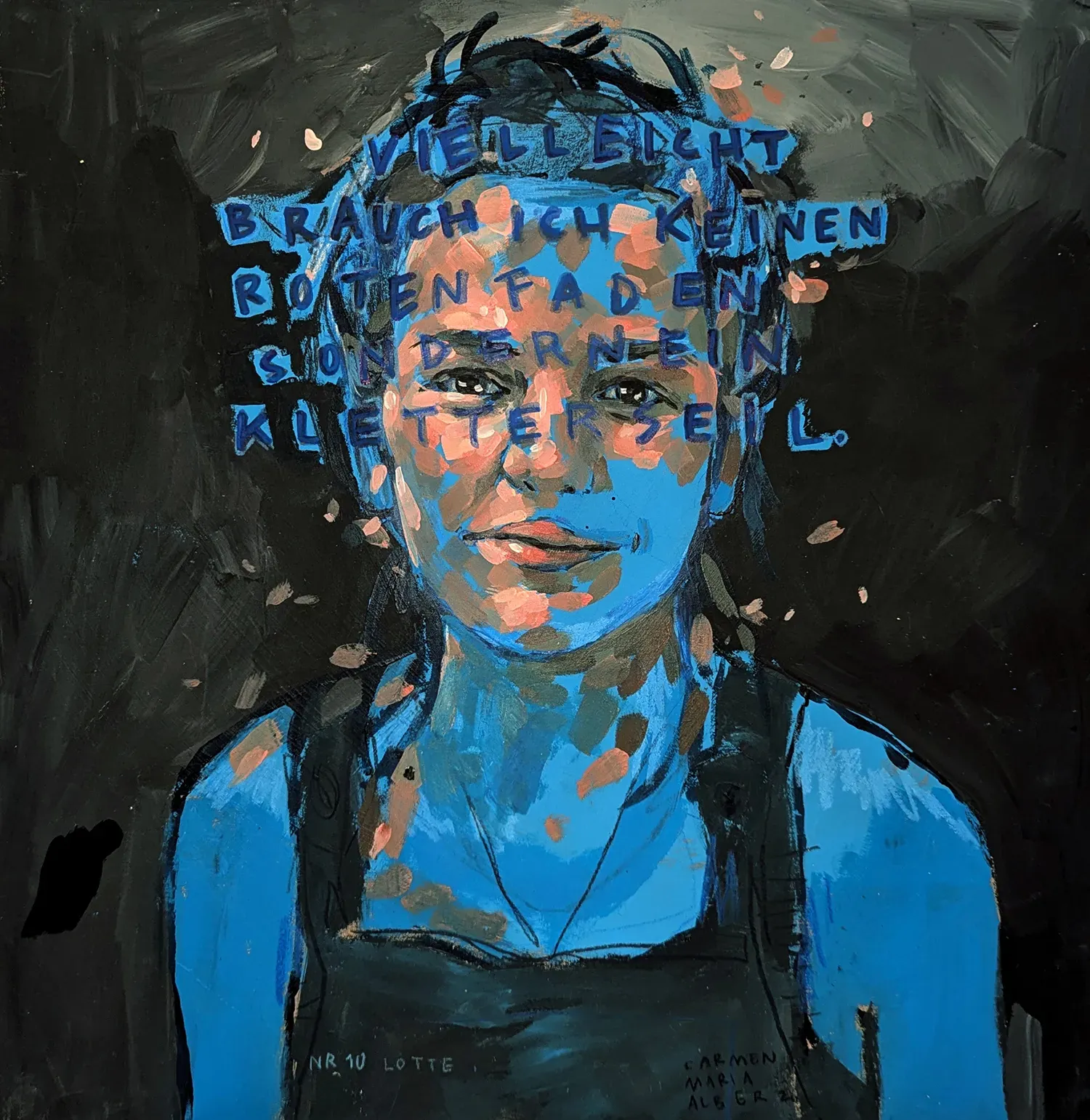
10 LOTTE
Vielleicht brauche ich gar keinen roten Faden, sondern ein Kletterseil.
Forse non mi serve affatto un filo conduttore, ma una corda da arrampicata.
Maybe I don’t need a guiding thread at all, but a climbing rope.
Lies mehr darüber
Vielleicht brauche ich gar keinen roten Faden. Mein Deutschlehrer hat schon immer gesagt, ich habe keinen roten Faden in meinen Geschichten. Ich gehe von einem Thema zum anderen. Vielleicht ist ein roter Faden manchmal gut. Aber vielleicht bin ich einfach nicht der Mensch dazu. Vielleicht brauche ich ein Kletterseil, das irgendwo hinfliegt. Und genau das ist für mich eigentlich eine Stärke: flexibel sein, spontan sein, nicht alles schon vorher wissen müssen. Ich stürze mich gern ins kalte Wasser und schaue, was passiert. Und dann lerne ich halt unterwegs.
Für mich war Mut eigentlich der ausschlaggebende Punkt. Wenn ich gesagt hätte, ich bin nicht mutig genug, dann hätte ich genug andere Gründe gefunden, es nicht zu machen. Ich habe mit dreiundzwanzig gesagt: Ja, ich will das machen. Ich will etwas machen, wo ich extrem viel lerne, wo ich über ganz viele Schatten springe, wo ein junges Team entsteht, wo man Leute zusammenbringt. Ich glaube, es hat einfach Mut gebraucht, das Ganze am Rollen zu halten und dann weiterzumachen. Wenn du auf dem Zehn-Meter-Brett oben stehst, dann ist es eigentlich allein der Mut, wo du sagst: Okay, jetzt hüpfen. Und dann hüpft man halt wieder über die nächste Hürde. Und bis zum Schluss lerne ich so viel daraus, wobei ich vorher nicht einmal weiß, was ich lernen werde.
Ganz spannend war dann, mit Angestellten das erste Mal Chefin zu sein. Ich war eine recht junge, zwanzigjährige Wirtin, und da waren Leute, die viel älter waren als ich und ganz andere Philosophien vom Gastgewerbe gehabt haben. Am Anfang war bei mir sowieso noch alles wackelig. Ich war mir nicht sicher: Darf ich da so viel entscheiden? Bin ich die Chefin? Ich wollte teilweise nicht einmal zugeben, dass ich es bin.
Eine Situation hat das für mich dann richtig verändert. Mein Pizzaiolo war ein sechzigjähriger Mann aus Marokko. Wir haben lange super zusammengearbeitet. Ich war selber vier Monate in Marokko, habe ein bisschen seine Sprache gelernt, war bei ihm zu Hause eingeladen. Und irgendwann ist die Pizza nicht mehr so gut gewesen. Die Gäste haben es gesagt, ich habe es selber gemerkt, und ich wollte einfach mit ihm darüber reden und schauen: Was können wir verändern? Vielleicht liegt es am Mehl, vielleicht am Wasser, was weiß ich. Ich wollte eine Lösung finden. Aber er hat irgendwann gar nicht mehr über die Pizza geredet, sondern darüber, dass ich immer etwas zu sagen habe. Dass ich kommandiere. Dass ich eigentlich nur alles machen darf, weil mein Vater mir das gegeben hat. Und irgendwann hat er mich sogar mit Mussolini verglichen, weil ich so viel zu sagen hätte. Da hat es mir einfach gereicht. Weil ich jeden Tag dort war, von früh bis spät gearbeitet habe, und er das auch gesehen hat. Und da habe ich gemerkt: Es geht gar nicht mehr um die Pizza. Es geht darum, dass ich eine junge Frau bin und die Chefin.
Am Anfang war bei mir selber noch alles wackelig. Ich war mir nicht sicher: Darf ich da so viel entscheiden? Ist das wirklich meines? Bin ich wirklich die Chefin? Und durch diese Situation bin ich eigentlich sicherer geworden. Da habe ich gesagt: Halt mal. Ich bin die Chefin. Wenn jemand mit mir über etwas reden will, dann reden wir. Aber ich lasse mich nicht kleinmachen. Ich habe versucht, ihn zu verstehen, seine Sicht, seine Glaubenssätze, seine Lebensphilosophie. Aber irgendwann habe ich gemerkt: Wenn ich mich selber zerreiße, damit jemand anderes mich versteht, und dabei über meine Grenzen geht, dann muss ich eine Grenze ziehen.
Leggi di più
Forse non ho affatto bisogno di un filo rosso. Il mio insegnante di tedesco diceva sempre che nelle mie storie non c’era un filo rosso. Passo da un tema all’altro. Forse a volte un filo rosso va bene. Ma forse io semplicemente non sono la persona adatta. Forse ho bisogno di una corda da arrampicata che vola da qualche parte. Ed è proprio questo, in realtà, uno dei miei punti di forza: essere flessibile, essere spontanea, non dover sapere già tutto prima. Mi piace buttarmi nell’acqua fredda e vedere che cosa succede. E poi imparo strada facendo.
Per me il coraggio è stato il punto decisivo. Se avessi detto che non ero abbastanza coraggiosa, avrei trovato abbastanza altri motivi per non farlo. A ventitré anni ho detto: Sì, voglio farlo. Voglio fare qualcosa in cui imparo tantissimo, in cui supero tantissimi ostacoli, in cui nasce un team giovane, in cui si mettono insieme le persone. Credo che ci sia voluto semplicemente coraggio per tenere tutto in movimento e poi continuare. Quando sei sul trampolino da dieci metri, alla fine è soltanto il coraggio che ti fa dire: Okay, adesso salto. E poi superi di nuovo l’ostacolo successivo. E alla fine imparo così tanto, senza sapere prima nemmeno che cosa imparerò.
È stato molto interessante essere per la prima volta la capa con dei dipendenti. Ero un’ostessa molto giovane, avevo vent’anni, e c’erano persone molto più grandi di me che avevano filosofie completamente diverse sull’ospitalità. All’inizio per me era tutto ancora molto instabile. Non ero sicura: Posso davvero decidere così tanto? Sono io la capa? A volte non volevo nemmeno ammettere di esserlo.
Una situazione per me ha cambiato davvero le cose. Il mio pizzaiolo era un uomo marocchino di sessant’anni. Abbiamo lavorato benissimo insieme per molto tempo. Io stessa sono stata quattro mesi in Marocco, ho imparato un po’ la sua lingua, sono stata invitata a casa sua. E a un certo punto la pizza non era più così buona. Lo dicevano gli ospiti, me ne accorgevo anch’io, e volevo semplicemente parlarne con lui e vedere: Che cosa possiamo cambiare? Forse è la farina, forse l’acqua, che ne so. Volevo trovare una soluzione. Ma a un certo punto lui non parlava più della pizza, parlava del fatto che io avessi sempre qualcosa da dire. Che comandavo. Che in realtà potevo fare tutto solo perché mio padre mi aveva dato tutto questo. E a un certo punto mi ha perfino paragonata a Mussolini, perché avevo così tanto da dire. A quel punto ne ho avuto abbastanza. Perché ero lì ogni giorno, lavoravo dalla mattina alla sera, e lui lo vedeva. E lì ho capito: non si tratta più della pizza. Si tratta del fatto che sono una giovane donna e sono la capa.
All’inizio per me era ancora tutto molto instabile. Non ero sicura: Posso davvero decidere così tanto? È davvero mio? Sono davvero io la capa? E attraverso quella situazione sono diventata in realtà più sicura. Lì ho detto: Un momento. Sono io la capa. Se qualcuno vuole parlare con me di qualcosa, ne parliamo. Ma non mi lascio sminuire. Ho cercato di capirlo, di capire il suo punto di vista, le sue convinzioni, la sua filosofia di vita. Ma a un certo punto ho capito: Se mi faccio a pezzi perché qualcun altro mi capisca e intanto supera i miei limiti, allora devo porre un limite.
Read about it
Maybe I don’t need a red thread at all. My German teacher always said there was no red thread in my stories. I jump from one topic to another. Maybe a red thread is good sometimes. But maybe I’m simply not that kind of person. Maybe I need a climbing rope that flies somewhere. And that is actually a strength for me: being flexible, being spontaneous, not having to know everything in advance. I like throwing myself in at the deep end and seeing what happens. And then I learn along the way.
For me, courage was really the decisive point. If I had said I wasn’t brave enough, I would have found enough other reasons not to do it. At twenty-three I said: Yes, I want to do this. I want to do something where I learn an incredible amount, where I get over a lot of hurdles, where a young team develops, where people are brought together. I think it simply took courage to keep the whole thing moving and then keep going. When you are standing on the ten-meter diving board, in the end it is really just courage that makes you say: Okay, now I jump. And then you get over the next hurdle again. And in the end I learn so much from it without even knowing beforehand what I am going to learn.
It was really interesting to be the boss of employees for the first time. I was a very young innkeeper, twenty years old, and there were people who were much older than me and had very different philosophies about hospitality. At the beginning, everything was still shaky for me anyway. I wasn’t sure: Am I allowed to decide this much? Am I the boss? Sometimes I didn’t even want to admit that I was.
One situation really changed that for me. My pizzaiolo was a sixty-year-old man from Morocco. We worked really well together for a long time. I had spent four months in Morocco myself, learned a little of his language, and had been invited to his home. And at some point the pizza stopped being as good. The guests said it, I noticed it myself, and I simply wanted to talk to him and see: What can we change? Maybe it is the flour, maybe the water, I don’t know. I wanted to find a solution. But at some point he stopped talking about the pizza and started talking about the fact that I always had something to say. That I bossed people around. That I was only allowed to do everything because my father had given it to me. And at some point he even compared me to Mussolini because I had so much to say. That was enough for me. Because I was there every day, working from early until late, and he had seen that too. And that is when I realized: this isn’t about the pizza anymore. It is about the fact that I am a young woman and the boss.
At the beginning, everything was still shaky for me. I wasn’t sure: Am I allowed to decide this much? Is this really mine? Am I really the boss? And through that situation I actually became more confident. That was when I said: Hold on. I am the boss. If someone wants to talk to me about something, then we talk. But I am not going to let myself be made small. I tried to understand him, his point of view, his beliefs, his philosophy of life. But at some point I realized: if I tear myself apart so that someone else understands me, while they are crossing my boundaries, then I have to draw a boundary.
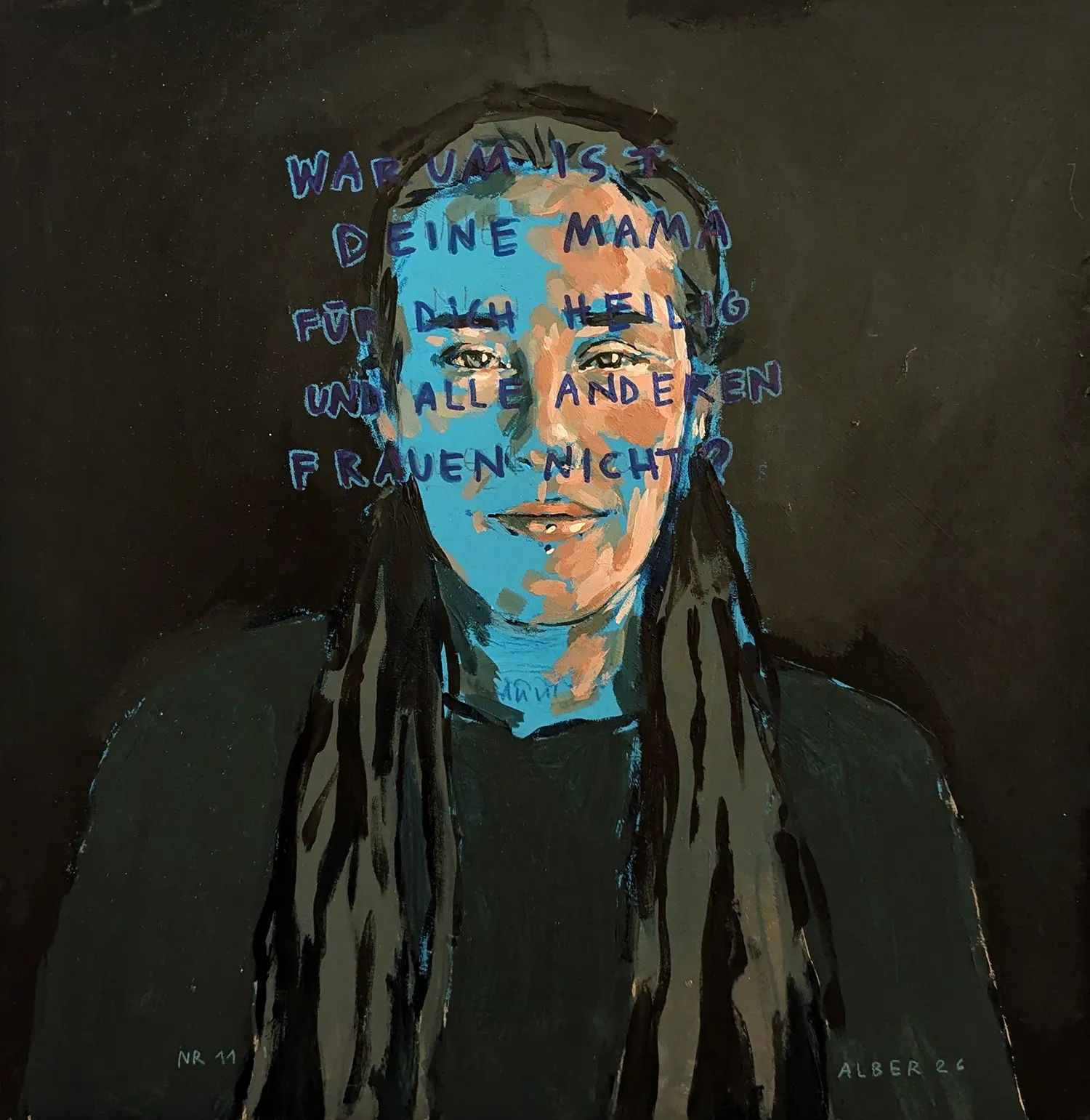
11 ISA
Warum ist deine Mama für dich heilig und alle anderen Frauen nicht?
Perché tua mamma per te è sacra e tutte le altre donne no?
Why is your mother sacred to you, but no other woman is?
Listen to the audio
Lies mehr darüber
Ja, also ich habe da ein ganz extremes Beispiel, das mir einfach gut im Kopf geblieben ist. Und das war auf der Geburtstagsfeier eines Kollegen. Wir reden alle miteinander und irgendwann kommt dann halt das Thema Feminismus auf. Wir reden und man merkt schon: Okay, das geht in eine schwierige Richtung. Und ich probiere auch, Argumente dafür zu bringen, wieso Feminismus wichtig ist, warum es ihn braucht. Hin und her. Aber ich bin da einfach nicht wirklich vorangekommen. Und dann kommt irgendwann die Aussage, die für mich so einschneidend war und an die ich immer wieder in meinem Leben antreffe. Die Aussage von dem Typen war so: „Ja, meine Mama ist ja die Queen bei uns zu Hause, also meine Mama ist die Chefin, die entscheidet alles, die macht alles, tut alles, kann alles.“ Dann habe ich mir gedacht: Na, wenn das so ist, dann kann ich ja einen Anruf machen und wir sagen dem Feminismus wieder ab. Wenn deine Mama daheim die Queen ist und entscheiden darf, wo sie im Urlaub hinfährt oder Wichtigeres, dann geht es allen anderen Frauen genauso. (ironisch)
Der springende Punkt ist, dass der Typ das nicht aus Bosheit sagt. Und es ist ja extrem, extrem wünschenswert, dass es seiner Mama in diesem Fall gut geht, dass sie sich einbringen kann, dass sie mitreden kann. Also alles Sachen, die der Feminismus sich für alle Frauen wünscht. Aber das große Problem ist einfach, dass hier von der persönlichen Erfahrung auf das Allgemeine geschlossen wird, also vom Einzelfall aufs Generelle sozusagen. Und es ist halt leider Gottes nicht so, dass es Gleichberechtigung gibt. Also das ist nicht meine Meinung, sondern das ist einfach ein wissenschaftlicher Fakt. Und wenn dann aber Leute mit so persönlichen Argumenten kommen, dann ist es schwer, überhaupt noch auf der wissenschaftlichen Ebene zu bleiben. Sie reden von ihrer Erfahrung, und ich rede von der Erfahrung von Milliarden von Frauen auf der Welt. Genau das gleiche Beispiel ist es mit dem guten und dem schlechten Ausländer. Das hört man ja auch gefühlt täglich irgendwo in Südtirol. Die Leute sagen: „Ich arbeite schon mit Ausländern, ich arbeite schon mit Albanern oder mit Iranern oder mit egal wem, die passen schon, nur die, die nichts tun, die nur herkemmen, die passen nicht.“ Wir kennen ja die alte Leier. Da ist genau das Gleiche.
Also praktisch gesagt: Jeder Ausländer, jede Frau, jede Person, die ausländisch ausschaut und überhaupt kein:e Ausländer:in ist, jede Minderheit im Grunde muss sich erst einmal beweisen, muss sich erst einmal rechtfertigen. „Ich bin eine Frau und kompetent. Ich bin schwarz und nicht gefährlich.“ Das, was uns als cis-weißen Südtirolerinnen einfach vorausgesetzt wird, wird bei ganz vielen anderen Gruppen nicht vorausgesetzt.
Und so ist es eben auch mit dem Beispiel von der Mama. Das findet man einfach immer wieder. Wie auch die ganze Aussage: „Die Mama ist die Heilige, die Schwester ist die Heilige.“ Ich glaube, das haben ganz viele von uns schon mal gehört. So: „Mit meiner Schwester darfst du nichts haben“ oder „Mit meiner Mama musst du aber anders reden.“ Oder: „Meine beste Freundin, die ist anders als die anderen Frauen.“ Das ist schon so ein Ding. Und auch im Deutschrap gibt es immer wieder die Zeilen wie: „Alles Schlampen außer Mutti“, und die ganze Glorifizierung von DER FRAU Mama. Weil das ist nicht nur eine Frau, sondern es ist dann die Frau, die wichtigste Frau, die wichtigste Person. Und ich glaube, dass das dann halt auch ganz oft ein Trugschluss ist, weil man dann sozusagen sagt: Ja, also diese eine Frau, die verdient sich das nicht, mit der würde ich nicht so reden. Aber bei ganz vielen anderen, die sie eben nicht kennen, die ich weit genug von mir wegschieben kann, stört es mich eigentlich nicht so viel. Das ist genau das Gleiche, wie wenn eine schöne Frau bei einer Männergruppe vorbeigeht. Ihr dürft diese Frau schön finden. Man kann aber auch einfach sagen: „Wow, das ist eine schöne Frau.“ Wenn man einen Menschen sexuell begehrt, muss man ihn nicht degradieren. Und da ist es meiner Meinung nach einfach die Aufgabe, dass Männer vor allem Männer aufklären und dann einfach sagen: „Wä, das ist grausig“ oder „red nicht so mit jemand“.
Ja, weil dann ist ja auch unter den Männern so ein Ding: „Mit meiner Schwester nicht.“ Hin oder her. Es ist einfach so ein trauriges Argument, zu sagen: „Das könnte deine Schwester sein, das könnte deine Mama sein.“ Damit die Leute erst einmal realisieren, dass da in allererster Linie nicht eine Frau, sondern ein Mensch dahinter ist. Ein Mensch, den diese Sachen verletzen können. Eine Frau, die etwas anderes machen möchte, die jemand anderes Schwester, jemand anderes Tochter ist. Und nur weil sie nicht dir gehört, solltest du sie trotzdem respektieren. Und müsstest das eigentlich auch.
Leggi di più
Sì, ho un esempio molto estremo che mi è rimasto bene in testa. Era alla festa di compleanno di un collega. Parliamo tutti insieme e a un certo punto salta fuori il tema del femminismo. E lì io sono già molto coinvolta. Parliamo e si capisce subito: okay, sta andando in una direzione difficile. E provo anche a portare argomenti sul perché il femminismo sia importante, sul perché ce ne sia bisogno. Avanti e indietro. Ma non riuscivo davvero ad andare avanti. E poi a un certo punto arriva quella frase che per me è stata così incisiva e che ritorna continuamente nella mia vita. Il tipo dice una cosa del genere: «Sì, mia mamma è la Queen, mia mamma è la capa, decide tutto, fa tutto, sa fare tutto.» E io ho pensato, ironicamente: Beh, se è così, allora posso fare una telefonata e annulliamo di nuovo il femminismo. Se tua mamma a casa è la Queen e può decidere dove andare in vacanza o cose più importanti, allora a tutte le altre donne va allo stesso modo.
Il punto è che quel tipo non lo dice per cattiveria. Ed è estremamente, estremamente auspicabile che in quel caso sua mamma stia bene, che possa partecipare, che possa dire la sua. Sono tutte cose che il femminismo desidera per tutte le donne. Ma il grande problema è che dall’esperienza personale si passa al generale, cioè dal singolo caso alla generalizzazione. E purtroppo non è così che esiste già la parità. Non è una mia opinione, è semplicemente un fatto scientifico. Ma quando le persone arrivano con argomenti così personali, diventa difficile rimanere sul piano scientifico. Loro parlano della loro esperienza e io parlo dell’esperienza di miliardi di donne nel mondo. È esattamente lo stesso esempio del «buon» e del «cattivo» straniero. Lo si sente praticamente ogni giorno da qualche parte in Alto Adige. La gente dice: «Io lavoro già con stranieri, lavoro già con albanesi o iraniani o con chiunque, quelli vanno bene, solo quelli che non fanno niente, quelli che vengono qui e basta.» Conosciamo la solita storia. È esattamente la stessa cosa.
In pratica: ogni straniero, ogni donna, ogni persona che sembra straniera e magari non è nemmeno straniera, ogni minoranza in fondo deve prima dimostrare qualcosa, deve prima giustificarsi. «Sono una donna e sono competente. Sono nera e non sono pericolosa.» Quello che a noi, come donne altoatesine bianche e cis, viene semplicemente dato per scontato, per moltissimi altri gruppi non viene dato per scontato.
E lo stesso vale per l’esempio della mamma. Lo ritrovi continuamente. Anche tutta questa frase: «La mamma è sacra, la sorella è sacra.» Credo che tantissime persone di noi l’abbiano già sentita. Tipo: «Con mia sorella non devi fare niente» oppure «Con mia mamma devi parlare in un altro modo.» Oppure: «La mia migliore amica è diversa dalle altre donne.» È proprio una cosa che esiste. E si ritrova già nel rap tedesco di tanti anni fa, dove ci sono continuamente versi come: «Tutte troie tranne mamma», e tutta questa glorificazione DELLA DONNA mamma. Perché non è semplicemente una donna: diventa la donna, la donna più importante, la persona più importante. E credo che spesso sia una conclusione sbagliata, perché si dice: sì, questa donna qui non se lo merita, con lei non parlerei così. Ma con tante altre, che non conosco e che posso tenere abbastanza lontane da me, mi disturba molto meno. È la stessa cosa di quando una bella donna passa davanti a un gruppo di uomini. Potete trovare bella quella donna. Si può anche semplicemente dire: «Wow, è una bella donna.» Se si desidera sessualmente una persona, non è necessario degradarla. E secondo me è proprio compito degli uomini educare soprattutto altri uomini e dire: «Bleah, è disgustoso» oppure «Non parlare così a qualcuno».
Sì, perché anche tra gli uomini c’è questa cosa: «Con mia sorella no.» In un modo o nell’altro. È un argomento davvero triste dire: «Potrebbe essere tua sorella, potrebbe essere tua mamma», affinché le persone si rendano conto che prima di tutto lì non c’è «una donna», ma una persona. Una persona che può essere ferita da queste cose. Una donna che vuole fare altro, che è la sorella di qualcun altro, la figlia di qualcun altro. E solo perché non appartiene a te, dovresti comunque rispettarla. E in realtà dovresti farlo.
Read about it
Yes, I have a pretty extreme example that has really stuck in my mind. It was at a colleague’s birthday party. We were all talking and at some point the topic of feminism came up. And then I’m already very invested. We talk and you can tell: okay, this is going in a difficult direction. And I try to bring in arguments for why feminism is important, why it is needed. Back and forth. But I just wasn’t really getting anywhere. And then at some point comes the statement that was so striking for me and that keeps recurring in my life. The guy says something like: “Yeah, my mum is the Queen. My mum is the boss, she decides everything, she does everything, she can do everything.” And I thought, ironically: Well, if that’s the case, then I can make a phone call and we can cancel feminism again. If your mum is the Queen at home and gets to decide where she goes on holiday or more important things, then all other women must have it the same way.
The key point is that the guy isn’t saying this out of malice. And of course it is extremely, extremely desirable that his mum, in this case, is doing well, that she can participate, that she can have a say. Those are all things feminism wants for all women. But the big problem is that a personal experience is generalized, from one individual case to the general situation. And unfortunately it simply isn’t true that equality already exists. That isn’t my opinion; it is simply a scientific fact. But when people come with these kinds of personal arguments, it becomes difficult to stay on the scientific level. They talk about their experience, and I’m talking about the experience of billions of women around the world. It is exactly the same example as the “good” and the “bad” foreigner. You hear that practically every day somewhere in South Tyrol. People say: “I already work with foreigners, I work with Albanians or Iranians or whoever, they’re fine, just the ones who do nothing, the ones who only come here.” We all know the old story. It is exactly the same thing.
Basically, every foreigner, every woman, every person who looks foreign and may not even be a foreigner at all, every minority fundamentally has to prove themselves first, has to justify themselves first. “I am a woman and competent. I am Black and not dangerous.” What is simply assumed about us as cis white South Tyrolean women is not assumed about many other groups.
And it is the same with the example of the mother. You find it again and again. The whole idea that “Mum is sacred, my sister is sacred.” I think a lot of us have heard that before. Things like: “Not my sister,” or “You have to speak differently to my mum.” Or: “My best friend is different from other women.” That is really a thing. And it goes back to old German rap, where you repeatedly get lines like: “They’re all sluts except Mum,” and this whole glorification of THE WOMAN who is Mum. Because she is not just a woman; she becomes the woman, the most important woman, the most important person. And I think that often becomes a false conclusion, because then people basically say: yes, this one woman doesn’t deserve that, I wouldn’t talk to her like that. But with lots of other women I don’t know, whom I can keep far enough away from myself, it doesn’t bother me so much. It is exactly the same as when an attractive woman walks past a group of men. You are allowed to find that woman beautiful. You can also simply say: “Wow, that is a beautiful woman.” If you sexually desire a person, you do not have to degrade them. And in my opinion, it is simply men’s job to educate other men in particular and then say: “Ugh, that’s disgusting,” or “Don’t talk to someone like that.”
Yes, because among men there is also this thing: “Not my sister.” Whatever. It is such a sad argument to say: “That could be your sister, that could be your mum,” just to make people realize that first and foremost there is not a woman there, but a human being. A human being who can be hurt by these things. A woman who wants to do something else, who is somebody else’s sister, somebody else’s daughter. And just because she does not belong to you, you should still respect her. And really, you should have to.
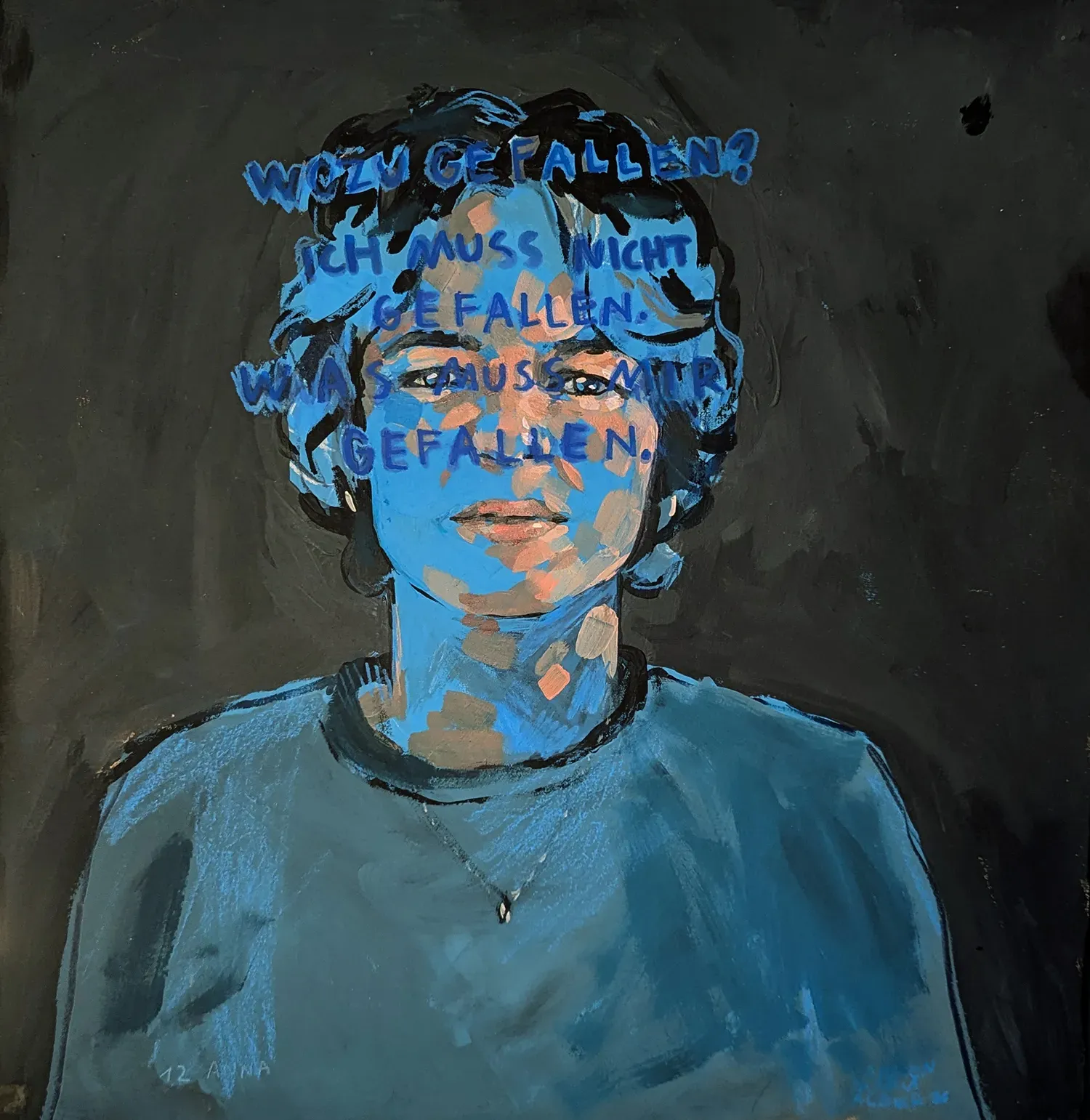
12 ANNA
Wozu gefallen? Ich muss nicht gefallen. Mir muss was gefallen.
Perché dovrei piacere? Non devo piacere agli altri. Sono io che devo trovare qualcosa che mi piace.
Why should I please anyone? I don’t have to please anyone. What matters is what I like.
Listen to the audio
Lies mehr darüber
Ich kann da Führung übernehmen und ich kann mehrere Menschen lieben und mit mehreren Menschen Liebesbeziehungen führen. Weil ich will. Und mir ist egal, was andere dazu zu sagen haben oder welches Bild das auf mich wirft.
Und Polyamorie ist für mich total bequem und für die Gesellschaft zum Teil sehr unbequem. Und ich finde es total spannend, wie Menschen sich von meiner Entscheidung zu lieben herausgefordert fühlen. Ich habe mich entschieden, jemanden zu lieben. Und du fühlst dich von mir provoziert. Wie sensibel ist die Welt, wenn das schon unbequem ist, dass du das nicht aushalten kannst, dass sie einfach liebt?
Und weil ich als Frau ja eher in der passiven Rolle zu sein hätte – begehrt und geliebt zu sein und nicht diejenige, die aussucht, die liebt. In erster Linie lieben dann die Kinder und so, aber jetzt eben in dieser Paarbeziehung haben Frauen in der patriarchalen Vorstellung nicht so die aktive Rolle.
Ich finde es eine feministische Haltung, in die Aktivität zu gehen und sich nicht als Objekt anzunehmen und zu sagen: Okay, dann warte ich ab, bis der Richtige oder die Richtige kommt.
Ich merke, dass ich als Kind schon voll mit dieser männlichen Brille aufgewachsen bin und es bis vor ein paar Jahren noch nicht so verstanden habe. Und ich glaube auch noch nicht so ganz verstanden zu haben, wie unglaublich stark ich mich selber durch die männliche Brille sehe.
Und die männliche Brille, die sagt mir: Ich muss brav genug, hübsch genug, lieb genug sein, um eine gute Ehefrau zu sein. So, jetzt ganz gebrochen.
Und mich ein Stück weit wieder von der männlichen Brille zu lösen und zu sagen: Hey, ich muss nicht hübsch sein, um zu gefallen. Ich muss nicht brav sein, um nicht aufzufallen. Ich muss nicht. Das hat mit mir nichts zu tun. Das ist irgendwie schon sehr befreiend.
Und deswegen war es für mich die wichtigste Erkenntnis meines Lebens, zu merken: Ich muss nicht gefallen. Ich muss nicht geliebt werden. Ich muss lieben, und mir muss etwas gefallen.
Leggi di più
Posso prendere io l’iniziativa e posso amare più persone e avere relazioni amorose con più persone. Perché lo voglio. E non mi importa che cosa abbiano da dire gli altri o quale immagine dia di me.
E la poliamoria per me è totalmente comoda e per la società, in parte, molto scomoda. E trovo davvero interessante come le persone si sentano messe in discussione dalla mia decisione di amare. Ho deciso di amare qualcuno. E tu ti senti provocato da me. Quanto è sensibile il mondo, se è già così scomodo il fatto che tu non riesca a sopportare che una persona semplicemente ami?
E perché io, come donna, dovrei stare piuttosto nel ruolo passivo: essere desiderata e amata e non essere quella che sceglie, quella che ama. In primo luogo poi si amano i figli e così via, ma nella relazione di coppia, nella rappresentazione patriarcale, le donne non hanno un ruolo così attivo.
Trovo che sia un atteggiamento femminista passare all’azione e non considerarsi un oggetto dicendo: Okay, allora aspetto che arrivi quello giusto o quella giusta.
Mi accorgo di essere cresciuta già da bambina completamente attraverso questo sguardo maschile e fino a qualche anno fa non l’avevo ancora capito così. E credo di non avere ancora compreso fino in fondo quanto incredibilmente io stessa mi guardi attraverso lo sguardo maschile.
E lo sguardo maschile mi dice: devo essere abbastanza brava, abbastanza bella, abbastanza dolce per essere una buona moglie. Detto in modo molto semplificato.
E liberarmi un po’ di nuovo da questo sguardo maschile e dire: Ehi, non devo essere bella per piacere. Non devo essere brava per non dare nell’occhio. Non devo. Questo non ha niente a che fare con me. È davvero molto liberatorio.
E per questo per me la consapevolezza più importante della mia vita è stata capire: non devo piacere. Non devo essere amata. Devo amare, e qualcosa deve piacere a me.
Read about it
I can take the lead, and I can love several people and have romantic relationships with several people. Because I want to. And I don’t care what other people have to say about it or what kind of image it gives them of me.
Polyamory is completely comfortable for me and, for society, partly very uncomfortable. And I find it fascinating how people feel challenged by my decision to love. I have decided to love someone. And you feel provoked by me. How sensitive is the world if it is already uncomfortable that you cannot tolerate someone simply loving?
And because as a woman I am supposedly meant to be in the passive role—to be desired and loved, rather than being the one who chooses, the one who loves. First of all, women are supposed to love the children and so on, but in a couple relationship, in the patriarchal idea of it, women are not given such an active role.
I think it is a feminist stance to become active and not accept yourself as an object and say: Okay, then I’ll wait until the right man or the right woman comes along.
I notice that even as a child I grew up very much through this male gaze and until a few years ago I had not really understood it. And I think I still have not completely understood how incredibly strongly I see myself through the male gaze.
And the male gaze tells me: I have to be good enough, pretty enough, sweet enough to be a good wife. Put very simply.
And freeing myself a little from the male gaze again and saying: Hey, I don’t have to be pretty in order to please. I don’t have to be good in order not to stand out. I don’t have to. That has nothing to do with me. That is actually very liberating.
And that is why the most important realization of my life was understanding: I do not have to please. I do not have to be loved. I have to love, and something has to please me.
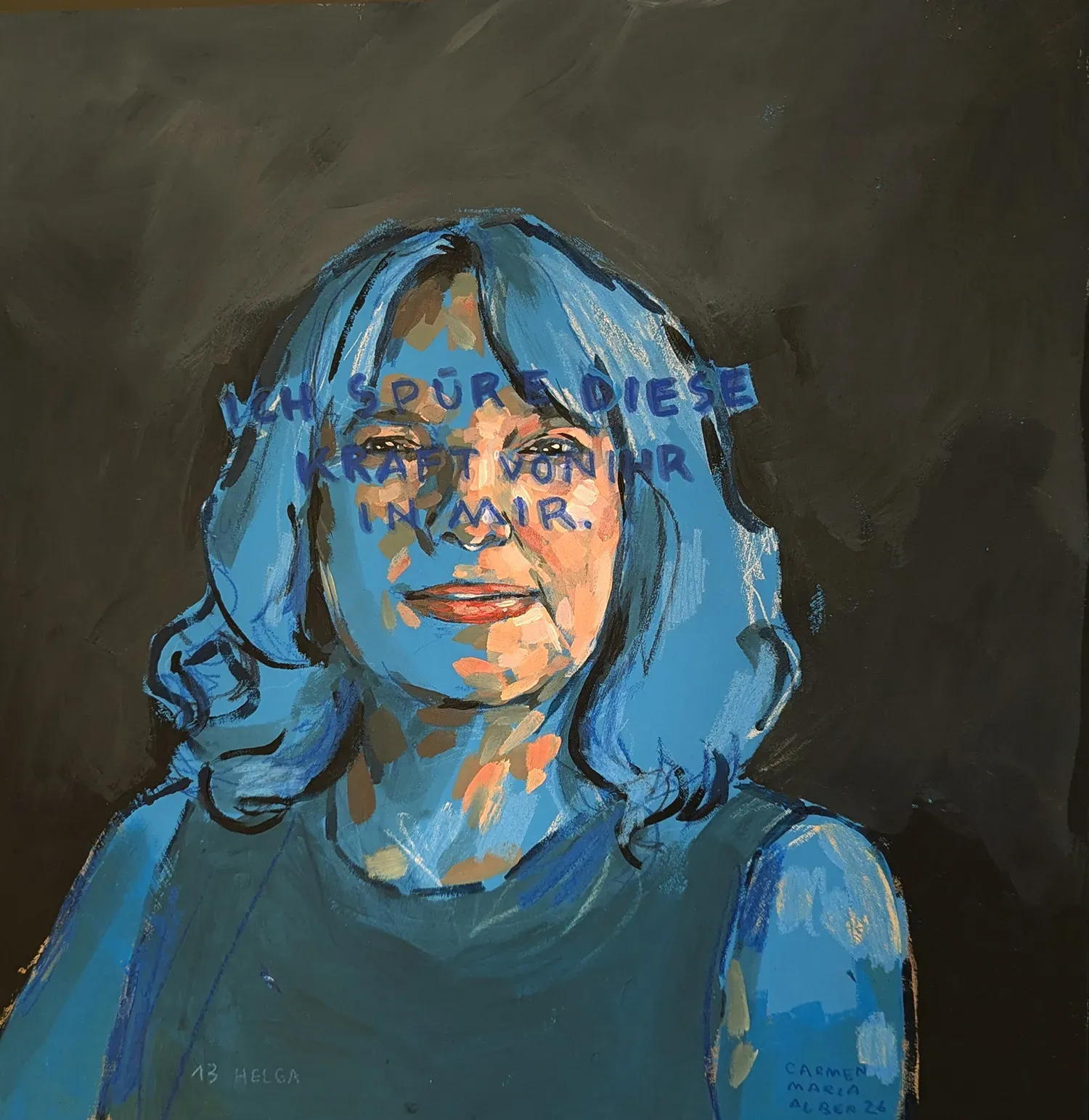
13 HELGA
Ich spüre diese Kraft von ihr in mir.
Sento dentro di me la sua forza.
I feel her strength within me.
Lies mehr darüber
Meine Mama war eine extrem starke Frau, aber auch eine sehr unbequeme Frau. Sie hatte einen ganz starken eigenen Willen und hat alles getan, was sie gewollt hat. Sie hat sich nicht den Mund verbieten lassen und sie war kein bisschen obrigkeitshörig. Sie hat sich immer gewehrt. Schon als Kind. Sie hat sich nie einem Mann untergeordnet gefühlt. Und dann hat mein Papa einen ganz schweren Unfall gehabt, da war sie dreiundzwanzig, mit drei kleinen Kindern. Er war lange schwerkrank und sie hat praktisch die ganze Familie weiterbringen müssen. Sie hat arbeiten gehen müssen, sie hat schauen müssen, wie sie die Kinder unterbringt. Sie hat ein sehr strenges Leben gehabt. Und später, in den letzten Monaten bevor sie gestorben ist, hat sie gesagt: ‚Wieso habe ich so ein schweres Leben gehabt?‘ Und ich habe gesagt: ‚Weil du so stark warst. Jemand anders hätte es nicht gepackt. Du hast ganz viele Aufgaben gehabt und alles gepackt.‘
Ich glaube schon, dass mich diese Unabhängigkeit geprägt hat. Arbeit war sicher ein roter Faden in meinem Leben. Die Arbeit hat mir geholfen. Ich war sehr erfolgreich. Ich habe viel Wertschätzung gekriegt und ich hatte ein sicheres Einkommen. Das hat mir geholfen, meine Wohnung abzuzahlen, meine Tochter ohne Alimente großzuziehen. Mein eigenes Einkommen war mir immer wichtig. Ich wollte nie abhängig sein von einem Mann. Ich wollte nie einen Partner fragen müssen: Kann ich mir das kaufen? Kann ich das machen? Ich habe für mein eigenes Geld gearbeitet.
Ich habe in einem Männerbetrieb gearbeitet, bei den Sitzungen war ich die einzige Frau. Das Autogeschäft ist eine Männerwelt und da sind auch sehr viele Machos unterwegs gewesen. Meine Arbeitskollegen, die Vertreter, waren Megamachos. Aber ich habe mich nie weniger wert gefühlt, weil ich eine Frau bin. Das ist mir gar nie in den Sinn gekommen. Vermutlich durch meine Mama. Weil sie mein Vorbild war. Da war gar kein Zweifel, dass die Frau die gleichen Rechte hat wie der Mann. Der Mann ist auf der gleichen Ebene, nicht höher und nicht niedriger. Und so habe ich auch meine Arbeitskollegen gesehen.
Wenn ich mein Leben zurückschaue, mit all den Irrungen und Wirrungen und Problemen, die das Leben so mit sich bringt: Innen drinnen habe ich so einen inneren Führer gehabt. Ich habe mich auf mich selber verlassen können. Das hat mir in vielen Situationen geholfen. Diese innere Stärke ist nach außen vielleicht gar nicht sichtbar, sondern ein bisschen versteckt, aber innen drinnen ist sie da. Ich glaube, man muss den eigenen Weg gehen und sich nicht verbiegen lassen oder Sachen machen, weil die anderen es erwarten. Das, was in dir drinnen ist, das, was dir wichtig ist – das ist dein Weg. Sich selber treu bleiben ist für mich eine der wichtigsten Sachen. Und diese Kraft von meiner Mama – ich spüre diese Kraft von ihr in mir.
Leggi di più
Mia mamma era una donna estremamente forte, ma anche una donna molto scomoda. Aveva una volontà propria molto forte e faceva tutto quello che voleva. Non si lasciava mettere a tacere e non era minimamente ossequiosa verso l’autorità. Si è sempre difesa. Già da bambina. Non si è mai sentita subordinata a un uomo. Poi mio papà ha avuto un incidente molto grave: lei aveva ventitré anni e tre bambini piccoli. Lui è stato malato a lungo e gravemente e lei ha dovuto praticamente mandare avanti tutta la famiglia. Ha dovuto andare a lavorare, ha dovuto vedere dove sistemare i bambini. Ha avuto una vita molto dura. E più tardi, negli ultimi mesi prima di morire, ha detto: «Perché ho avuto una vita così dura?» E io ho detto: «Perché eri così forte. Un’altra persona non ce l’avrebbe fatta. Hai avuto tantissimi compiti e sei riuscita a farcela con tutto.»
Credo proprio che questa indipendenza mi abbia segnata. Il lavoro è stato sicuramente un filo rosso nella mia vita. Il lavoro mi ha aiutata. Ho avuto molto successo. Ho ricevuto molta stima e avevo un reddito sicuro. Questo mi ha aiutata a pagare il mio appartamento e a crescere mia figlia senza alimenti. Avere un reddito mio è sempre stato importante per me. Non ho mai voluto dipendere da un uomo. Non ho mai voluto dover chiedere a un partner: Posso comprarmi questo? Posso fare questo? Ho lavorato per avere i miei soldi.
Ho lavorato in un’azienda dominata dagli uomini; alle riunioni ero l’unica donna. Il settore automobilistico è un mondo maschile e c’erano anche moltissimi machi. I miei colleghi di lavoro, i rappresentanti, erano supermachi. Ma non mi sono mai sentita di minor valore perché sono una donna. Non mi è proprio mai venuto in mente. Probabilmente grazie a mia mamma. Perché era il mio modello. Non c’era alcun dubbio sul fatto che la donna avesse gli stessi diritti dell’uomo. L’uomo è sullo stesso piano, non più in alto e non più in basso. E così ho visto anche i miei colleghi.
Quando guardo indietro alla mia vita, con tutti gli errori, i giri, i problemi che la vita porta con sé, dentro di me ho sempre avuto una specie di guida interiore. Ho potuto fare affidamento su me stessa. Questo mi ha aiutata in molte situazioni. Questa forza interiore forse non è affatto visibile all’esterno, è un po’ nascosta, ma dentro c’è. Credo che si debba seguire la propria strada e non piegarsi o fare cose perché gli altri se lo aspettano. Quello che hai dentro, quello che per te è importante: quella è la tua strada. Rimanere fedeli a se stessi è per me una delle cose più importanti. E questa forza di mia mamma, io la sento dentro di me.
Read about it
My mum was an extremely strong woman, but also a very uncomfortable woman. She had a very strong will of her own and did everything she wanted to do. She did not let anyone silence her and she was not obedient to authority at all. She always fought back. Even as a child. She never felt subordinate to a man. Then my dad had a very serious accident. She was twenty-three and had three small children. He was seriously ill for a long time, and she basically had to keep the whole family going. She had to go to work, she had to figure out where to place the children. She had a very hard life. And later, in the final months before she died, she said: “Why have I had such a hard life?” And I said: “Because you were so strong. Someone else would not have managed it. You had so many tasks and you managed them all.”
I do think that this independence shaped me. Work was definitely a recurring thread in my life. Work helped me. I was very successful. I received a lot of appreciation and I had a secure income. That helped me pay off my apartment and raise my daughter without child support. Having my own income was always important to me. I never wanted to be dependent on a man. I never wanted to have to ask a partner: Can I buy this? Can I do this? I worked for my own money.
I worked in a male-dominated company, and at meetings I was the only woman. The car business is a man’s world and there were also a lot of macho men around. My colleagues, the sales representatives, were mega-macho. But I never felt worth less because I am a woman. That simply never occurred to me. Probably because of my mum. Because she was my role model. There was never any doubt that a woman has the same rights as a man. A man is on the same level, not higher and not lower. And that is how I saw my colleagues too.
When I look back on my life, with all the twists and turns and problems that life brings with it, I had something like an inner guide inside me. I was able to rely on myself. That helped me in many situations. This inner strength may not be visible from the outside at all; it is a little hidden, but it is there inside. I think you have to follow your own path and not bend yourself or do things because other people expect them. What is inside you, what matters to you—that is your path. Staying true to yourself is one of the most important things for me. And that strength from my mum—I feel that strength from her inside me.
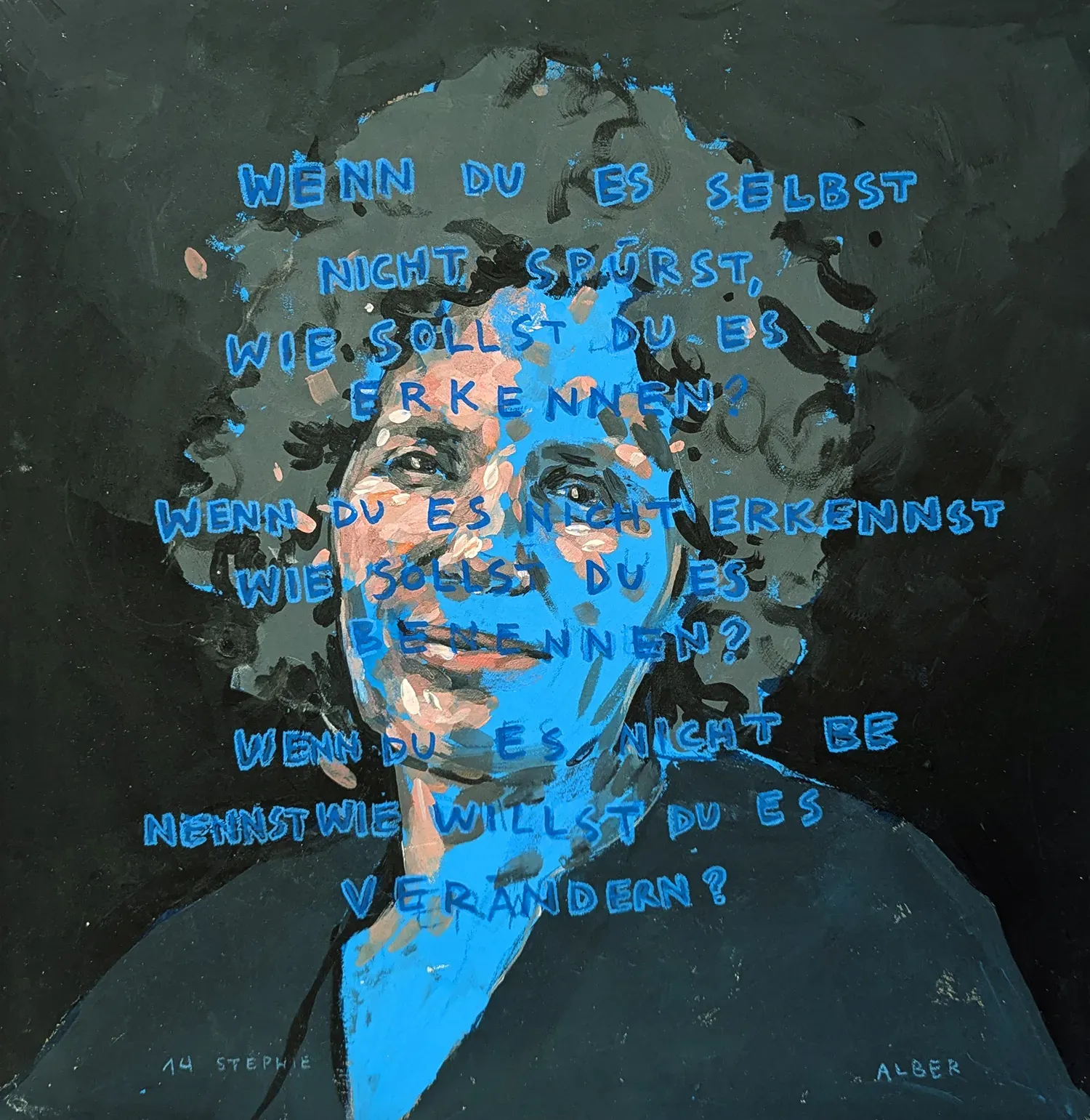
14 STEPHANIE
Wenn du es selbst nicht spürst, wie willst du es erkennen? Wenn du es nicht erkennst, wie willst du es benennen? Wenn du es nicht benennst, wie willst du es verändern?
Se non lo senti in prima persona, come puoi riconoscerlo? Se non lo riconosci, come puoi dargli un nome? Se non gli dai un nome, come puoi cambiarlo?
If you can’t feel it yourself, how can you recognize it? If you can’t recognize it, how can you name it? If you can’t name it, how can you change it?
Lies mehr darüber
Bei uns haben eigentlich immer nur die Männer geredet. Ich bin halt irgendwann aufgestanden. Bei meiner Mutter zum Geburtstag haben wieder meine Brüder geredet, und ich habe gesagt: Das passt mir gar nicht. Dann habe ich einfach die Rede gehalten. Bei der Hochzeit meiner Tochter haben mein Mann und ich eine Rede gehalten, weil ich gesagt habe: Das kann nicht sein, dass bei solchen Sachen immer nur Männer reden. Mir ist das aufgefallen. Und es war meine erste Rede in meinem Leben. Da musst du dich auch erst einmal hinstellen und reden. Aber ich habe bei der jüngeren Generation schon gemerkt, dass da eine Bewunderung da ist: dass man für sich einstehen kann, dass man sich hinstellen kann.
Meine Tochter hat mir erzählt: Sie sitzen in einer Clique, die sich schon ewig kennt, Männer und Frauen. Und wenn sie über irgendetwas Politisches reden, übernehmen eigentlich die Männer das Gespräch. Wenn meine Tochter dann etwas sagt, wird sie im ersten Moment wahrscheinlich nicht gehört. Oder sie hören ganz kurz zu und reden dann wieder weiter. Und dann muss sie sagen: Jetzt hört mal auf, ihr redet wieder untereinander. Sie haben das schon öfter besprochen, und dann macht sie sie wieder darauf aufmerksam. Und das ist schon viel: dass sie es einsehen und nicht sagen: Ja, ihr müsst halt auch einfach reden.
Aber wenn du die Sensibilität dafür nicht hast, ist es schwierig, das zu erklären. Wenn du es selber nicht spürst, wie willst du es dann wahrnehmen? Du kannst sagen: Ja, ja, die kann mir erzählen, was sie will. Stimmt gar nicht. Ich höre genauso zu. Aber du hast nicht die Sensibilität, das unterschiedlich wahrzunehmen. Wenn du nicht spürst, dass du nicht reden gelassen wirst, wenn das in dir kein Unwohlgefühl macht – wie willst du dann merken, dass das für dich nicht stimmt? Ich glaube wirklich, dass es ganz viel mit Spüren zu tun hat. Und Empathie ist etwas, was du lernst, wenn du spürst. Wenn du spürst, hast du auch Empathie.
Und deswegen finde ich auch das Gendern wichtig. Ich bin sechzig Jahre ohne Gendern aufgewachsen. Mir fällt eher auf, wenn jemand gendert, als wenn jemand nicht gendert. Aber ich bin überzeugt, dass es nicht richtig ist, wenn alles nur in der männlichen Form dasteht. Wenn die Frau nie erwähnt wird, wenn alles männlich ist, kann das nicht sein. Weil das unser Denken prägt. Wenn du nicht anfängst, ändert sich nichts. Du kannst nicht etwas verändern, wenn du es in der Sprache nicht veränderst. Sprache ist unser Hauptkommunikationsmittel. Wie soll sich die Welt dahin verändern, dass wir gleichberechtigt sind, wenn wir in der Sprache nicht gleichberechtigt sind? Wie sollen Frauen und Männer gleich werden, wenn es Frauen in der Sprache nicht gibt? Die Worte formen auch unser Denken. Das, was wir hören, was wir lesen, formt unser Denken weiter. Und wenn ich nichts tue, beeinflusse ich eben mit, dass sich nichts ändert.
Leggi di più
Da noi in realtà hanno sempre parlato soltanto gli uomini. A un certo punto mi sono alzata. Al compleanno di mia madre parlavano di nuovo i miei fratelli e io ho detto: Questo proprio non mi va. E allora ho semplicemente fatto io il discorso. Al matrimonio di mia figlia mio marito e io abbiamo fatto un discorso, perché ho detto: Non può essere che in occasioni del genere parlino sempre soltanto gli uomini. Me ne sono accorta. Ed è stato il primo discorso della mia vita. Devi prima riuscire a metterti lì davanti e parlare. Ma nella generazione più giovane ho già notato una certa ammirazione: il fatto di saper difendere la propria posizione, di riuscire ad alzarsi e parlare.
Mia figlia mi ha raccontato: sono in un gruppo di amici che si conosce da sempre, uomini e donne. E quando parlano di qualcosa di politico, in realtà sono gli uomini a prendere in mano la conversazione. Quando mia figlia dice qualcosa, nel primo momento probabilmente non viene ascoltata. Oppure la ascoltano per un attimo e poi continuano a parlare tra loro. E allora lei deve dire: Adesso basta, state di nuovo parlando solo tra di voi. Ne hanno già parlato diverse volte e allora lei glielo fa notare di nuovo. E questo è già molto: che lo riconoscano e non dicano semplicemente: Sì, dovete soltanto parlare anche voi.
Ma se non hai la sensibilità per accorgertene, è difficile spiegarlo. Se non lo senti tu stessa, come fai a percepirlo? Puoi dire: Sì, sì, può raccontarmi quello che vuole. Non è vero. Io ascolto allo stesso modo. Ma non hai la sensibilità per percepire la differenza. Se non senti che non ti lasciano parlare, se dentro di te questo non crea disagio, come fai allora ad accorgerti che per te non va bene? Credo davvero che abbia moltissimo a che fare con il sentire. E l’empatia è qualcosa che impari quando senti. Se senti, hai anche empatia.
E per questo trovo importante anche usare un linguaggio inclusivo. Sono cresciuta per sessant’anni senza linguaggio inclusivo. Mi accorgo più facilmente quando qualcuno lo usa che quando non lo usa. Ma sono convinta che non sia giusto se tutto viene espresso soltanto nella forma maschile. Se la donna non viene mai menzionata, se tutto è maschile, non può andare bene. Perché questo plasma il nostro pensiero. Se non cominci, non cambia niente. Non puoi cambiare qualcosa se non lo cambi anche nella lingua. La lingua è il nostro principale mezzo di comunicazione. Come dovrebbe cambiare il mondo verso la parità se nella lingua non siamo pari? Come dovrebbero diventare uguali donne e uomini se le donne nella lingua non esistono? Le parole formano anche il nostro pensiero. Quello che sentiamo, quello che leggiamo continua a formare il nostro pensiero. E se io non faccio nulla, contribuisco al fatto che nulla cambi.
Read about it
In our family, basically only the men ever spoke. At some point I simply stood up. At my mother’s birthday my brothers were speaking again, and I said: I really don’t like this. Then I simply gave the speech myself. At my daughter’s wedding my husband and I gave a speech because I said: It cannot be that at occasions like this only men ever speak. I noticed that. And it was the first speech of my life. You have to stand up there and speak for the first time. But with the younger generation I have already noticed a kind of admiration: that someone can stand up for themselves, that someone can get up and speak.
My daughter told me: they are in a group of friends who have known one another forever, men and women. And when they talk about anything political, the men basically take over the conversation. When my daughter says something, at first she probably is not heard. Or they listen very briefly and then go on talking. And then she has to say: Stop, you’re talking among yourselves again. They have discussed it several times, and then she points it out again. And that is already a lot: that they acknowledge it and do not say: Well, you just have to talk too.
But if you do not have the sensitivity for it, it is difficult to explain. If you do not feel it yourself, how are you supposed to perceive it? You can say: Yeah, yeah, she can tell me whatever she wants. That is not true. I listen just as much. But you do not have the sensitivity to perceive it differently. If you do not feel that you are not being allowed to speak, if it does not create a sense of discomfort inside you—how are you supposed to notice that it is not right for you? I really think it has a lot to do with feeling. And empathy is something you learn when you feel. If you feel, you also have empathy.
And that is why I also think gender-inclusive language is important. I grew up for sixty years without it. I notice more when someone uses gender-inclusive language than when they do not. But I am convinced that it is not right if everything is only written in the masculine form. If women are never mentioned, if everything is masculine, that cannot be right. Because it shapes our thinking. If you do not start, nothing changes. You cannot change something if you do not change it in language. Language is our main means of communication. How is the world supposed to change toward equality if we are not equal in language? How are women and men supposed to become equal if women do not exist in language? Words also shape our thinking. What we hear and what we read continues to shape our thinking. And if I do nothing, I am contributing to nothing changing.
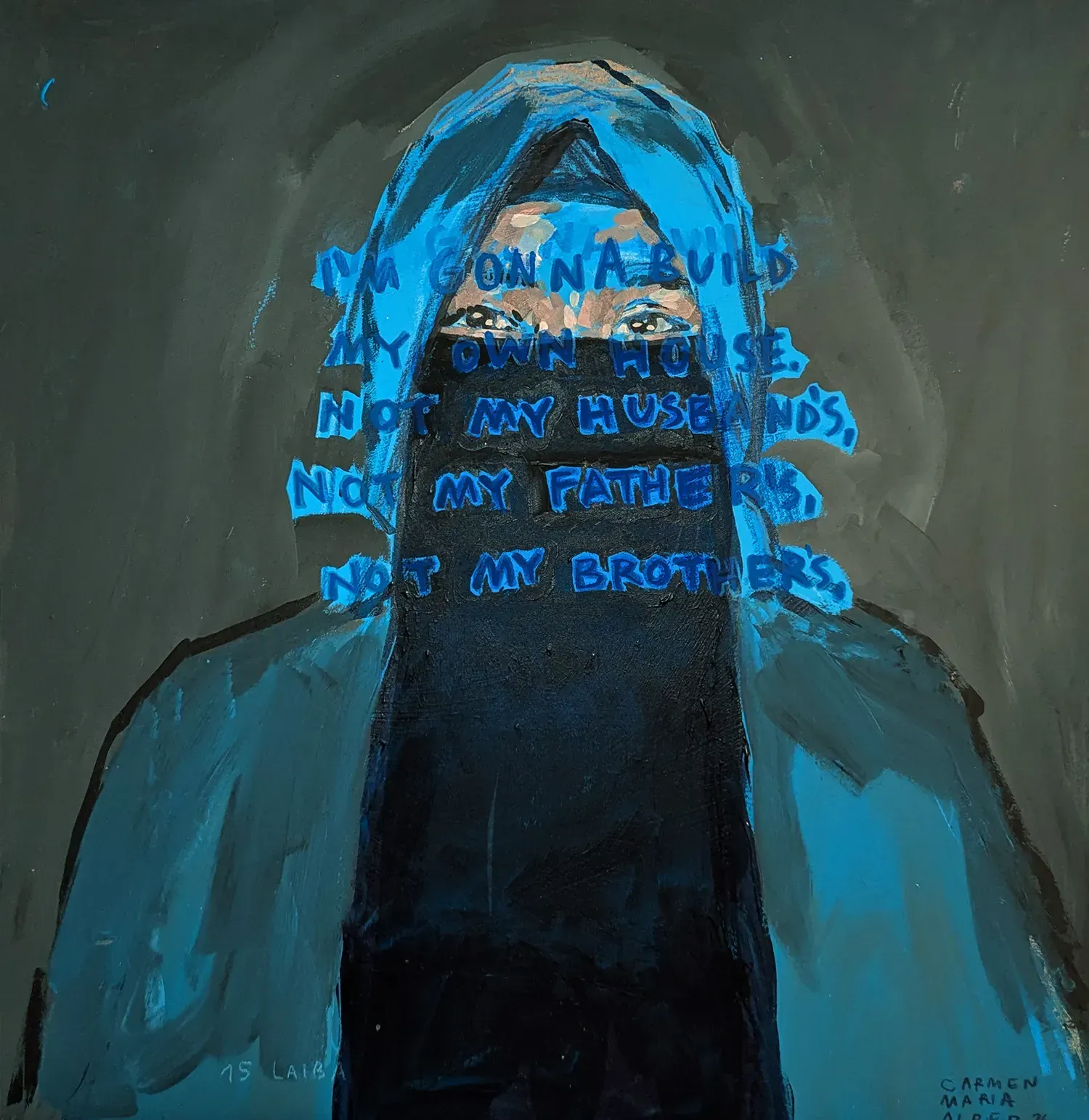
15 LAIBA
I’m gonna build my own house. Not my husband’s, not my father’s, not my brother’s.
Costruirò la mia casa. Non quella di mio marito, non quella di mio padre, non quella di mio fratello.
Ich werde mein eigenes Haus bauen. Nicht das meines Mannes, nicht das meines Vaters, nicht das meines Bruders.
Listen to the audio
Lies mehr darüber
Jeden Tag hört man so viele Geschichten über Frauen, die häusliche Gewalt erleben, über Ehemänner, die ihre Frauen buchstäblich ermorden. Und die Regierung weiß, wer es getan hat. Der Mann gibt es zu. Er sagt so etwas wie: „Ich habe sie getötet, weil sie keine gute Ehefrau war. Ich habe sie getötet, weil sie mich nicht mit ihr schlafen lassen wollte.“ Es gibt so viele Männer, die das tun. Sie sagen: „Sie wollte nicht mit mir schlafen, also habe ich sie getötet. Sie hat diese Aufgaben im Haushalt nicht gemacht, also habe ich sie getötet.“ Und solche Geschichten hört man buchstäblich jeden Tag in den Nachrichten. Ich persönlich habe mit Männern darüber gesprochen. Ich bin zu Fremden hingegangen und habe sie gefragt: „Glaubt ihr, dass Vergewaltigung in der Ehe existiert?“ Und sie haben gesagt: „Nein, das gibt es nicht.“ Weil, wenn du zustimmst, jemanden zu heiraten, dann ist das für sie die Zustimmung.
Wenn meine Verwandten zu Besuch kamen und sagten, ich müsse diszipliniert werden, ich müsse dieses Leben führen, habe ich irgendwann einfach angefangen zu sagen: „Ist euch klar, dass ich, wenn ich heiraten soll, diejenige bin, die den Ehevertrag unterschreiben muss? Ich bin diejenige, die zustimmen muss.“ Also habe ich angefangen, mich zu wehren. Ich habe gesagt: „Ihr denkt, ihr könnt mich zwingen, jemanden zu heiraten? Ich werde keinen Vertrag unterschreiben. Was wollt ihr machen, mich umbringen? Nur zu. Ihr wollt mich umbringen, weil ich jemanden nicht heirate? Nur zu. Ich würde lieber sterben, als das zu tun. Ich würde lieber sterben, als jemanden zu heiraten, den ihr für mich wollt. Ich würde lieber sterben, als jemanden zu heiraten, wenn ich nicht heiraten will. Ich würde lieber sterben, als so ein Leben zu führen.“ Ich werde euch trotzdem nicht folgen. Ich werde mich trotzdem nicht nach dem disziplinieren lassen, was auch immer ihr von mir wollt.
Seit wir klein sind, ist einer der Sätze, die wir sehr oft hören: „Das ist nicht dein Haus.“ Selbst jetzt ist das Haus, in dem ich lebe, das Haus meiner Eltern, und technisch gesehen ist es doch mein Haus, oder? Aber so wird es dir beim Aufwachsen nicht gesagt. Dir wird immer gesagt: „Wenn du einmal in dein eigenes Haus gehst, dann wirst du das so machen.“ Aber mit „deinem eigenen Haus“ meinen sie das Haus des Ehemannes. Und das Lustige ist dann: Wenn du verheiratet bist, sagt die Familie deines Mannes zu dir: „Hast du das nicht in deinem eigenen Haus gelernt?“ Das Haus, in dem du aufwächst, gibt dir also das Gefühl, dass es nicht dein Haus ist, und das Haus deines Mannes gibt dir ebenfalls das Gefühl, dass es nicht dein Haus ist.
Eines meiner größten Ziele im Leben ist deshalb, mein eigenes Haus zu haben, eines, das ich selbst baue. Deshalb arbeite ich gerade Vollzeit, und hoffentlich werde ich zwei Jobs haben, und ich werde Geld sparen, damit ich mein eigenes Haus bauen kann. Damit kein Mann und niemand, keine einzige Person, zu mir kommen und sagen kann: „Das ist nicht dein Haus.“
Ich werde mein eigenes Haus bauen. Nicht das meines Mannes, nicht das meines Vaters, nicht das meines Bruders. Mein eigenes Haus. Und es wird mein Haus sein. Und dann werde ich es so einrichten, wie ich will, und darin so leben, wie ich will.
Leggi di più
Ogni giorno senti tantissime storie di donne che subiscono violenza domestica, di mariti che letteralmente uccidono le proprie mogli. E il governo sa chi è stato. L’uomo lo ammette. Dice: «L’ho uccisa perché non era una buona moglie. L’ho uccisa perché non mi lasciava fare sesso con lei.» Ci sono tantissimi uomini che lo fanno. Dicono: «Non voleva fare sesso con me, quindi l’ho uccisa. Non faceva queste responsabilità domestiche, quindi l’ho uccisa.» E senti queste storie letteralmente ogni giorno nelle notizie. Io personalmente ne ho parlato con degli uomini. Sono andata da sconosciuti e ho chiesto: «Pensate che lo stupro coniugale esista?» E loro hanno detto: «No, non esiste.» Perché quando accetti di sposare qualcuno, per loro quello è il consenso.
Quando i miei parenti venivano da noi e dicevano che dovevo essere disciplinata, che dovevo vivere questa vita, a un certo punto ho semplicemente iniziato a dire: «Vi rendete conto che quando dovrò sposarmi sarò io a dover firmare il contratto di matrimonio? Sarò io a dover dare il consenso.» Così ho iniziato a reagire. Dicevo: «Pensate di potermi costringere a sposare qualcuno? Io non firmerò un contratto. Che cosa farete, mi ucciderete? Fatelo. Mi ucciderete perché non voglio sposare qualcuno? Fatelo. Preferirei morire piuttosto che farlo. Preferirei morire piuttosto che sposare qualcuno che volete voi. Preferirei morire piuttosto che sposare qualcuno quando io non voglio sposarmi. Preferirei morire piuttosto che vivere una vita così.» Continuerò comunque a non seguirvi. Continuerò comunque a non lasciarmi disciplinare secondo qualunque cosa vogliate che io sia.
Fin da quando siamo piccole, una delle frasi che sentiamo più spesso è: «Questa non è casa tua.» Anche adesso, la casa in cui vivo è la casa dei miei genitori e tecnicamente è casa mia, no? Ma crescendo non ti viene detto così. Ti dicono sempre: «Quando andrai a casa tua, allora farai questo.» Ma con «casa tua» intendono la casa del marito. E poi la cosa buffa è che, quando sei sposata, la famiglia di tuo marito ti dice: «Non l’hai imparato a casa tua?» Quindi la casa in cui cresci ti fa sentire che non è casa tua, e poi anche la casa del marito ti fa sentire che non è casa tua.
Quindi uno dei miei obiettivi più grandi nella vita è avere una casa mia, costruita da me. È per questo che adesso lavoro a tempo pieno e, spero, lavorerò due lavori, e risparmierò soldi per potermi costruire una casa mia. Così nessun uomo e nessuno, non una singola persona, potrà venire da me e dirmi: «Questa non è casa tua.»
Costruirò la mia casa. Non quella di mio marito, non quella di mio padre, non quella di mio fratello. La mia casa. E sarà casa mia. E poi la arrederò come voglio io e ci vivrò come voglio io.
Read about it
Every day you hear so many stories about women going through domestic abuse, about husbands literally murdering their wives. And the government knows who did it. The man admits it. He’s like: “I killed her because she was not being a good wife. I killed her because she was not letting me have sex with her.” There are so many men that do it. They’re like: “She wouldn’t let me have sex with her, so I killed her. She wasn’t doing this household responsibility, so I killed her.” And you hear these stories literally every day in the news. I personally have talked to men about it. I went up to strangers and I asked them: “Do you think marital rape is a thing?” And they said: “No, it’s not.” Because when you agree to marry somebody, that is the consent.
When my relatives would come over and say that I should be disciplined, that I should be living this life, at one point I just started saying: “You do realize that when I have to get married, I’m the one who has to sign the marriage contract. I’m the one who has to consent to it.” So I started fighting back. I was like: “You think you can force me to marry somebody? I’m not going to sign a contract. What are you going to do, kill me? Go for it. You’re going to kill me for not marrying somebody? Go for it. I would rather die than do that. I would rather die than marry somebody that you guys want me to. I’d rather die than marry someone when I don’t want to get married. I’d rather die than live a life like this.” I’ll still not follow you. I’ll still not be disciplined according to whatever it is that you want me to be.
Ever since we were young, one of the main phrases we heard a lot was: “This is not your house.” Even right now, the house that I live in is my parents’ house and technically it’s my house, right? But you’re not told that growing up. You’re always told: “When you go to your own house, then you’re going to do this.” But in their terms, “your own house” refers to the husband’s house. And then the funny thing is that when you’re married, your husband’s family tells you: “Didn’t you learn this at your own house?” So the house that you grow up in makes you feel like it’s not your house, and then the husband’s house also makes you feel like it’s not your house.
So one of my biggest goals in life is to have my own house, one that I build myself. Which is why I work full time right now, and I’m hopefully going to work two jobs, and I’m going to save money so I can build my own house. So no man or anybody, not a single person, can come and tell me: “This is not your house.”
I’m going to build my own house. Not my husband’s, not my father’s, not my brother’s. My own house. And it’s going to be my house. And then I will decorate it the way I want, and I will live in it the way I want.
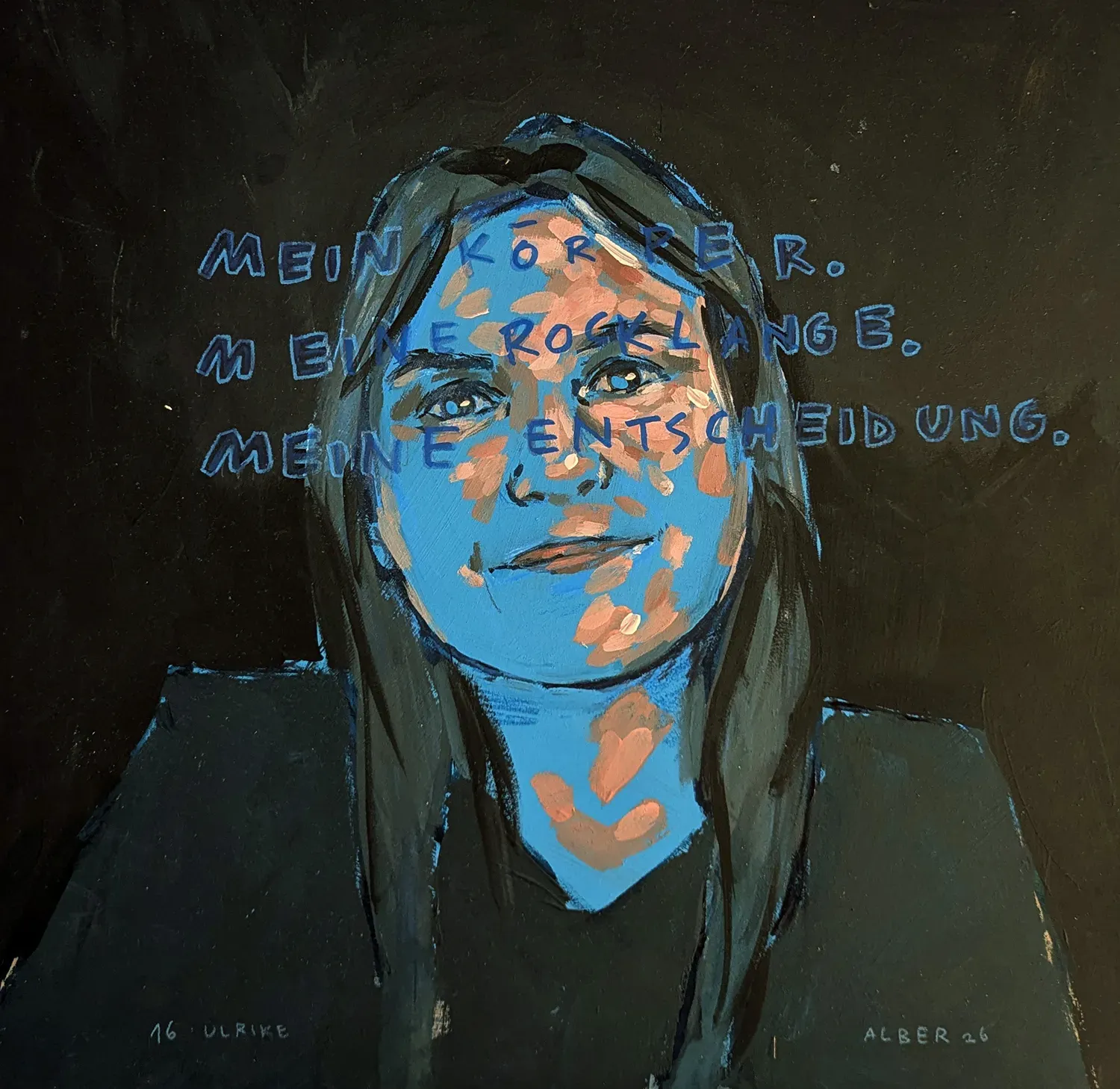
16 ULLI
Mein Körper. Meine Rocklänge. Meine Entscheidung.
Il mio corpo. La lunghezza della mia gonna. La mia decisione.
My body. My skirt length. My decision.
Lies mehr darüber
Mit sechzehn habe ich angefangen, ganz viele Bücher zu lesen. Da waren Geschichten von jungen Frauen, die in Frankreich aufgewachsen sind. Dann hieß es, sie fahren zur Oma in Urlaub, und sie sind nicht mehr zurückgekommen, sondern zwangsverheiratet, in die Berge verschleppt und missbraucht worden und haben sehr jung Kinder bekommen. Das hat mich total schockiert. Ich war in einem Alter, wo ich der Meinung war: Ich kann alles machen, was ich will. Und dann habe ich angefangen, ganz viel zu lesen. Das Thema hat mich einfach fasziniert: Warum kann ich sein, wie ich will, und andere Frauen nicht? Ich habe dann Rechtswissenschaften studiert, Erasmus in Spanien gemacht, eine Prüfung über Menschenrechte, internationales Recht und Völkerrecht. Und bei meiner Diplomarbeit habe ich mich für Frauenrechte entschieden. Ein Vergleich: die Rechte für Frauen im Islam und die Rechte für Frauen in unserem Kulturkreis. Wo sind die Unterschiede? Was steht wirklich drinnen? Wie wird das interpretiert? Kopftuch, Bekleidung und so weiter. Und mein Professor im Völkerrecht war der Meinung, Frauen hätten im Studium nichts verloren und sollten lieber daheim hinterm Herd sein. Das hat er wortwörtlich mehreren Studentinnen gesagt.
Danach hat mich eine Freundin gefragt, ob ich im Beirat für Chancengleichheit mitarbeiten will. Und irgendwann bin ich gefragt worden, ob ich den Vorsitz übernehmen will. Ich habe lange überlegt: Soll ich? Soll ich nicht? Ich kann das ja nicht. Typisch Frau: Ich kann das ja nicht. Und dann habe ich gesagt: Okay, ich mache es. Aufhören kann ich immer noch. Und dann habe ich erst mitgekriegt, was das in der Realität heißt. Wie viele Frauen, die zu mir kommen, Opfer von Gewalt sind. Weil es ist etwas anderes, davon zu hören, und etwas anderes, wenn eine Frau vor dir sitzt, die medizinischen Unterlagen mitbringt und der Weg so schwer ist. Und dann wird alles wieder infrage gestellt: Was hat sie getan? Was hat sie provoziert? Ganz viele Frauen kommen und sagen: Es war mir wichtig, dass jemand zuhört. Dass ich das einmal deponieren kann. Ich möchte das hier lassen, falls mir noch etwas passiert. Wenn ich nicht mehr da bin, möchte ich ein Testament für mein Kind machen. Das sind Momente, wo du merkst: Jetzt müssen wir schauen, dass es nicht so weit kommt. Ich kann einer Frau die Entscheidung nicht abnehmen. Ich kann sie begleiten. Aber es ist wichtig zu wissen: Was sind meine Rechte? Wenn ich meine Rechte kenne, kann ich Entscheidungen anders treffen oder zumindest abwägen.
Das betrifft auch ganz banale Sachen. Was ist sinnvoll bei einer Heirat? Gütergemeinschaft, Gütertrennung? Was muss ich vor einer Trennung wissen? Welche Schritte soll ich setzen? Und wenn ich finanziell abhängig bin, habe ich halt auch oft weniger zu sagen. Ganz typisch: Du ziehst mit deinem Freund zusammen. Oft kauft der Mann das Haus oder die Wohnung, kommt leichter an den Kredit. Und die Frau zahlt die Küche, die Lebensmittel, Strom, Heizung, die Sachen für die Kinder. Und wenn die Beziehung nach zehn Jahren auseinandergeht: Die Lebensmittel sind gegessen, die gebrauchte Küche ist nichts mehr wert. Die Immobilie hat vielleicht eine Wertsteigerung gehabt. Er hat schon einen Teil vom Darlehen zurückgezahlt. Und du stehst mit nichts da. Das ist etwas ganz Typisches. Und viele reden darüber vorher nicht, weil es als unbequem wahrgenommen wird. So: Jetzt lieben wir uns. Hast du mich nicht mehr lieb, weil du jetzt darüber reden willst? Denkst du schon daran, dass wir uns vielleicht einmal trennen? Aber genau deshalb muss man darüber reden.
Und das Gleiche sehe ich bei der Frage, was Frauen mit ihrem Körper machen dürfen. Beim Frauenschwimmen in Salurn hat es eine riesengroße Diskussion gegeben. Eine Frauengruppe wollte nach Betriebsschluss eine Stunde allein unter Frauen schwimmen, damit auch Frauen schwimmen können, die sich ansonsten nicht ins Schwimmbad trauen oder nicht gehen dürfen. Und dann ist eine riesige Diskussion losgegangen: Das kann nicht sein. Die anderen werden ausgeschlossen. Das kann nicht sein, dass sie gratis hineingehen. Das kann nicht sein mit dem Burkini. Und wir haben gesagt: Wir müssen weg von der Diskussion, warum sie das nicht machen dürfen. Es ist doch positiv, wenn dadurch Frauen überhaupt die Möglichkeit bekommen, schwimmen zu gehen. Wir sind dann selber hingefahren. Da waren siebzig, achtzig Frauen. Es war eine total positive Stimmung, eine Freude. Und das Faszinierende ist schon: Was man Frauen alles vorschreiben will. Ich glaube, manchmal muss man sich einfach trauen, unbequem zu sein. Paroli zu bieten und zu sagen: Nein. Jetzt ist genug.
Leggi di più
A sedici anni ho iniziato a leggere tantissimi libri. C’erano storie di giovani donne cresciute in Francia; poi veniva detto loro che sarebbero andate in vacanza dalla nonna e non tornavano più, ma venivano costrette a sposarsi, portate via sulle montagne, abusate e avevano figli molto giovani. Questa cosa mi ha sconvolta. Ero in un’età in cui pensavo: io posso fare tutto quello che voglio. E allora ho iniziato a leggere tantissimo. Il tema mi affascinava: perché io posso essere come voglio e altre donne no? Poi ho studiato giurisprudenza, ho fatto l’Erasmus in Spagna, un esame sui diritti umani, il diritto internazionale e il diritto delle genti. E per la mia tesi ho scelto i diritti delle donne. Un confronto: i diritti delle donne nell’Islam e i diritti delle donne nel nostro contesto culturale. Quali sono le differenze? Che cosa c’è davvero scritto? Come viene interpretato? Il velo, l’abbigliamento e così via. E il mio professore di diritto internazionale era dell’opinione che le donne non avessero niente da fare all’università e dovessero piuttosto stare a casa dietro ai fornelli. Lo ha detto letteralmente a diverse studentesse.
Dopo, un’amica mi ha chiesto se volevo collaborare nella Commissione per le pari opportunità. E a un certo punto mi hanno chiesto se volevo assumere la presidenza. Ci ho pensato a lungo: lo faccio? Non lo faccio? Non sono capace. Tipico da donna: non sono capace. E poi ho detto: Okay, lo faccio. Posso sempre smettere. E solo allora ho capito che cosa significa nella realtà. Quante donne che vengono da me sono vittime di violenza. Perché una cosa è sentirne parlare e un’altra è avere davanti una donna che porta la documentazione medica e per la quale il percorso è così difficile. E poi tutto viene rimesso in discussione: che cosa ha fatto lei? Che cosa ha provocato? Tantissime donne vengono e dicono: per me era importante che qualcuno ascoltasse. Che potessi lasciare qui questa cosa. Voglio lasciarla qui nel caso mi succeda ancora qualcosa. Se non ci sarò più, voglio fare un testamento per mio figlio. Sono momenti in cui capisci: adesso dobbiamo fare in modo che non si arrivi a questo. Non posso prendere la decisione al posto di una donna. Posso accompagnarla. Ma è importante sapere: quali sono i miei diritti? Se conosco i miei diritti, posso prendere decisioni in modo diverso o almeno valutarle.
Questo riguarda anche cose molto banali. Che cosa è sensato fare quando ci si sposa? Comunione dei beni, separazione dei beni? Che cosa devo sapere prima di una separazione? Quali passi devo fare? E se dipendo economicamente, spesso ho anche meno voce in capitolo. Un caso tipico: vai a vivere con il tuo compagno. Spesso è l’uomo a comprare la casa o l’appartamento, ottiene più facilmente il mutuo. E la donna paga la cucina, la spesa, la corrente, il riscaldamento, le cose per i bambini. E quando la relazione finisce dopo dieci anni: il cibo è stato mangiato, la cucina usata non vale più niente. L’immobile magari è aumentato di valore. Lui ha già restituito una parte del mutuo. E tu non hai niente. È una cosa molto tipica. E molte persone non ne parlano prima perché viene percepito come scomodo. Tipo: adesso ci amiamo. Non mi ami più perché vuoi parlare di questo? Stai già pensando che un giorno potremmo separarci? Ma è proprio per questo che bisogna parlarne.
E la stessa cosa la vedo nella questione di ciò che le donne possono fare con il proprio corpo. Per il nuoto riservato alle donne a Salorno c’è stata una discussione enorme. Un gruppo di donne voleva nuotare per un’ora, dopo l’orario di chiusura, soltanto tra donne, in modo che potessero andare a nuotare anche donne che altrimenti non osano andare in piscina o non possono andarci. E allora è partita una discussione enorme: non si può. Gli altri vengono esclusi. Non si può che entrino gratis. Non si può con il burkini. E noi abbiamo detto: dobbiamo uscire dalla discussione sul perché non dovrebbero poterlo fare. È una cosa positiva se così le donne hanno almeno la possibilità di andare a nuotare. Poi siamo andate anche noi. C’erano settanta, ottanta donne. C’era un’atmosfera davvero positiva, una gioia. E la cosa affascinante è proprio questa: quante cose si vuole prescrivere alle donne. Credo che a volte bisogni semplicemente avere il coraggio di essere scomode. Rispondere e dire: No. Adesso basta.
Read about it
When I was sixteen, I started reading a lot of books. There were stories about young women who had grown up in France, and then they were told they were going to visit their grandmother for a holiday and they never came back. Instead, they were forced into marriage, taken into the mountains, abused, and had children very young. That completely shocked me. I was at an age when I thought: I can do anything I want. And then I started reading a lot. The subject simply fascinated me: Why can I be the way I want, while other women cannot? I then studied law, did Erasmus in Spain, and took an exam on human rights, international law, and public international law. And for my diploma thesis I chose women’s rights. A comparison: women’s rights in Islam and women’s rights in our cultural context. What are the differences? What is actually written? How is it interpreted? Headscarves, clothing, and so on. And my professor of international law believed that women had no place at university and should rather stay at home behind the stove. He literally said that to several female students.
After that, a friend asked me whether I wanted to work on the Equal Opportunities Advisory Board. And at some point I was asked whether I wanted to take over as chair. I thought about it for a long time: Should I? Shouldn’t I? I can’t do that. Typical woman: I can’t do that. And then I said: Okay, I’ll do it. I can always stop. And only then did I realize what it means in reality. How many women who come to me are victims of violence. Because it is one thing to hear about it and another thing when a woman is sitting in front of you, brings medical documents, and the path is so difficult. And then everything is questioned again: What did she do? What did she provoke? A lot of women come and say: It was important to me that someone listened. That I could leave this here once. I want to leave this here in case something else happens to me. If I’m no longer here, I want to make a will for my child. Those are moments when you realize: now we have to make sure it does not get that far. I cannot make the decision for a woman. I can accompany her. But it is important to know: What are my rights? If I know my rights, I can make decisions differently, or at least weigh them up.
That also applies to very ordinary things. What makes sense when you get married? Community of property, separation of property? What do I need to know before a separation? What steps should I take? And if I am financially dependent, I often have less of a say. A very typical situation: you move in with your boyfriend. Often the man buys the house or the apartment, or gets the loan more easily. And the woman pays for the kitchen, the groceries, electricity, heating, things for the children. And if the relationship ends after ten years: the groceries have been eaten, the used kitchen is worth nothing anymore. The property may have increased in value. He has already paid back part of the loan. And you are left with nothing. That is very typical. And many people do not talk about it beforehand because it is perceived as uncomfortable. Like: We love each other now. Don’t you love me anymore because you want to talk about this now? Are you already thinking about us separating one day? But that is exactly why you have to talk about it.
And I see the same thing in the question of what women are allowed to do with their bodies. There was a huge discussion about women-only swimming in Salorno. A group of women wanted to swim for one hour after closing time, just among women, so that women who otherwise do not dare to go to the pool or are not allowed to go can swim too. And then a huge discussion started: That can’t be allowed. The others are being excluded. They can’t be allowed in for free. That can’t be allowed with the burkini. And we said: We have to move away from the discussion about why they should not be allowed to do it. It is positive if this gives women the chance to go swimming at all. We went there ourselves. There were seventy, eighty women. The atmosphere was incredibly positive, joyful. And what is fascinating is how much people want to dictate to women. I think sometimes you simply have to dare to be uncomfortable. Push back and say: No. Enough.
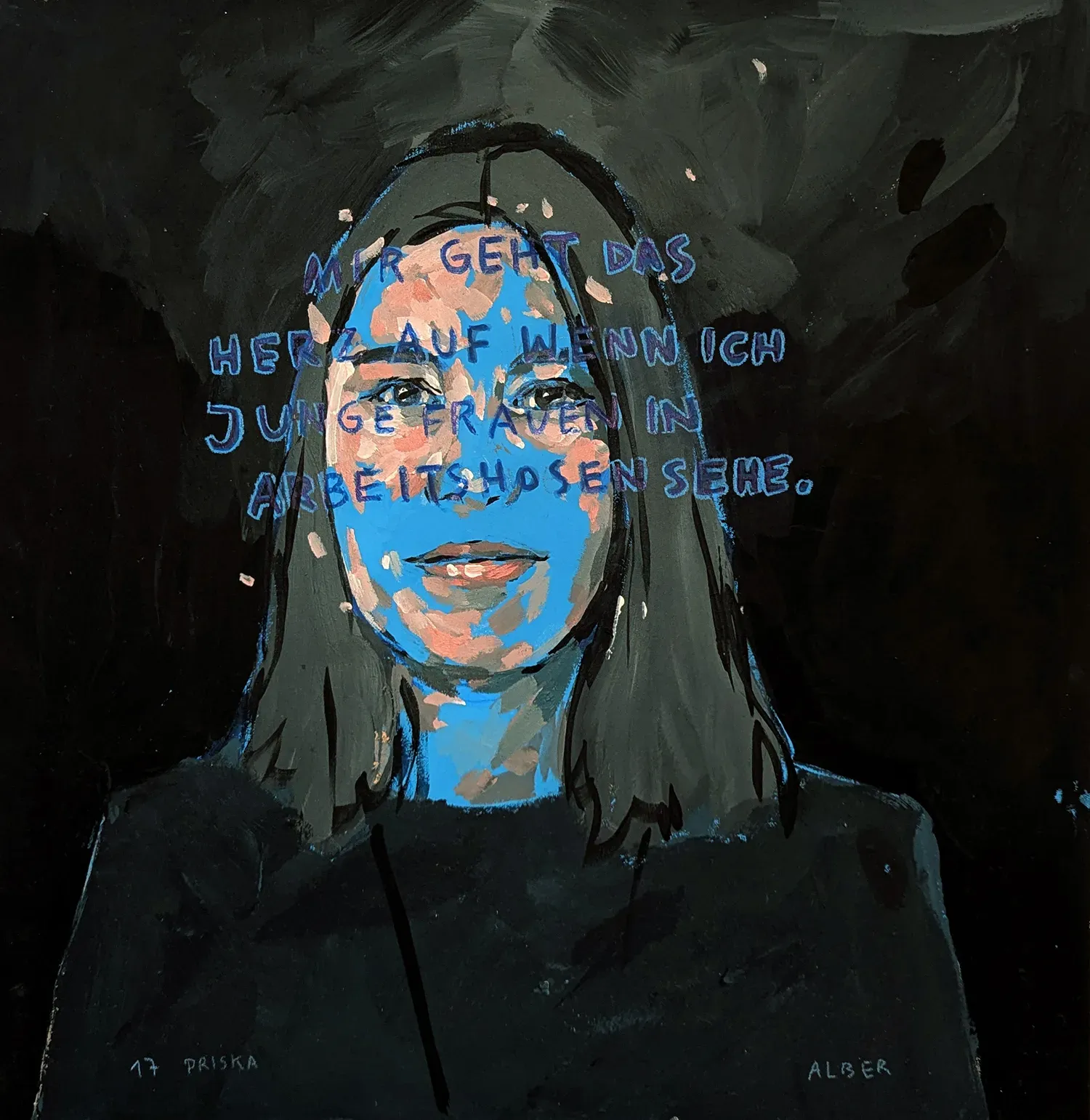
17 PRISKA
Mir geht das Herz auf, wenn ich junge Frauen in Arbeitshosen sehe.
Mi si riempie il cuore di gioia quando vedo giovani donne con i pantaloni da lavoro.
It warms my heart to see young women in work pants.
Lies mehr darüber
Bei uns war das im Elternhaus eigentlich nie so ein großes Ding. Ich bin zusammen mit meinem Bruder im Betrieb, und wir sind schon früh eingebunden worden. Wir sind nach der Schule in die Werkstatt und haben dort mitgetan. Und dadurch, wenn du so aufwächst, stellt sich irgendwann die Frage: Wieso soll er das machen und wieso soll ich das nicht machen? Also für mich war im Kopf nie die Frage: Kann ich das überhaupt oder darf ich das überhaupt? Das hat es von meinen Eltern aus überhaupt nicht gegeben. Vor allem meine Mama hat uns voll motiviert, egal um was es gegangen ist. Wenn du dich für etwas interessiert hast, dann hat sie dich motiviert. Und ich finde, das nimmt viel Druck. Wenn man sich zuerst beweisen oder rechtfertigen muss, dass man sich überhaupt dafür interessiert, dann zweifelt man an sich selber und verfolgt es vielleicht gar nicht.
Es hat schon einzelne Fälle gegeben, die lieber mit einem Techniker reden wollten. Am Anfang habe ich das vielleicht auch mehr empfunden. Ich glaube aber, das hat auch ein bisschen mit der eigenen Unsicherheit zu tun. Wenn man das noch nicht so lange macht, dann hat man noch nicht die Sicherheit und hat das Bedürfnis: Ich muss jetzt zeigen, dass ich das verstehe. Mir war dann ganz wichtig, dass ich ganz professionell wirke. Mittlerweile ist das nicht mehr so. Man wächst da hinein und merkt, man muss es gar nicht so machen. Aber einen Fall hat es gegeben: Der hat gesagt, er hätte halt gern mit einem Techniker geredet. Und ich habe gesagt: „Dann müssen Sie halt mit mir reden. Ich kann das genauso gut. Wenn es irgendetwas gibt, was ich nicht verstehe oder nicht kann, dann verspreche ich Ihnen, dass jemand anderes kommt. Aber ich bin mir sicher, dass ich das weiß, weil ich mache das jeden Tag und ich weiß, wovon Sie reden.“ Und dann habe ich ihm zum Glück alle Fragen beantworten können. Und zum Schluss hat er gesagt: „Na, da muss ich mich jetzt halt noch einmal in aller Form entschuldigen. Aber zu meiner Zeit war das mit den Frauen ganz anders…“
Was ich ganz wichtig finde, sind Vorbilder. Wie sollst du auf die Idee kommen, dass du diesen Weg gehen kannst, wenn du es nie irgendwo gesehen hast? Mittlerweile sieht man immer mehr Frauen im Handwerk. Und ich denke, das ist ganz wichtig, weil es dann auch für ein kleines Mädel zur Option wird, wenn sie sieht: Das machen andere Mädchen auch. Bei mir geht das Herz auf, wenn ich durch die Stadt fahre und ganz junge Frauen mit Arbeitshosen sehe. Je mehr Frauen da sind, umso normaler wird es. Und das ist eigentlich das Wichtigste, was man erreichen kann: dass es einfach normal ist. Weil wenn es normal ist, dann wird es nicht mehr hinterfragt.
Leggi di più
A casa nostra non è mai stata una questione così grande. Sono nell’azienda insieme a mio fratello e siamo stati coinvolti fin da piccoli. Dopo la scuola andavamo in officina e davamo una mano. E quando cresci così, a un certo punto ti chiedi: perché dovrebbe farlo lui e perché io no? Quindi nella mia testa non c’è mai stata la domanda: sono capace di farlo? Posso farlo? Dai miei genitori questa cosa non è mai esistita. Soprattutto mia mamma ci ha sempre motivati, indipendentemente da ciò di cui si trattava. Se qualcosa ti interessava, lei ti incoraggiava. E trovo che questo tolga molta pressione. Se prima devi dimostrare o giustificare il fatto che ti interessi a qualcosa, allora dubiti di te stessa e magari non lo segui nemmeno.
Ci sono stati singoli casi di persone che avrebbero preferito parlare con un tecnico. All’inizio forse lo percepivo anche di più. Credo però che abbia anche un po’ a che fare con la propria insicurezza. Se fai una cosa da poco tempo, non hai ancora la sicurezza e senti il bisogno di dimostrare: devo far vedere che capisco. Per me era molto importante apparire professionale. Oggi non è più così. Ci cresci dentro e ti accorgi che non devi nemmeno farlo in quel modo. Ma c’è stato un caso: lui ha detto che avrebbe preferito parlare con un tecnico. E io ho detto: «Allora dovrà parlare con me. Lo so fare altrettanto bene. Se c’è qualcosa che non capisco o non so fare, le prometto che arriverà qualcun altro. Ma sono sicura di saperlo, perché lo faccio ogni giorno e so di che cosa sta parlando.» E per fortuna sono riuscita a rispondere a tutte le sue domande. E alla fine ha detto: «Beh, allora devo scusarmi ancora una volta formalmente. Ma ai miei tempi questa cosa era molto diverso con le donne…»
Quello che trovo molto importante sono i modelli. Come fai anche solo a pensare che puoi seguire quella strada, se non l’hai mai vista da nessuna parte? Nel frattempo si vedono sempre più donne nei mestieri manuali. E penso che questo sia molto importante, perché così diventa un’opzione anche per una bambina quando vede: lo fanno anche altre ragazze. Mi si apre il cuore quando giro per la città e vedo donne giovanissime con i pantaloni da lavoro. Più donne ci sono, più diventa normale. E in realtà è questa la cosa più importante che si può raggiungere: che sia semplicemente normale. Perché quando è normale, non viene più messo in discussione.
Read about it
In our family home, it was never really a big issue. I’m in the business together with my brother, and we were involved from an early age. After school we went to the workshop and helped out there. And when you grow up like that, at some point the question arises: Why should he do it and why shouldn’t I? So in my head the question was never: Can I even do this, or am I even allowed to do this? That did not exist at all from my parents’ side. My mum in particular really encouraged us, no matter what it was about. If you were interested in something, she encouraged you. And I think that takes away a lot of pressure. If you first have to prove or justify that you are even interested in something, then you start doubting yourself and maybe you do not pursue it at all.
There have been individual cases where people would rather have spoken to a technician. At the beginning, I probably felt that more strongly too. But I think it also has a little to do with your own insecurity. If you have not been doing something for very long, you do not yet have that confidence and you feel the need to show: I have to prove that I understand this. It was very important to me then to appear completely professional. That is not the case anymore. You grow into it and realize that you do not have to do that. But there was one case: he said he would rather speak to a technician. And I said: “Then you’ll have to talk to me. I can do this just as well. If there is anything I do not understand or cannot do, I promise you someone else will come. But I am sure I know this, because I do it every day and I know what you are talking about.” And luckily I was able to answer all his questions. And at the end he said: “Well, then I really have to apologize formally once again. But in my day, this was very different with women…”
What I think is very important is role models. How are you supposed to get the idea that you can take this path if you have never seen it anywhere? By now you see more and more women in the trades. And I think that is very important, because then it also becomes an option for a little girl when she sees: other girls do this too. My heart opens when I drive through town and see very young women in work trousers. The more women there are, the more normal it becomes. And that is really the most important thing you can achieve: that it simply becomes normal. Because when it is normal, it is no longer questioned.
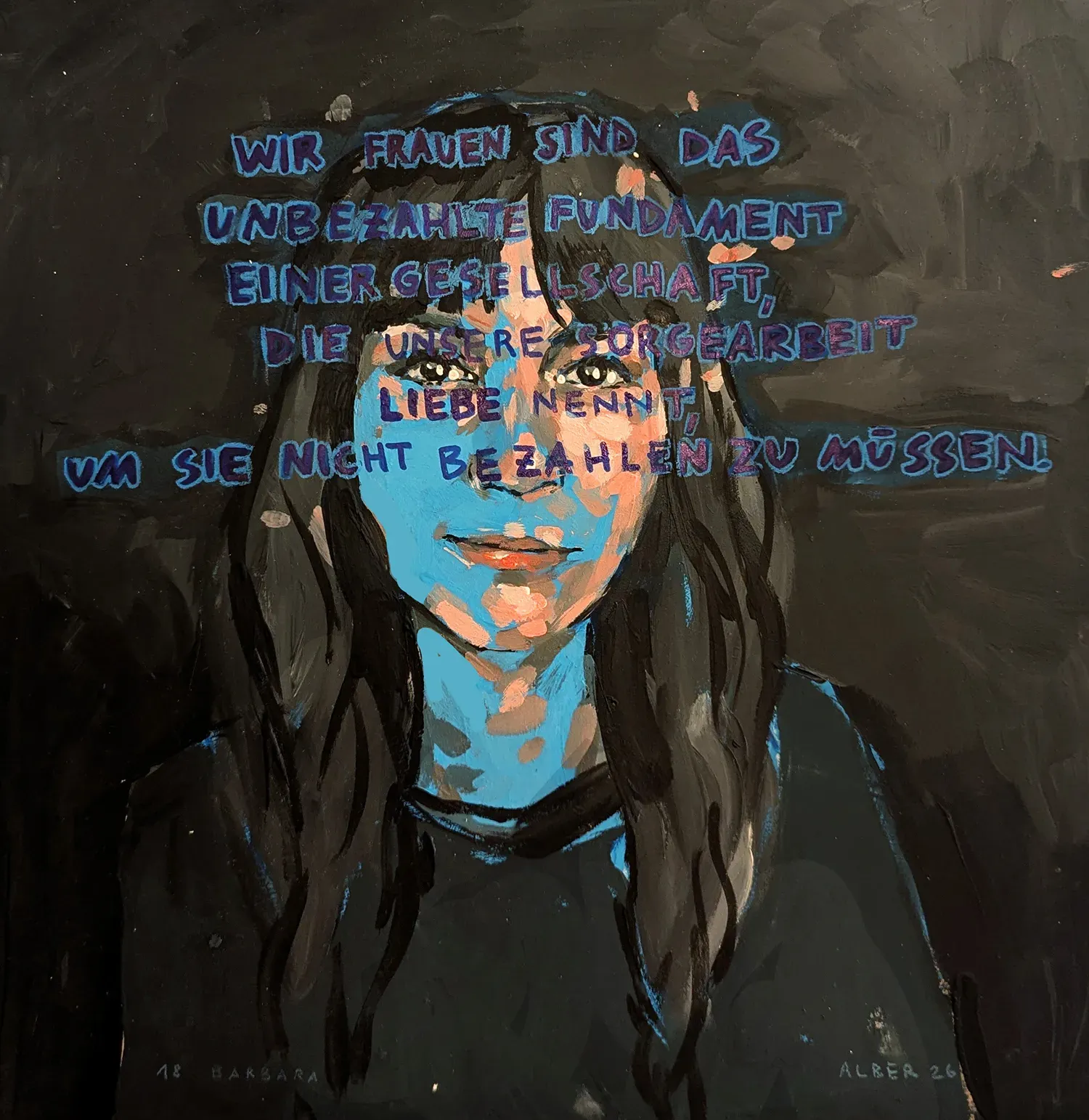
18 BARBARA
Wir sind das unbezahlte Fundament einer Gesellschaft, die unsere Sorgearbeit „Liebe“ nennt, um sie nicht bezahlen zu müssen.
Siamo le fondamenta non retribuite di una società che chiama il nostro lavoro di cura «amore» per non doverlo pagare.
We are the unpaid foundation of a society that calls our care work “love” so it doesn’t have to pay for it.
Lies mehr darüber
Ich forsche zum Thema häusliche Demenzpflege. Also Leute, die zu Hause jemanden pflegen, der an Demenz erkrankt ist. Wir haben uns angeschaut, wie anstrengend das ist und wie es sich auf die Gesundheit von Pflegenden niederschlägt.
Und das ist wieder eine Frauenrolle. Carearbeit heißt meistens: In erster Linie auf die kleinen Kinder schauen. Aber es heißt dann für Frauen auch, auf die älteren Menschen zu schauen, wenn sie krank werden. Es ist meistens nicht der Sohn oder der Schwiegersohn oder der Partner, sondern die Frauen, die wieder einspringen. Die Kinder sind vielleicht endlich aus dem Gröbsten raus, da sind plötzlich ältere Familienmitglieder zu pflegen. In einer unserer letzten Studien sind es fünfundneunzig Prozent Frauen, die pflegen.
Wir Frauen erhalten die Gesellschaft mit – unentgeltlich und auf Kosten der eigenen Gesundheit, des eigenen Einkommens, der eigenen Freizeit, der eigenen Pension. Diese Arbeit muss geleistet werden. Wir hätten nicht genug Heimplätze für alle kranken älteren Leute. Also Frauen leisten da eine extrem existenzielle Arbeit.
Und trotzdem wird sie nicht anerkannt und abgesichert. Dahinter steckt ein perfider Trick: Was die Frau leistet, passiert aus Liebe. Und was aus Liebe passiert, muss man nicht bezahlen. Und wenn du das verlangst, bist du materialistisch. Lieblos. Egoistisch. Wie wenig liebst du deine Kinder oder deine kranken Eltern, wenn du für deren Pflege nicht selbstverständlich dein Leben als Frau aufgibst?
Das ist eine extreme Ungleichheit. Und diese Ungleichheit ist keine private Meinung, sondern ein Fakt. Das kann man wissenschaftlich ganz gut quantifizieren. Carearbeit kostet Zeit, Einkommen, berufliche Chancen und soziale Absicherung.
Und bei Mutterschaft ist es genauso. Ich kann nicht die Lohnarbeit, die Care-Arbeit, die Hausarbeit und die bedürfnisorientierte Erziehung, Selbstfürsorge und Yoga und Beziehungsarbeit unter einen Hut bringen. Das geht nicht.
Und irgendwann siehst du es halt schwarz auf weiß. Wieso kriegt meine Mama achthundert Euro Rente? Und mein Papa tausendsechshundert?
Unfreiwillige Teilzeit. Frauen, die aus der Erwerbstätigkeit rausgehen und danach nicht mehr zurückkommen. Wer macht die Aufgaben? Wer tröstet das Kind, wenn es traurig ist? Wer bleibt zuhause, wenn es krank ist? Wer kocht? Wer macht Hausaufgabenbetreuung? In Studien ist das alles längst quantifiziert.
Aber wenn du darüber redest, dann bist du nicht mehr unbequem, sondern gescheitert in der Mutterrolle. Und wer will in der Mutterrolle scheitern? Niemand. Weil du liebst ja die Kinder. Du möchtest alles richtig machen.
Aber es wird alles moralisiert, anstatt politisiert. Es wird gesagt: Die ist unbequem. Die ist nervig. Die ist zu direkt. Die ist eine schlechte Mutter. Und so wird aus einer Systemfrage eine Charakterfrage gemacht.
Unbequem ist nicht die Frau. Unbequem ist ein System, das nicht mehr reibungslos funktioniert, sobald Frauen aufhören, angepasst zu sein.
Die Frau wird zum Problem – und das System wird nicht als Problem erkannt.
Leggi di più
Faccio ricerca sul tema dell’assistenza domiciliare alle persone con demenza. Quindi persone che a casa assistono qualcuno che ha la demenza. Abbiamo studiato quanto sia faticoso e come si ripercuota sulla salute di chi presta assistenza.
E questo è di nuovo un ruolo femminile. Il lavoro di cura significa di solito, prima di tutto, occuparsi dei bambini piccoli. Ma per le donne significa poi anche occuparsi delle persone anziane quando si ammalano. Di solito non è il figlio, il genero o il partner, ma sono le donne a intervenire di nuovo. I figli magari sono finalmente usciti dalla fase più impegnativa e improvvisamente ci sono familiari anziani da assistere. In uno dei nostri ultimi studi, il novantacinque per cento di chi presta assistenza sono donne.
Noi donne contribuiamo a tenere in piedi la società, gratuitamente e a costo della nostra salute, del nostro reddito, del nostro tempo libero, della nostra pensione. Questo lavoro deve essere svolto. Non avremmo abbastanza posti nelle strutture per tutte le persone anziane malate. Quindi le donne svolgono un lavoro estremamente essenziale.
E nonostante questo non viene riconosciuto né tutelato. Dietro c’è un trucco perfido: quello che fa la donna succede per amore. E quello che succede per amore non bisogna pagarlo. E se lo pretendi, sei materialista. Senza amore. Egoista. Quanto poco ami i tuoi figli o i tuoi genitori malati, se non rinunci spontaneamente alla tua vita di donna per prenderti cura di loro?
Questa è una disuguaglianza estrema. E questa disuguaglianza non è un’opinione privata, ma un fatto. Si può quantificare molto bene scientificamente. Il lavoro di cura costa tempo, reddito, opportunità professionali e sicurezza sociale.
E con la maternità è esattamente lo stesso. Non posso conciliare il lavoro retribuito, il lavoro di cura, il lavoro domestico, l’educazione orientata ai bisogni, la cura di me stessa, lo yoga e il lavoro di coppia. Non si può.
E a un certo punto lo vedi nero su bianco. Perché mia mamma prende ottocento euro di pensione? E mio papà milleseicento?
Part-time involontario. Donne che escono dal mercato del lavoro e poi non ci rientrano più. Chi svolge i compiti? Chi consola il bambino quando è triste? Chi resta a casa quando è malato? Chi cucina? Chi segue i compiti scolastici? Negli studi tutto questo è quantificato da tempo.
Ma se ne parli, allora non sei più scomoda: hai fallito nel ruolo di madre. E chi vuole fallire nel ruolo di madre? Nessuno. Perché ami i tuoi figli. Vuoi fare tutto nel modo giusto.
Ma viene tutto moralizzato invece che politicizzato. Si dice: è scomoda. È fastidiosa. È troppo diretta. È una cattiva madre. E così da una questione di sistema si fa una questione di carattere.
Non è la donna a essere scomoda. È scomodo un sistema che non funziona più senza attriti non appena le donne smettono di adattarsi.
La donna diventa il problema, e il sistema non viene riconosciuto come problema.
Read about it
I research home care for people with dementia. So, people who care at home for someone who has dementia. We looked at how exhausting that is and how it affects the health of caregivers.
And that is another women’s role. Care work usually means, first of all, looking after small children. But for women it also means looking after older people when they become ill. It is usually not the son or the son-in-law or the partner, but women who step in again. The children may finally be through the most demanding stage, and suddenly there are older family members who need care. In one of our latest studies, ninety-five percent of the people providing care are women.
We women help keep society going—unpaid and at the expense of our own health, our own income, our own free time, our own pension. This work has to be done. We would not have enough care-home places for all sick older people. So women are doing work that is absolutely essential.
And yet it is not recognized or protected. There is a perfidious trick behind it: what a woman does happens out of love. And what happens out of love does not have to be paid. And if you demand that, you are materialistic. Unloving. Selfish. How little do you love your children or your sick parents if you do not automatically give up your life as a woman to care for them?
That is an extreme inequality. And this inequality is not a personal opinion, but a fact. It can be quantified quite well scientifically. Care work costs time, income, professional opportunities, and social security.
And motherhood is exactly the same. I cannot fit paid work, care work, housework, needs-oriented parenting, self-care and yoga, and relationship work all under one roof. It is not possible.
And at some point you see it in black and white. Why does my mum get an eight-hundred-euro pension? And my dad sixteen hundred?
Involuntary part-time work. Women who leave employment and then do not return. Who does the tasks? Who comforts the child when they are sad? Who stays home when they are sick? Who cooks? Who helps with homework? Studies have quantified all of this for a long time.
But if you talk about it, then you are no longer uncomfortable; you have failed in the role of mother. And who wants to fail in the role of mother? Nobody. Because you love your children. You want to do everything right.
But everything is moralized instead of politicized. People say: She is uncomfortable. She is annoying. She is too direct. She is a bad mother. And that turns a systemic issue into a question of character.
The woman is not uncomfortable. What is uncomfortable is a system that stops running smoothly as soon as women stop adapting themselves.
The woman becomes the problem—and the system is not recognized as the problem.
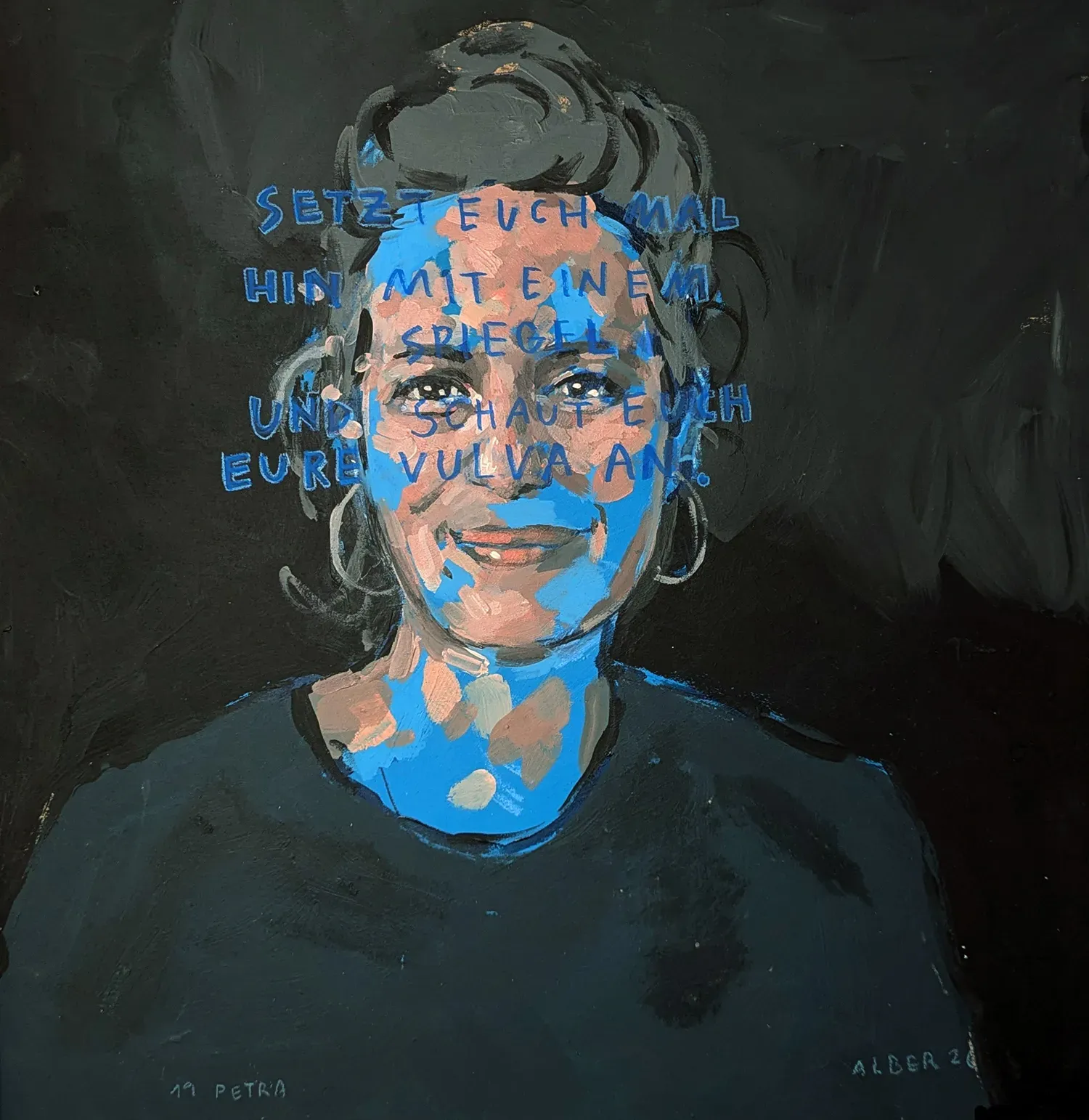
19 PETRA
Setzt euch mal hin mit einem Spiegel und schaut euch eure Vulva an.
Sedetevi con uno specchio e guardatevi la vulva.
Sit down with a mirror and take a look at your vulva.
Lies mehr darüber
Das Thema Körper hat mich immer schon interessiert. Ich bin Körpertherapeutin und habe eine vierjährige Ausbildung gemacht. Und dann war ich schwanger und habe nach der Geburt einen sekundären Vaginismus entwickelt. Also ein unwillkürliches Verkrampfen der Beckenbodenmuskulatur bei sexueller Erregung, wodurch Berührung unangenehm und Penetration nicht möglich wird. Und das hat mich wahnsinnig irritiert. Ich habe bis dahin meine Sexualität gelebt, mir ist es gut gegangen, und auf einmal passiert das. Keine Ahnung. Dann bin ich zum Frauenarzt. Der wollte mir einen sexuellen Missbrauch unterschieben, das hat überhaupt nicht resoniert, und dann hat er gesagt: Trinken Sie ein Gläschen Wein, dann geht das schon wieder. Und ich habe gedacht: Okay, wenn jetzt mein Frauenarzt keine Ahnung hat – fuck, ich muss mir selber helfen. Ich habe eine Beckenbodentherapie-Ausbildung gemacht, um zu verstehen: Wie kriege ich überhaupt Zugriff zu meinem Beckenboden? Wie kann ich bewusst entspannen und bewusst anspannen? Ich bin in die Sexualberatungsausbildung gegangen, um zu verstehen: Was sind die Puzzlestücke? Was passiert da gerade? Wir waren damals auch als Paar sprachlos. Beziehung und Sexualität, das muss ja alles von alleine gehen. Darüber haben wir überhaupt nicht geredet. Null. Das geht nicht – und darüber reden wir nicht. Und das hat total zur Distanzierung geführt. Wir wollten uns dann trennen und sind in eine Begleitung gegangen, eigentlich mit dem Gedanken, uns begleitet zu trennen. Und die haben uns einfach Raum gegeben zu reden. Und auf einmal ist die Mauer, die sich zwischen uns aufgebaut hatte, kleiner geworden. Wir haben durch diesen Vaginismus extrem viel gelernt – über Kommunikation, über Reden während Sex. Es braucht Kommunikation. Wir können nicht Gedanken lesen. Ich kann meinen Körper spüren und das dann mitteilen. Und dann kann mein Gegenüber damit mitgehen.
Und das hat mich immer mehr zu der Frage gebracht: Welche lustvolle Frau bin ich eigentlich? Was gefällt mir? Das kann kein Mann wissen. Ich darf mich mitteilen – ich muss mich mitteilen. Es braucht diese Hinwendung zum eigenen Körper, dieses Tieftauchen, dieses Wegräumen von einem Haufen Überzeugungen, die da im Weg stehen. Weil die Idee immer noch so stark ist: Der weibliche Körper steht dem Mann zu Diensten. Die Frau ist das Befriedigungsobjekt, die Dienstleisterin für die Lust des Mannes. Und gleichzeitig lernen Frauen so früh: Greif dich dort nicht an. Hand weg. Scham. Dabei bin in erster Linie ich für meine sexuellen Bedürfnisse verantwortlich. Selbstbefriedigung kann ein Selbstlieberitual sein. Ein Akt, wo ich mir selber etwas Gutes tue, wo ich mit mir selber intim werde, mir selber begegne und Verbindung mit mir pflege. Sexualität ist so ein großer Teil von unserem Menschsein – und gleichzeitig reden wir so wenig darüber. Genau deswegen finde ich es so wichtig, Worte dafür zu finden.
Setzt euch mal hin mit einem Spiegel und schaut euch eure Vulva an. Schaut einmal: Was ist bei deiner anders? Wie ist meine? Ich erinnere mich bei meiner Tochter, wie wir das gemacht haben, und sie gemeint hat: Meine ist viel schöner wie deine. Und wie schön ist das? Ich habe das so schön gefunden, wie sie ihre Vulva feiert. Weil da so viel Scham ist, wie so ein Schleier, den man ein bisschen durchbrechen darf. Wir müssen unseren Körper nicht verstecken, wir müssen ihn nicht verschließen. Wenn wir uns von unserem Intimbereich abtrennen, sind wir nicht verbunden mit unserer Basis, mit unserer Mitte, mit unserem Intimsten. Ich erlebe ganz viele Frauen, oft mit sechzig, in meinen Kursen, wo dann klar ist: Der Gynäkologe und die Partnerperson kennen ihren Intimbereich besser als sie selber. Und das ist schon tragisch, traurig – und gleichzeitig die Realität, wo man ansetzen kann. Eben indem wir mal einen Spiegel nehmen und mal schauen. Jede Vulva hat äußere und innere Labien, Klitorisperle, Kapuze, Harnröhrenöffnung und die Öffnung in die Vagina. Aber keine schaut identisch aus. Keine. Es ist wie ein zweites Gesicht. Wir haben alle Augen, Augenbrauen, Nase – und trotzdem komplett unterschiedliche Gesichter. Und so ist es in unserem Intimbereich genauso. Superindividuell und einzigartig.
Leggi di più
Il tema del corpo mi ha sempre interessata. Sono terapeuta corporea e ho fatto una formazione di quattro anni. Poi sono rimasta incinta e dopo il parto ho sviluppato un vaginismo secondario. Cioè una contrazione involontaria della muscolatura del pavimento pelvico durante l’eccitazione sessuale, per cui il contatto diventa sgradevole e la penetrazione non è possibile. E questa cosa mi ha sconvolta tantissimo. Fino a quel momento vivevo la mia sessualità, stavo bene, e all’improvviso succede questo. Non ne avevo idea. Poi sono andata dal ginecologo. Voleva attribuirmi un abuso sessuale, ma non mi risuonava per niente, e poi ha detto: beva un bicchiere di vino, poi passerà. E io ho pensato: Okay, se adesso il mio ginecologo non ne ha idea, fuck, devo aiutarmi da sola. Ho fatto una formazione di terapia del pavimento pelvico per capire: come riesco ad avere accesso al mio pavimento pelvico? Come posso rilassarlo consapevolmente e contrarlo consapevolmente? Ho fatto una formazione in consulenza sessuale per capire: quali sono i pezzi del puzzle? Che cosa sta succedendo? All’epoca, come coppia, eravamo anche senza parole. Relazione e sessualità: dovrebbe funzionare tutto da solo. Non ne parlavamo affatto. Zero. Non funziona, e non ne parliamo. E questo ha portato a una distanza enorme tra noi. Volevamo separarci e siamo andati a farci accompagnare, in realtà con l’idea di separarci con un sostegno. E loro ci hanno semplicemente dato spazio per parlare. E all’improvviso il muro che si era costruito tra noi è diventato più piccolo. Attraverso questo vaginismo abbiamo imparato tantissimo: sulla comunicazione, sul parlare durante il sesso. Serve comunicazione. Non possiamo leggere il pensiero. Io posso sentire il mio corpo e comunicarlo. E allora la persona davanti a me può seguirlo.
E questo mi ha portata sempre di più alla domanda: che donna desiderante sono, in realtà? Che cosa mi piace? Un uomo non può saperlo. Posso comunicarmi, devo comunicarmi. Serve questo rivolgersi al proprio corpo, questo andare in profondità, questo togliere di mezzo un mucchio di convinzioni che ostacolano. Perché l’idea è ancora così forte: il corpo femminile è al servizio dell’uomo. La donna è l’oggetto di soddisfazione, la fornitrice di servizi per il piacere dell’uomo. E allo stesso tempo le donne imparano così presto: non toccarti lì. Togli la mano. Vergogna. Ma in primo luogo sono io responsabile dei miei bisogni sessuali. La masturbazione può diventare un rituale di amore per sé. Un atto in cui faccio qualcosa di buono per me stessa, in cui divento intima con me stessa, incontro me stessa e coltivo il legame con me. La sessualità è una parte così grande del nostro essere umani, e allo stesso tempo ne parliamo così poco. Proprio per questo trovo così importante trovare le parole per parlarne.
Sedetevi con uno specchio e guardate la vostra vulva. Guardate un po’: che cosa c’è di diverso nella tua? Com’è la mia? Mi ricordo di quando l’ho fatto con mia figlia e lei ha detto: la mia è molto più bella della tua. E quanto è bello? Ho trovato così bello il modo in cui celebrava la sua vulva. Perché c’è così tanta vergogna, come un velo che si può un po’ rompere. Non dobbiamo nascondere il nostro corpo, non dobbiamo chiuderlo. Se ci separiamo dalla nostra zona intima, non siamo connesse con la nostra base, con il nostro centro, con la parte più intima di noi. Nei miei corsi incontro tantissime donne, spesso sui sessant’anni, per le quali diventa chiaro che il ginecologo e la persona partner conoscono la loro zona intima meglio di loro stesse. Ed è già tragico, triste, e allo stesso tempo è la realtà da cui si può partire. Per esempio prendendo uno specchio e guardando. Ogni vulva ha labbra esterne e interne, glande del clitoride, cappuccio, apertura dell’uretra e apertura vaginale. Ma nessuna è identica a un’altra. Nessuna. È come un secondo volto. Abbiamo tutte occhi, sopracciglia, naso, eppure volti completamente diversi. E nella nostra zona intima è esattamente lo stesso. Superindividuale e unica.
Read about it
The body has always interested me. I’m a body therapist and I completed a four-year training program. Then I was pregnant and after giving birth I developed secondary vaginismus. That means an involuntary tightening of the pelvic-floor muscles during sexual arousal, which makes touch uncomfortable and penetration impossible. And that really unsettled me. Until then I had lived my sexuality, I had felt good, and suddenly this happened. No idea. Then I went to the gynecologist. He tried to suggest that I had experienced sexual abuse; that did not resonate with me at all, and then he said: Have a glass of wine, then it’ll be fine again. And I thought: Okay, if my gynecologist has no idea—fuck, I have to help myself. I did a pelvic-floor therapy training course to understand: How can I even access my pelvic floor? How can I consciously relax it and consciously tense it? I trained in sex counseling to understand: What are the pieces of the puzzle? What is happening here? At the time, we were also speechless as a couple. Relationships and sexuality are supposed to work all by themselves. We did not talk about it at all. Zero. It does not work—and we do not talk about it. And that created a lot of distance between us. We wanted to separate and went into counseling, actually with the idea of separating with support. And they simply gave us space to talk. And suddenly the wall that had built up between us became smaller. We learned an incredible amount through this vaginismus—about communication, about talking during sex. Communication is necessary. We cannot read minds. I can feel my body and then communicate that. And then the other person can respond to it.
And that brought me more and more to the question: What kind of sensual woman am I actually? What do I like? No man can know that. I am allowed to communicate—I have to communicate. It takes this turning toward your own body, this deep dive, this clearing away of a whole pile of beliefs that stand in the way. Because the idea is still so strong: the female body exists to serve the man. The woman is the object of satisfaction, the service provider for the man’s pleasure. And at the same time women learn so early: Don’t touch yourself there. Hands off. Shame. But first and foremost, I am responsible for my own sexual needs. Masturbation can become a self-love ritual. An act where I do something good for myself, where I become intimate with myself, encounter myself, and nurture my connection with myself. Sexuality is such a large part of being human—and at the same time we talk so little about it. That is exactly why I think it is so important to find words for it.
Sit down with a mirror and look at your vulva. Have a look: what is different about yours? What is mine like? I remember doing that with my daughter, and she said: Mine is much prettier than yours. And how beautiful is that? I thought it was so beautiful how she celebrated her vulva. Because there is so much shame, like a veil that you are allowed to break through a little. We do not have to hide our bodies, we do not have to close them off. If we disconnect from our intimate area, we are not connected to our base, our center, our most intimate self. I meet a lot of women in my courses, often around sixty, where it becomes clear that the gynecologist and their partner know their intimate area better than they do themselves. And that is tragic, sad—and at the same time it is the reality where you can begin. By taking a mirror and looking. Every vulva has outer and inner labia, a clitoral glans, hood, urethral opening, and vaginal opening. But no two look identical. None. It is like a second face. We all have eyes, eyebrows, a nose—and yet completely different faces. And it is exactly the same with our intimate area. Super individual and unique.
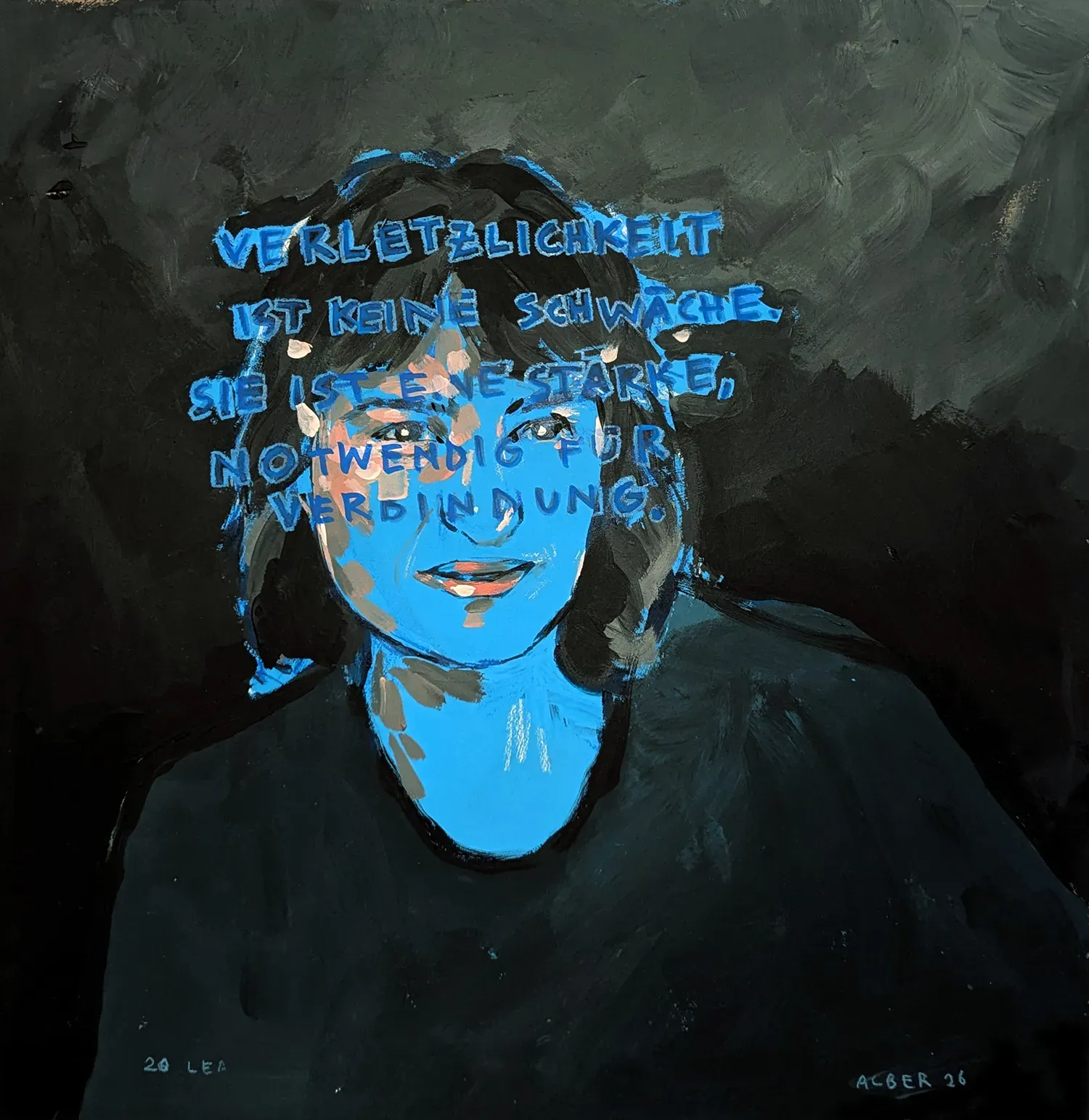
20 LEA
Verletzlichkeit ist keine Schwäche. Sie ist eine Stärke, notwendig für Verbindung.
La vulnerabilità non è una debolezza. È una forza, necessaria per creare legami.
Vulnerability is not a weakness. It is a strength, essential for connection.
Listen to the audio
Lies mehr darüber
Beim Bondage, also wenn zwei Personen sich dafür entscheiden, gemeinsam zu fesseln, denkt man vielleicht, dass es hauptsächlich um die Knoten geht, um die Ästhetik. Man hat vielleicht gewisse Bilder im Kopf. Ich finde vor allem faszinierend, dass es um die Verbindung zwischen den zwei Personen geht, die gemeinsam dieses Fesselritual machen. Und der wesentliche Punkt der Verbindung beim Fesseln ist die Verletzlichkeit. Und Verletzlichkeit wird oft als etwas Schwaches und vielleicht sogar Negatives gesehen. Wobei Verletzlichkeit für mich tatsächlich eine Stärke ist und auch beim gemeinsamen Fesseln etwas ist, das die ehrliche, authentische Verbindung erst möglich macht. Und das sehe ich ganz klar in meinen Bondage-Workshops oder auch wenn ich selber fessle: Dann ist es die Verletzlichkeit, die andere Menschen spürbar macht oder mich selber spürbar macht.
Verletzlichkeit zu zeigen und damit auch in die Begegnung zu gehen, finde ich auch einen rebellischen Akt. Weil es etwas ganz, ganz Ehrliches ist, und ich finde es so faszinierend, dass es beim gemeinsamen Fesseln sehr gut möglich ist, in die Verletzlichkeit hineinzugehen und den Mut zur Verletzlichkeit zu üben.
Leggi di più
Nel bondage, quindi quando due persone decidono di legarsi insieme, si può pensare che si tratti soprattutto dei nodi, dell’estetica. Magari si hanno in mente certe immagini. Quello che trovo soprattutto affascinante è che si tratta della connessione tra le due persone che fanno insieme questo rituale di legatura. E il punto essenziale della connessione nel bondage è la vulnerabilità. La vulnerabilità viene spesso vista come qualcosa di debole e magari perfino di negativo. Per me invece la vulnerabilità è davvero una forza ed è anche, nel legarsi insieme, ciò che rende possibile una connessione onesta e autentica. E lo vedo molto chiaramente nei miei workshop di bondage o anche quando lego io stessa: è la vulnerabilità a rendere percepibili le altre persone o me stessa.
Mostrare vulnerabilità e attraverso questo entrare nell’incontro per me è anche un atto ribelle. Perché è qualcosa di molto, molto onesto e trovo affascinante che nel legarsi insieme sia davvero possibile entrare nella vulnerabilità ed esercitare il coraggio di essere vulnerabili.
Read about it
With bondage, when two people decide to tie together, you might think it is mainly about the knots, about the aesthetics. You may have certain images in your head. What I find especially fascinating is that it is about the connection between the two people who do this tying ritual together. And the essential point of the connection in bondage is vulnerability. Vulnerability is often seen as something weak and perhaps even something negative. For me, vulnerability is actually a strength, and when tying together it is also what makes honest, authentic connection possible in the first place. I see that very clearly in my bondage workshops, or when I tie myself: it is vulnerability that makes other people tangible to me, or makes me tangible to myself.
Showing vulnerability and entering into an encounter through it is also a rebellious act for me. Because it is something very, very honest, and I find it fascinating that when tying together it is very possible to enter into vulnerability and practice the courage to be vulnerable.
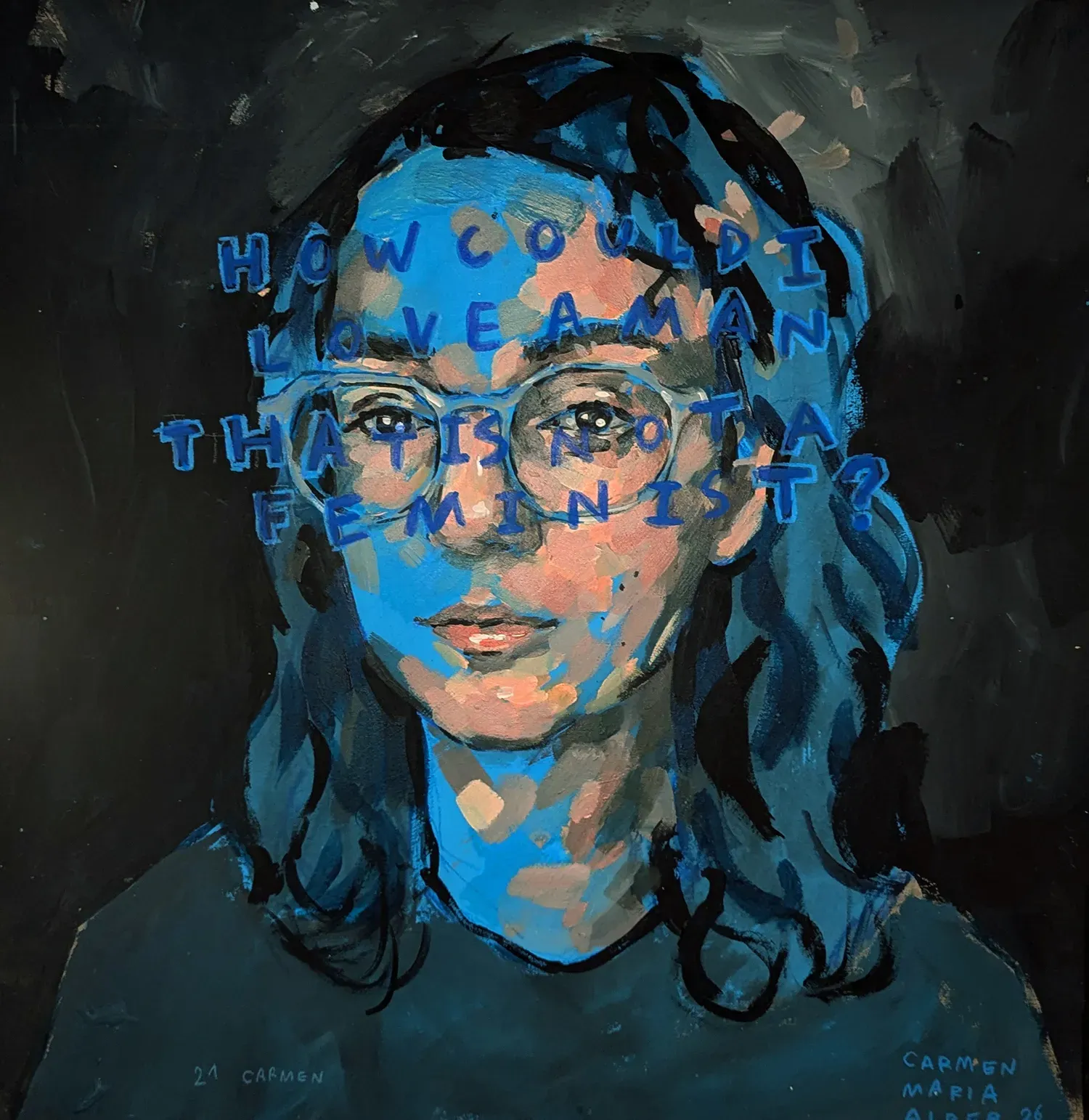
21 CARMEN
How could I love a man who is not a feminist?
Come potrei amare un uomo che non è femminista?
Wie könnte ich einen Mann lieben, der kein Feminist ist?
Lies mehr darüber
/
Leggi di più
Read about it
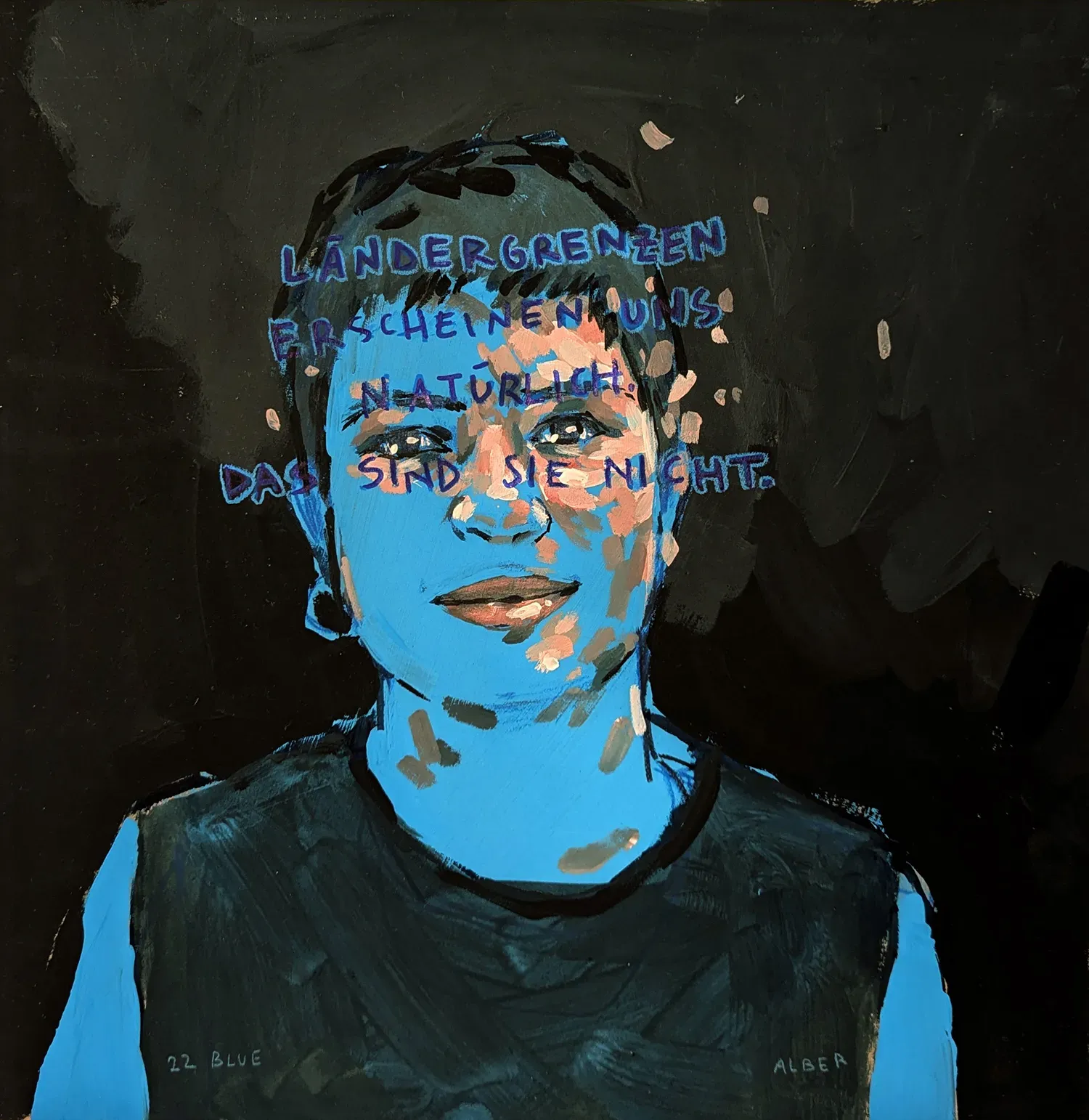
22 BLUE
Ländergrenzen erscheinen uns natürlich, aber das sind sie nicht.
I confini tra Paesi ci sembrano naturali, ma non lo sono.
National borders seem natural to us, but they aren’t.
Lies mehr darüber
Ländergrenzen erscheinen uns natürlich, aber sie sind es nicht. Sie sind in dieser Form noch gar nicht so alt. Und Geschlechterrollen genauso. Ich finde es spannend, Sachen zu hinterfragen, die natürlich scheinen.
Letzten Winter war ich für sechs Wochen im Val di Susa, an der Grenze zwischen Italien und Frankreich. Ich habe dort mit Menschen gearbeitet, die flüchten oder migrieren. Und theoretisch ist das voll ähnlich wie Südtirol: hohe Berge, schicke Skigebiete. Leute mit viel Geld und den richtigen Pässen fahren einfach mit dem Skilift über die Grenze.
Und Leute, die keine Papiere haben, müssen in der Nacht bei minus fünfundzwanzig Grad stundenlang über die Berge gehen. Manche waren vorher noch nie im Schnee. Leute gehen verloren. Leute sterben. Und das ist nicht einmal eine EU-Außengrenze.
Das war für mich so eine Parallelwelt. Weil wir diese Privilegien haben – durch Staatsbürgerschaft, durch einen Pass, durch Weißsein. Für mich ist diese Grenze fast nicht da. Und für eine andere Person bestimmt dieselbe Grenze plötzlich, ob sie sicher durch die Berge kommt.
Ich glaube, meine Queerness hat mit dem Ganzen viel zu tun. Weil man Sachen anders sehen kann und weiß, dass man Sachen anders machen kann. Dass man offener denken kann, umdenken kann, kreativer sein kann.
Queer sein heißt für mich auch: nicht der Norm entsprechen. Das Wort queer war lange eine Beschimpfung und ist dann angeeignet worden. Es war auch eine politische Identität. Nicht nur: Wir wollen die gleichen Rechte innerhalb von dem, was schon da ist. Sondern auch: Warum ist das überhaupt so organisiert? Warum muss ich heiraten, um bestimmte Rechte zu haben? Warum gibt der Staat das vor?
Beim Geschlecht ist es ähnlich. Für mich ist das keine Wahrheit, dass es Mann und Frau gibt und das bestimmt alles. Es gibt einfach alles Mögliche: wie Leute sich identifizieren, wie sie körperlich sind und was man daraus macht. Für mich fühlt sich das nicht wie ein drittes Geschlecht an, sondern eher wie ein Spektrum.
Ich habe mich lange einfach als queer identifiziert. Ich identifiziere mich auch als bisexuell, nichtbinär und ich bin nicht monogam beziehungsweise polyamor. Und ich fühle mich super frei und super glücklich in einem ganz offenen Leben.
Ich finde das mit Grenzen deswegen spannend. Nicht, weil alle Grenzen einfach weg sein sollten. Eigene Grenzen sind ja auch wichtig. Aber Grenzen zu hinterfragen, die uns selbstverständlich vorkommen.
Ich glaube, meine Definition von unbequem ist eigentlich, dass man Sachen hinterfragt, die natürlich erscheinen. Ich glaube, ich will manchmal Leute zum Nachdenken bringen. So kleine Sachen anstoßen.
Und ich bin ja selber in diesem Prozess. Es ist mir auch nicht immer wohl dabei. Es ist nicht fein und ehrlicherweise anstrengend, aber voll wichtig.
Veränderung ist nicht bequem. Ganz selten.
Leggi di più
I confini tra Paesi ci sembrano naturali, ma non lo sono. Nella forma attuale non sono nemmeno così antichi. E lo stesso vale per i ruoli di genere. Trovo interessante mettere in discussione cose che sembrano naturali.
L’inverno scorso sono stata per sei settimane in Val di Susa, al confine tra Italia e Francia. Ho lavorato lì con persone in fuga o in migrazione. E in teoria è molto simile all’Alto Adige: montagne alte, comprensori sciistici eleganti. Le persone con molti soldi e i passaporti giusti attraversano semplicemente il confine con gli impianti di risalita.
E le persone che non hanno documenti devono camminare per ore attraverso le montagne di notte, a meno venticinque gradi. Alcune non avevano mai visto la neve prima. Le persone si perdono. Le persone muoiono. E non è nemmeno un confine esterno dell’UE.
Per me era come un mondo parallelo. Perché noi abbiamo questi privilegi: attraverso la cittadinanza, attraverso un passaporto, attraverso l’essere bianche. Per me questo confine quasi non esiste. E per un’altra persona lo stesso confine improvvisamente determina se riuscirà ad attraversare le montagne in sicurezza.
Credo che il mio essere queer abbia molto a che fare con tutto questo. Perché si possono vedere le cose in modo diverso e si sa che si possono fare le cose diversamente. Che si può pensare in modo più aperto, ripensare, essere più creativi.
Essere queer per me significa anche non corrispondere alla norma. La parola queer è stata a lungo un insulto e poi è stata riappropriata. È stata anche un’identità politica. Non soltanto: vogliamo gli stessi diritti all’interno di ciò che esiste già. Ma anche: perché tutto questo è organizzato così? Perché devo sposarmi per avere determinati diritti? Perché è lo Stato a stabilirlo?
Con il genere è simile. Per me non è una verità il fatto che esistano uomo e donna e che questo determini tutto. Esiste semplicemente di tutto: come le persone si identificano, come sono fisicamente e che cosa se ne fa. Per me non sembra un terzo genere, ma piuttosto uno spettro.
Per molto tempo mi sono identificata semplicemente come queer. Mi identifico anche come bisessuale, non binaria e non sono monogama, cioè sono poliamorosa. E mi sento super libera e super felice in una vita molto aperta.
Per questo trovo interessante il tema dei confini. Non perché tutti i confini debbano semplicemente sparire. Anche i propri confini personali sono importanti. Ma mettere in discussione i confini che ci sembrano ovvi.
Credo che la mia definizione di «scomodo» sia proprio mettere in discussione cose che sembrano naturali. Credo di voler a volte far riflettere le persone. Dare piccoli impulsi.
E anch’io sono dentro questo processo. Non mi sento sempre a mio agio. Non è piacevole e, sinceramente, è faticoso, ma è molto importante.
Il cambiamento non è comodo. Quasi mai.
Read about it
Country borders seem natural to us, but they are not. In this form, they are not even that old. And the same goes for gender roles. I find it interesting to question things that seem natural.
Last winter I spent six weeks in Val di Susa, on the border between Italy and France. I worked there with people who are fleeing or migrating. And theoretically it is quite similar to South Tyrol: high mountains, fancy ski resorts. People with lots of money and the right passports simply cross the border by ski lift.
And people who do not have papers have to walk for hours through the mountains at night at minus twenty-five degrees. Some of them had never seen snow before. People get lost. People die. And it is not even an external EU border.
For me it was like a parallel world. Because we have these privileges—through citizenship, through a passport, through whiteness. For me, that border is almost not there. And for another person, that same border suddenly determines whether they get through the mountains safely.
I think my queerness has a lot to do with all of this. Because you can see things differently and you know that things can be done differently. That you can think more openly, rethink things, be more creative.
Being queer also means, for me, not conforming to the norm. The word queer was an insult for a long time and was then reclaimed. It was also a political identity. Not just: We want the same rights within what already exists. But also: Why is this organized this way at all? Why do I have to get married to have certain rights? Why does the state decide that?
Gender is similar. For me, it is not a truth that there are men and women and that this determines everything. There are all kinds of possibilities: how people identify, what their bodies are like, and what people make of that. To me it does not feel like a third gender, but more like a spectrum.
For a long time I simply identified as queer. I also identify as bisexual and nonbinary, and I am not monogamous, or rather I am polyamorous. And I feel super free and super happy in a very open life.
That is why I find borders interesting. Not because all borders should simply disappear. Personal boundaries are important too. But because it is worth questioning borders that seem self-evident to us.
I think my definition of uncomfortable is actually questioning things that seem natural. I think sometimes I want to make people think. To set small things in motion.
And I am in this process myself. I am not always comfortable with it either. It is not pleasant and, honestly, it is exhausting, but it is very important.
Change is not comfortable. Very rarely.
Nicht die Frauen* sind unbequem, sondern die Gesellschaft in der sie Leben.
Non sono le donne* a essere scomode, ma la società in cui vivono.
It's not the women* who are inconvenient, but the society they live in.

